资本主义模式

Search documents
斯大林为什么要拒绝马歇尔计划?
伍治坚证据主义· 2025-12-18 03:34
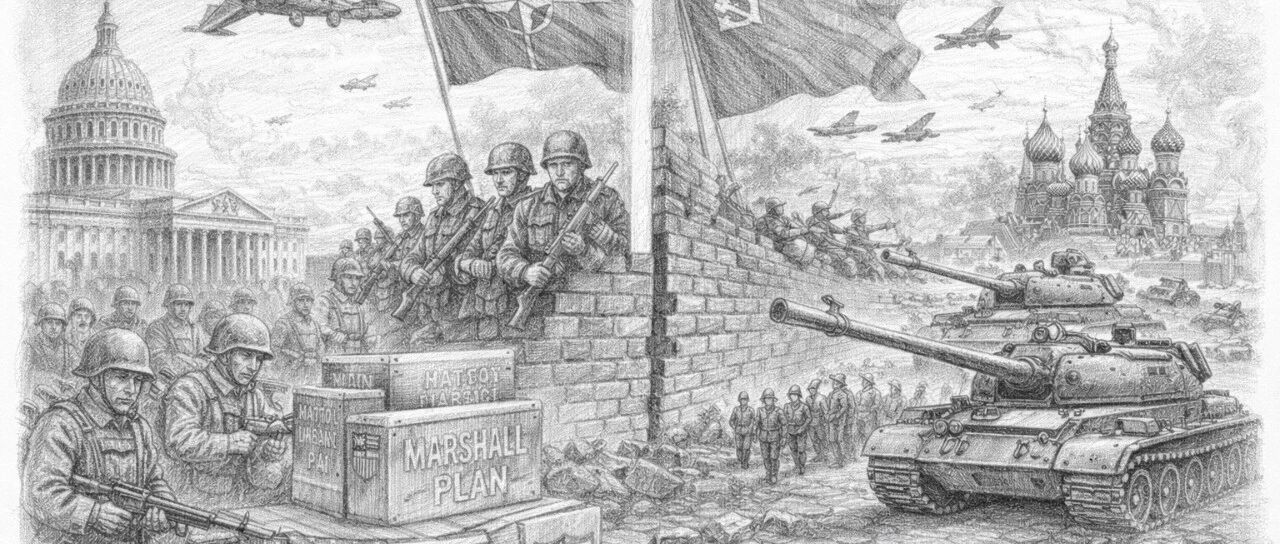
Core Viewpoint - The article discusses the historical context and implications of the Marshall Plan, emphasizing its economic significance rather than merely a political tool during the early Cold War. It highlights the choices made by Stalin and the Soviet Union regarding economic aid and the long-term consequences of those decisions for Eastern Europe and the USSR [4][9][10]. Group 1: Historical Context - In 1947, Europe was in a fragile economic state post-World War II, with high inflation, food shortages, and a lack of resources for production [2]. - The Marshall Plan was proposed by U.S. Secretary of State George Marshall as a large-scale economic aid initiative to help Europe recover and stabilize its economy [2]. Group 2: Soviet Response - Initially, the Soviet Union, represented by Foreign Minister Molotov, did not outright reject the Marshall Plan but sought to limit discussions to technical economic cooperation without long-term oversight [5][6]. - The Soviet leadership recognized the dire need for resources to alleviate economic pressures but was wary of the implications of accepting aid that came with conditions [5][6]. Group 3: Decision to Reject - By early July 1947, the Soviet Union decided to withdraw from negotiations, fearing that accepting aid would mean losing control over Eastern European economies and political influence [7][9]. - Stalin's decision was based on the understanding that accepting the Marshall Plan would lead to a loss of absolute control over Eastern Europe, which he deemed unacceptable [9][10]. Group 4: Economic Consequences - The refusal of the Marshall Plan had significant long-term economic consequences for Eastern Europe, leading to a widening gap in GDP growth between Western and Eastern European countries from 1951 onwards [11]. - By 1960, Western European countries had significantly higher GDP per capita compared to their Eastern counterparts, illustrating the impact of the Soviet decision [11]. Group 5: Lessons Learned - The article outlines several lessons from this historical episode, including the risks of being locked into a flawed system, the importance of retaining the ability to change alliances, and the dangers of systemic risks associated with external dependencies [14][15][16]. - It emphasizes that the ability to compare and adjust economic systems is crucial for long-term growth and stability, a freedom that was lost for Eastern European countries under Soviet influence [17][18].