
资本转移

Search documents
美元“塌房”进行时:逃离大军挤爆 但才刚开场?
智通财经网· 2025-06-18 12:15
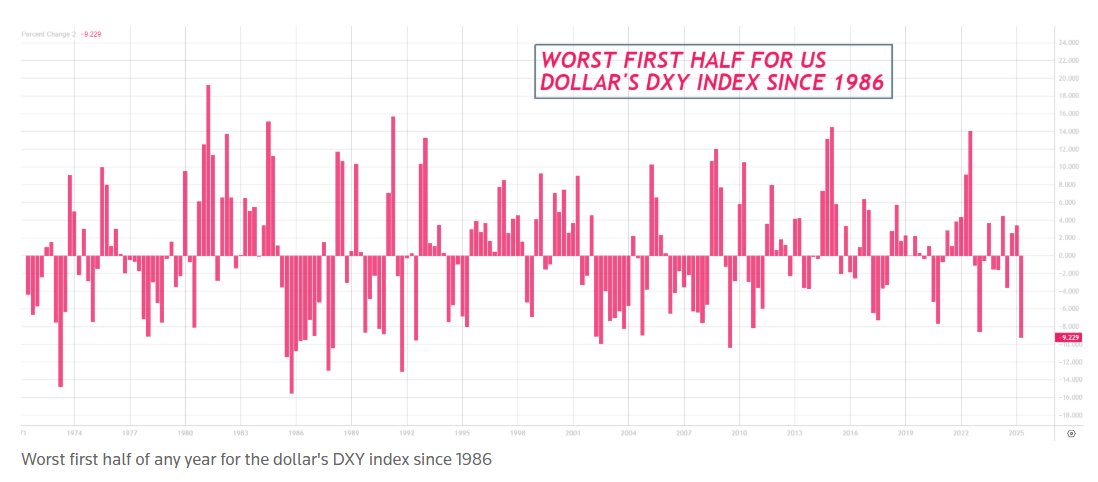
Core Viewpoint - The decline of the US dollar is not a short-term speculative behavior or a cyclical adjustment, and its recovery may take several years [1] Group 1: Dollar Performance - The US dollar index has fallen nearly 10% against major currencies this year, marking the worst first half since 1986 [1] - The current dollar short positions have reached a 20-year high, making "shorting the dollar" one of the three most crowded trades globally [3] Group 2: Market Sentiment and Reactions - Crowded trades are often seen as contrarian indicators, suggesting that the market may have overbet on the dollar's decline [6] - Despite high speculative positions, the dollar's short positions have not reached historical extremes, indicating that the bearish trend may continue [8] Group 3: Short-term Dynamics - The forex market is currently influenced by two opposing forces: potential dovish signals from the Federal Reserve and rising oil prices due to Middle Eastern conflicts [10] - Traders are selling the dollar against most currencies, keeping the dollar index near a three-year low, while anticipating a dovish stance from the Fed [10] Group 4: Long-term Trends - Asset management institutions are showing a record avoidance of dollar assets, reflecting concerns over US trade policies and the structural weakening of the dollar [13] - The capital is shifting from US assets to European and emerging market bonds, driven by geopolitical factors and the reconfiguration of global risk premiums [14] Group 5: Future Outlook - The ongoing capital migration from "light asset" industries to "heavy asset" sectors is expected to continue, with a tilt towards Europe [14][16] - Even if there are technical rebounds in the dollar's value, its long-term downtrend is likely to persist [16]

美银高管:欧洲市场吸金有限 美国仍更受资本青睐
news flash· 2025-05-06 11:56
Core Viewpoint - The recent surge in interest in the European market does not necessarily indicate the beginning of a long-term structural shift, according to the head of the EMEA market at a major bank [1] Group 1: Market Performance - The EMEA department reported a 23% revenue growth in the first quarter, marking the best performance for the same period on record [1] Group 2: Investor Sentiment - Brian Weinstein noted that there is insufficient evidence to support the claim of a large and permanent capital shift from the U.S. to Europe [1] - Many institutional investors remain cautious and are taking a wait-and-see approach towards the European market [1] - Weinstein emphasized that the current movement towards Europe is more of a small-scale inflow rather than a structural change [1]