足球产业链

Search documents
中国足球热潮如何扣动万亿产业链的扳机?
Ge Long Hui· 2026-01-23 01:30
Group 1: Market Reaction and Investment Opportunities - The Chinese U23 men's football team achieved a historic victory, defeating Vietnam 3-0, which triggered a surge in "football concept stocks" in the capital market, including companies like Tsinghua Tongfang and Inpai [1] - The victory is seen as a catalyst for a valuation recovery in the football industry, signaling a potential market shift as the 2026 World Cup approaches, which is expected to be a "football year" with significant economic implications [1][2] - The unexpected rise of the U23 team is accelerating interest in the football market, with amateur player numbers nearly doubling to 980,000 in 2025, indicating a growing commercial demand [2] Group 2: Industry Growth and Projections - China's sports event market is projected to reach nearly 40 billion yuan by 2025, while the broader outdoor sports industry is expected to exceed 3 trillion yuan [3] - The demand for artificial turf in football fields is anticipated to grow significantly, with over 54% of future demand coming from renovations rather than new constructions [4] - The Chinese sports apparel market is expected to reach $27 billion by 2026, driven by companies like Anta and Li Ning, which are focusing on youth leagues and national team sponsorships [4] Group 3: Technological Integration and AI in Football - The upcoming 2026 World Cup presents a complex challenge for event services, with an increase in teams and matches, necessitating advanced technology for logistics and audience engagement [6] - Lenovo, as a technology partner for the World Cup, is leveraging AI to enhance various aspects of the event, including tactical analysis and real-time officiating support [6][7] - The global sports market for AI is projected to grow from $1.2 billion in 2024 to $4.7 billion by 2034, indicating a significant opportunity for tech companies in the sports sector [7] Group 4: Policy Support and Long-term Outlook - The Chinese government's "14th Five-Year Plan" emphasizes the role of the sports industry in boosting domestic demand and economic resilience, with a target of over 70,000 football fields by 2025 [8] - The development of a grassroots competition system is underway, with urban leagues being established across 16 provinces, fostering a non-commercial growth model that supports the entire industry chain [8] - Analysts caution that while the football industry shows promise, the path to monetization remains complex, with future growth likely stemming from the integration of sports and technology [9]






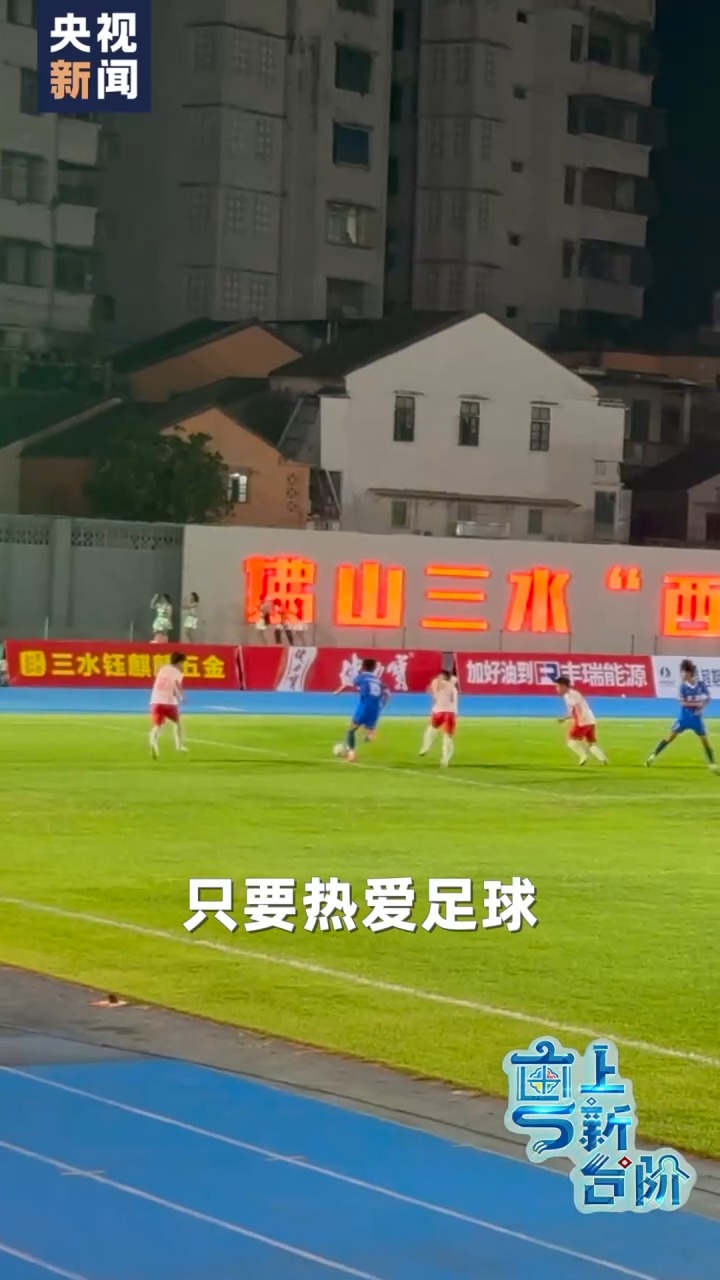
粤上新台阶丨“厂牌”踢出“世界波”
Nan Fang Du Shi Bao· 2025-07-26 16:43
Core Viewpoint - The "Foshan La Liga" has emerged as a grassroots football league in the Guangdong-Hong Kong-Macao Greater Bay Area, attracting significant local participation and interest, comparable to professional leagues like the Chinese Super League [1][7]. Group 1: Event Participation and Popularity - The "Foshan La Liga" attracted over 1.46 million attendees last year, with an average of 20,000 spectators per match, nearing the attendance levels of the Chinese Super League [7]. - The league features 40 teams from various regions, including former national players and professional athletes, highlighting its competitive nature [4]. Group 2: Community and Economic Impact - Local industries and enterprises actively participate in the league, using it as a team-building exercise while enhancing their brand visibility [7]. - The league has transformed local economic activity, with events like "West La Liga Night" evolving into a "Super Weekend" that includes cultural performances, thus revitalizing the local economy [9]. Group 3: Infrastructure and Development - The local government has invested in football infrastructure, converting idle land into football fields, resulting in over 100 football venues in the Sanshui District, significantly above the national average [12]. - The league has initiated a football ecosystem that includes coach training, youth development, and collaboration with professional clubs, attracting professional teams for winter training [12]. Group 4: Future Prospects - The "Foshan La Liga" aims to establish itself as a phenomenon-level IP in the competitive cultural and tourism sector over the next decade, focusing on sustainability and growth [12].