
足球青训

Search documents
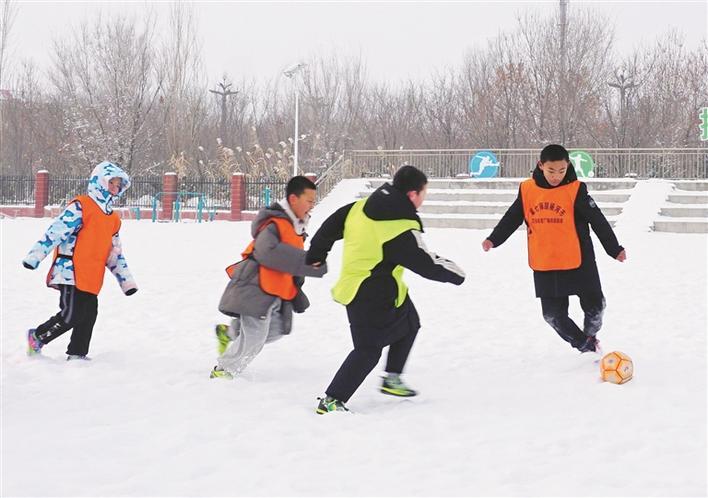
驰骋训练场 放飞足球梦
Xin Lang Cai Jing· 2026-02-08 18:30
Core Insights - The "Snow Youth Training Team" in Hu Yanghe City is actively training in snowy conditions, showcasing resilience and determination among the children involved [2][3] - The local football association has successfully attracted children to football through interest classes, leading to the formation of a dedicated training team [2] - The training environment is designed to be engaging and fun, with a focus on skill development through games rather than traditional drills [3] Investment in Football Development - Since 2021, significant investments have been made in football infrastructure, including the construction and renovation of four football fields, addressing the lack of facilities [3][4] - The promotion of a "3+2" five-a-side football initiative has led to the establishment of unique football teams across 11 groups, enhancing community engagement [4] - A total of 46 events have been held, attracting over 31,000 participants, indicating strong community interest and involvement in football [4] Talent Development and Future Plans - The establishment of seven national youth football specialty schools has resulted in the training of 42 football specialists and 16 semi-professional athletes, indicating a growing talent pipeline [4] - Hu Yanghe City First High School has introduced a specialized football class, providing a pathway for students from interest to professional development [4] - Future plans include hosting youth football invitation tournaments and initiating specialized training for coaches and referees, aiming to integrate football into regular school curricula [4]

承担起“足球城”的使命
Xin Lang Cai Jing· 2026-02-01 22:24
Core Viewpoint - Dalian football is experiencing significant progress in both professional and grassroots levels, with a strong emphasis on youth training and community engagement, positioning itself as a leading football city in China by 2026 [3][4][7]. Group 1: Competitive Achievements - Dalian Yingbo team finished 11th in their first season in the Chinese Super League, while Dalian Kunchen team ranked 8th in the China League One [4]. - Dalian teams achieved notable successes across various leagues, including a third-place finish in the China Amateur League and a championship in the U21 league, marking a comprehensive coverage of all five levels of Chinese football [4][5]. Group 2: Youth Training Development - Dalian has established a national-level youth training center, enhancing its training system from grassroots to elite levels [5]. - The youth training framework has produced several players who have joined national teams, showcasing the effectiveness of Dalian's youth development programs [4][6]. Group 3: Football Culture and Community Engagement - The Shoyu Bay Stadium hosted 16 matches in 2025, attracting a total of 934,000 spectators, averaging over 58,000 per match, solidifying its reputation as "Asia's No. 1 Stadium" [5][6]. - Dalian's football culture is deeply ingrained in the community, with nearly 700,000 residents participating in football activities, reflecting the sport's significance in daily life [6][7]. Group 4: Future Prospects - In 2026, Dalian will have five professional teams competing across various leagues, with a focus on sustainable development and enhancing the commercial viability of clubs [7][8]. - The city aims to maintain its leadership in football development in China, with plans to strengthen youth training and community football initiatives [8].

“苏超”背后推动者、珂缔缘足球俱乐部创始人李太镇:“苏超”带来的巨大流量正在转化为商业价值
Mei Ri Jing Ji Xin Wen· 2026-01-27 13:11
Core Viewpoint - The article highlights the journey of Li Taizhen, who transformed from a successful slipper factory owner to a football club founder, emphasizing the challenges and successes of developing youth football in China, culminating in the establishment of the "Su Super" league and the entry of state capital into his club, Kedi Yuan, marking a significant shift in its operational model [1][9][10]. Group 1: Li Taizhen's Background and Vision - Li Taizhen, originally a slipper factory owner, made a bold decision to invest in football youth training, believing in the potential of local talent and the need for a free training model to attract young players [3][4]. - The club's initial struggles included low enrollment and financial challenges, with Li's commitment to a free training model leading to significant financial losses [4][5]. Group 2: Financial Challenges and Support - The club faced severe financial difficulties, with annual costs exceeding initial projections, leading Li to seek external funding and support from local businesses and media [5][8]. - A turning point came when Li received support from a local entrepreneur, which helped stabilize the club during its most challenging times [6][8]. Group 3: Development of the "Su Super" League - The "Su Super" league emerged from discussions about expanding football opportunities in Jiangsu province, leading to unexpected popularity and increased visibility for local football [7][9]. - The league's success provided a platform for Kedi Yuan to gain recognition and attract more players, shifting the focus from mere survival to sustainable growth [8][11]. Group 4: Transition to State Capital Involvement - In January 2025, state capital officially entered Kedi Yuan, marking a significant transition from a privately funded model to a mixed-ownership structure, which alleviated some financial pressures [9][10]. - This transition allowed Li to shift from being a sole decision-maker to a professional manager accountable to a board, indicating a move towards a more structured and sustainable operational model [10][11]. Group 5: Future Plans and Sustainability - The club aims to achieve self-sustainability within three years, focusing on diversifying revenue streams through ticket sales, sponsorships, and player transfers, leveraging the popularity of the "Su Super" league [11][12]. - Li's vision includes transforming the club into a community service provider, emphasizing the importance of a viable business model in the future of grassroots football [10][11].
这座西部城市,发展足球有妙招
Xin Lang Cai Jing· 2026-01-27 03:23
Core Insights - Chengdu has emerged as a key city for football development in China, with a focus on youth training and talent cultivation, aiming to supply 54 players to national teams by 2025 [4][10] Group 1: Youth Football Development - The 16th National Youth Football Invitation Tournament showcased the competitive spirit of young players, with local coaches scouting for potential talent [4] - Chengdu hosted 17 city-level youth football events in 2025, involving 2,068 teams and over 25,000 players, resulting in 5,739 matches [5] - The Chengdu Football Association emphasizes the importance of events as a platform for talent discovery and skill enhancement [4][5] Group 2: Training and Technology Integration - Chengdu's youth training camps utilize technology to track and analyze players' physical metrics, aiding in their development [6] - The city promotes a model of integrating sports and education, allowing young players to balance their academic and athletic pursuits [7][8] Group 3: International Collaboration - Chengdu is actively linking with international football resources, collaborating with clubs from countries like France and Brazil to enhance training opportunities for young players [9] - In January 2025, the Chengdu U15 elite team participated in a month-long training program in Brazil, achieving success in local competitions [9] - The collaboration with international clubs has led to young players from Chengdu being selected for trials and teams abroad, expanding their growth opportunities [9][10]
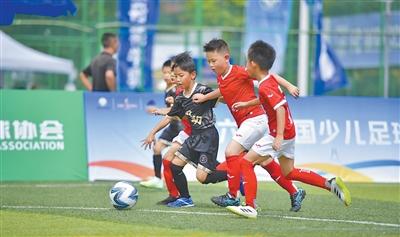
这里培养E级教练员1.4万余人
Xin Lang Cai Jing· 2026-01-26 10:47
Core Viewpoint - The article highlights the systematic training of E-level football coaches in Jiangsu province, which is crucial for enhancing youth football training and increasing participation in the sport ahead of the upcoming "Super League" in 2026 [4][6]. Group 1: E-Level Coach Training Overview - Jiangsu province has initiated E-level coach training since 2018, successfully conducting around 450 sessions and training over 14,000 E-level coaches [4][5]. - E-level coaching is the entry-level training in China's football coaching hierarchy, aimed at addressing the shortage of qualified coaches in schools and community clubs [5][6]. - The training program focuses on basic football skills, including shooting, passing, and positioning, which are essential for youth development [7][9]. Group 2: Impact on Youth Football - The E-level coaches primarily target children and youth, providing structured and safe training environments, thereby lowering the barriers to entry for football participation [6][10]. - The training emphasizes practical skills and includes a significant portion of hands-on training to enhance the coaches' ability to conduct effective sessions [7][9]. - The program has attracted a diverse group of participants, including football enthusiasts and university students, with over 60% of attendees coming from these backgrounds in recent years [6][8]. Group 3: Professional Development and Future Prospects - The quality of training is enhanced by ongoing professional development for E-level instructors, with over 20 qualified instructors in Jiangsu [9]. - The E-level coaching certification is recognized across the Yangtze River Delta region, facilitating career advancement for grassroots coaches and expanding the talent pool for youth football [10]. - The initiative aims to create a more robust foundation for youth football in Jiangsu, ultimately contributing to the selection of high-level athletes in the future [10].
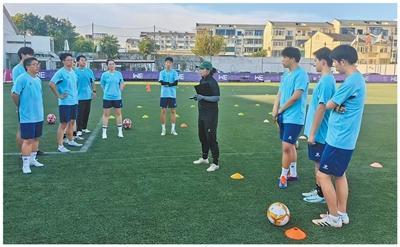
向下扎深根 才能向上走
Xin Lang Cai Jing· 2026-01-25 22:24
Core Viewpoint - The U23 national football team's recent loss to Japan highlights the progress and challenges faced by Chinese football, emphasizing the need for a stronger youth training foundation in Liaoning football [3][4]. Group 1: Performance Analysis - The U23 national team, despite being in the fourth tier, reached the finals without conceding a goal, marking the best performance of recent years for the national men's football team [3]. - In the final match against Japan's U23 team, the Chinese team was largely passive, revealing significant gaps in technical skills and tactical training [3]. Group 2: Youth Training and Development - Liaoning football, historically a stronghold for producing national players, has seen a decline due to the exit of professional teams and a lack of youth training, transforming from a "talent exporter" to a "talent leaker" [4]. - The future of Chinese football relies heavily on a robust youth training system, and Liaoning must focus on grassroots football development to regain its status [4]. Group 3: Strategic Recommendations - Emphasis should be placed on building a multi-tiered youth training system to encourage more children to participate in football [4]. - There is a need for better integration between school football programs and club training to prevent talent loss [4]. - Developing a strong team of youth training coaches is essential for improving both technical skills and football philosophies [4].
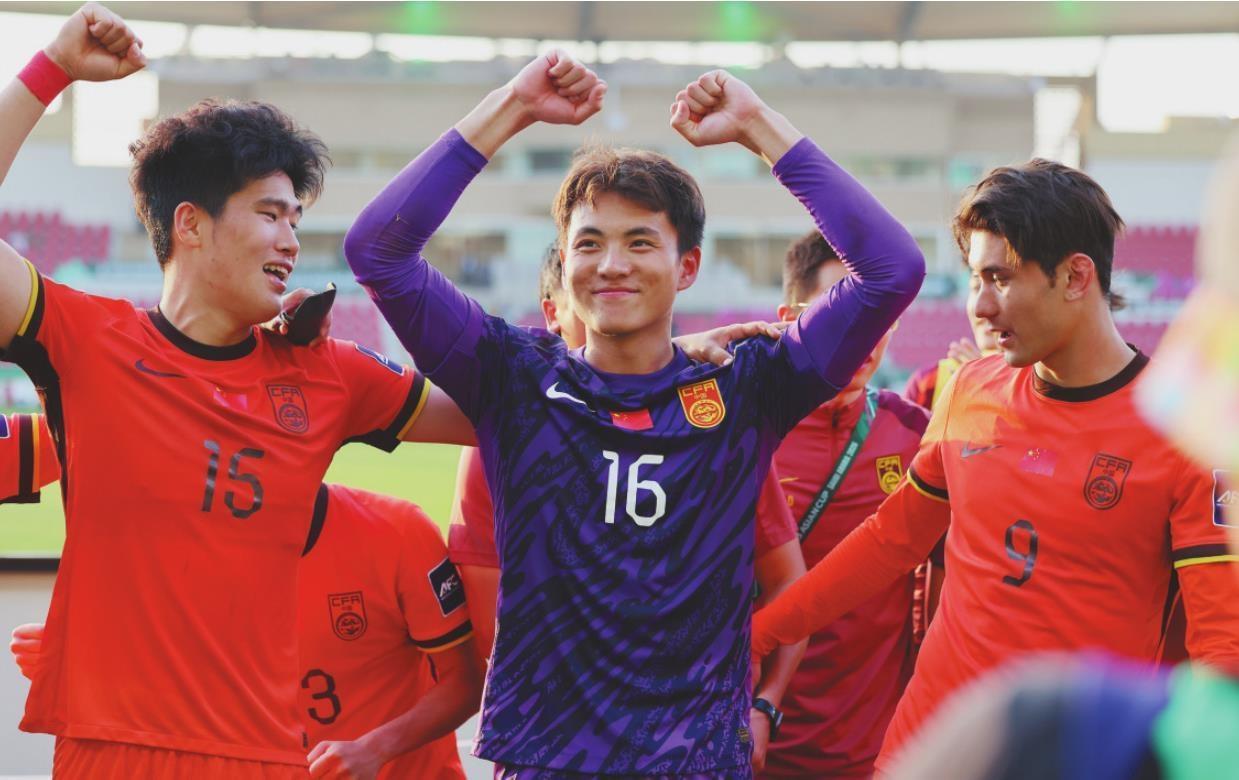
新一代中国足球小将们的进步值得称赞
Xin Lang Cai Jing· 2026-01-25 19:17
Core Insights - The U23 national football team of China achieved a significant milestone by finishing as runners-up in the AFC U23 Asian Cup, marking the first time in 22 years that a Chinese men's football team has reached the top two in an international tournament [3][4] - The team's performance is seen as a reflection of the gradual resurgence of Chinese football, showcasing the potential of the new generation of players [3][4] Performance Summary - The U23 team, classified as a fourth-tier team, advanced from the group stage with an unbeaten record of 1 win and 2 draws, scoring 5 points and not conceding any goals, demonstrating a solid defensive structure [4] - In the knockout stage, the team defeated Uzbekistan in a penalty shootout and won against Vietnam with a score of 3-0, achieving the best performance in the team's history [4] Analysis of Strengths - The success is attributed to the collective effort of the entire team, including strategic coaching, execution by players, and resilience against stronger opponents [4] - Young players have shown significant improvement in tactical awareness and teamwork, narrowing the gap with peers from other Asian football powerhouses [4] Areas for Improvement - The final match's 0-4 loss to Japan highlighted the existing gap between Chinese football and top-tier Asian teams, emphasizing the need for foundational improvements [4][5] - Key areas of concern include psychological readiness, physical conditioning, technical skills, and tactical execution, with specific issues noted in passing accuracy and ball control compared to Japan's high success rates [4] Future Outlook - The development of football in China is closely linked to the revival of football in Liaoning province, which historically contributed many talented players to the national team [6] - There is a pressing need for a robust youth training system, particularly in early childhood football development, to cultivate future talent [6] - A combination of northern and southern football styles, along with the adoption of advanced training methodologies from Europe and South America, is essential for enhancing competitiveness [6]
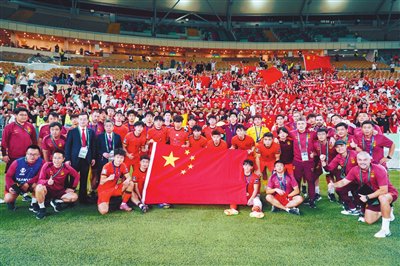
记住星光不凡 记住泪水不甘
Xin Lang Cai Jing· 2026-01-25 18:14
Group 1 - The Chinese U23 national football team achieved a significant breakthrough by securing the runner-up position in the 2026 U23 Asian Cup, marking the first time in 22 years that a Chinese national team reached the finals of an international tournament [1] - The team's journey included advancing from the group stage to the semifinals and ultimately to the finals, showcasing their potential as a fourth-seeded team and creating a historical narrative [1] - Despite the final match loss of 0:4, the performance of the U23 team has reignited hope and enthusiasm for Chinese football among fans, highlighting the importance of discipline and determination [1] Group 2 - The success of the U23 national team is attributed to years of consistent effort, professional management, and a commitment to developing a professional spirit, emphasizing that breakthroughs are the result of sustained dedication [2] - The need for continued investment in youth training is underscored, as the gap with top Asian teams like Japan is significant, stemming from their long-term commitment to youth development [1][2]
人民锐评|中国足球:向下扎根,向上生长
Xin Lang Cai Jing· 2026-01-25 11:03
Group 1 - The Chinese U23 national football team achieved a historic runner-up position in the Asian Cup, marking a significant moment for Chinese football [1] - The current generation of players, born between 2003 and 2006, represents the first fruits of a decade-long football reform initiated in 2015, coinciding with the implementation of the "Overall Plan for the Reform and Development of Chinese Football" [1][2] - The youth training system in China has seen substantial improvements, with a 24.88% increase in registered youth players, reaching 109,200 by 2025, indicating a growing football population [2] Group 2 - The team's tactical approach under coach Antonio, focusing on counter-attacking strategies, showcased the players' strong execution abilities, leading to a solid defensive record throughout the tournament [2] - The integration of players from professional leagues, such as the Chinese Super League and China League One, has created a robust environment for talent development, with young players no longer requiring special policies to participate effectively [3] - Despite the progress, challenges remain, including a significant gap in the number of registered youth players compared to Japan, uneven distribution of training resources, and the need for improved coaching standards [3]
U23男足输球没有谁忍心责怪
Xin Lang Cai Jing· 2026-01-25 04:52
Core Viewpoint - The Chinese U23 football team's performance in the Asian Cup exceeded expectations despite losing to Japan, showcasing the positive impact of recent youth training investments [1] Group 1: Performance Analysis - The U23 team's disciplined defense and strong execution have garnered recognition from external observers, indicating a promising future for these young talents [1] - The overall performance in the tournament is seen as a significant return on investment in youth training programs over recent years [1] Group 2: Future Implications - Continued investment and support in youth talent development and opportunities for players to compete on higher international stages are essential for the future success of national teams [1]