
中国足球发展

Search documents
【声音】不忘“苏”心,方得始终
Xin Lang Cai Jing· 2026-02-03 19:46
Group 1 - The core idea of the articles highlights the significant growth and commercialization of the Jiangsu Provincial Football League (Su Super League), with a notable increase in sponsors from 6 to 24, including major international brands like Adidas [1][2] - The league is making efforts to remain accessible to small businesses, allowing them to participate with a low entry fee of 50,000 yuan, thus promoting inclusivity and community engagement [1][2] - The Su Super League has achieved impressive viewership statistics, with over 2.43 million attendees and more than 2.2 billion online views during the 2025 season, indicating a strong interest in football at the grassroots level [3] Group 2 - The league's development is contributing to a more comprehensive football ecosystem in China, integrating professional, youth training, and community involvement, which is essential for the sport's growth [4] - The Su Super League aims to maintain its local identity and community roots while expanding, emphasizing the importance of grassroots football in the overall development of Chinese sports [5] - The league's success is seen as a reflection of the broader trend towards making sports more integrated into daily life in China, aligning with the vision of sports being a part of everyday culture [5]
“把中国足球的精神找回来”(对话体坛名将)
Ren Min Ri Bao· 2026-02-03 02:16
Core Viewpoint - The appointment of Shao Jiayi as the head coach of the Chinese national football team marks a significant step towards revitalizing the team and aiming for a World Cup qualification, reflecting the aspirations of fans and the need for a cohesive and competitive squad [4][6][18]. Group 1: Coaching Philosophy and Goals - Shao Jiayi emphasizes the importance of building a strong team with high cohesion and combat effectiveness, focusing on collective play rather than imitating other styles like Brazilian football [7]. - The primary goal under Shao's leadership is to qualify for the World Cup, which he sees as a responsibility to the fans and the nation [6][18]. - He believes that consistent victories in training and matches are essential for building the players' confidence [5]. Group 2: Team Selection and Development - The selection criteria for the national team will prioritize players who demonstrate stable performance in both league and national team contexts, aligning with the coach's tactical philosophy [8]. - Shao is open to including young players in the national team, provided they show the necessary skills and commitment to represent the country [9]. - The recent improvements in youth national teams are seen as a positive sign for the future of Chinese football, with the potential for these young players to contribute to the senior team [10][11]. Group 3: Training and Competition - Shao Jiayi stresses the need for high-quality training and competitive matches against stronger teams to identify and address weaknesses within the squad [5]. - The national team recently completed a training camp in Dubai, where they played three warm-up matches, achieving one win and two draws [2]. Group 4: Future Aspirations - Shao Jiayi expresses a strong desire to lead the national team back to the World Cup, recalling the emotional impact of the team's qualification in 2002 [18]. - He acknowledges the rapid evolution of modern football and the necessity for Chinese players to adapt to these changes to improve their performance on the international stage [12].
这些年我都是在质疑声中成长
Xin Lang Cai Jing· 2026-02-01 17:16
Group 1 - The U23 Asian Cup experience has been a significant journey for the player, transitioning from criticism to praise, highlighting personal growth amidst challenges [2][3] - The player acknowledged the pressure of representing the national team for the first time, which led to initial performance anxiety and missed opportunities during the qualifiers [2] - Support from family, teammates, and fans played a crucial role in helping the player regain confidence after facing criticism [2][3] Group 2 - The player views the U23 Asian Cup as a starting point for Chinese football, recognizing the existing gaps with other national teams but expressing optimism for improvement through hard work [4] - There is a belief that the younger generation of players can learn from past experiences and continue to close the performance gap, with aspirations for the national team to qualify for the World Cup [4] - The player emphasized the importance of establishing a solid foundation in the Chinese Super League (CSL) for the team, focusing on youth development and long-term growth [5] Group 3 - The player is aware of the challenges posed by competing against foreign forwards in the CSL but is determined to improve and establish confidence to compete effectively [5] - The club's philosophy emphasizes local roots, structured operations, and a commitment to youth training, which aligns with the player's personal goals [5] - The player aims to prove himself as a starting forward through consistent performance, highlighting the need for domestic players to adapt and thrive in a competitive environment [5]


“希望下一代球员再破纪录”!对话U23国足队员
Xin Lang Cai Jing· 2026-01-27 14:46
Core Viewpoint - The Chinese U23 national men's football team achieved a historic runner-up position in the U23 Asian Cup, marking the best performance in the team's history, and engaged with fans in Beijing after the tournament [1] Group 1: Player Insights - Midfielder Li Zhenquan reflected on his growth journey through various leagues and expressed hope for future players to break records and contribute more to Chinese football [2] - Forward Xiang Yuwang scored a crucial goal in the semi-final against Vietnam, which he described as a release from previous pressure and a maturation of his mindset [2] - Defender Peng Xiao, known as the "blade defender," scored two key goals during the tournament and emphasized his willingness to contribute in any position while hoping to inspire future players [3] Group 2: Memorable Moments - Players shared unforgettable moments from the tournament, with Peng Xiao recalling the intense match against Uzbekistan and the emotional victory in the penalty shootout [4] - Li Zhenquan highlighted the final against Japan as a moment that made him aware of the gap between his team and top Asian teams, motivating him to improve [4] - The meet-and-greet event not only connected young players with fans but also showcased the team's determination and awareness of their historical achievements [4]
U23国脚:争取下次拿个冠军回来
Xin Lang Cai Jing· 2026-01-26 22:08
Core Viewpoint - The U23 national football team of China received a warm welcome from fans upon their return after finishing as runners-up in the U23 Asian Cup, highlighting the strong support for the team despite their loss [1][2]. Group 1: Fan Support and Player Reactions - Fans gathered at the airport to welcome the U23 team, expressing joy and support for the players, with one fan stating the importance of showing encouragement after a tough tournament [2]. - Player Li Hao expressed gratitude for the fan support and emphasized the need to convert the disappointment of not winning into motivation for future competitions [2]. - Defender Hu Hetao also thanked the fans, stating that their presence alleviated the fatigue from travel and reinforced the commitment to improve and aim for higher goals [2]. Group 2: Future Aspirations and Opportunities - The U23 team disbanded upon returning to Beijing, marking the beginning of new journeys for the players, with team captain Xu Bin set to embark on a journey to play abroad [3]. - Xu Bin is likely to join Wolverhampton Wanderers in the English Premier League, with plans for potential loan arrangements to gain experience [4]. - Xu Bin expressed a strong determination to pursue opportunities abroad, aiming to bridge the gap with teams like Japan and set a positive example for Chinese football [4].
输掉了一场比赛,却没有输掉未来
Xin Lang Cai Jing· 2026-01-25 19:17
Group 1 - The Chinese U23 football team finished as runners-up in the U23 Asian Cup, losing 0-4 to Japan in the final, marking a significant improvement in their historical performance in the tournament [2][3] - The team displayed strong performances throughout the tournament, winning five out of six matches, including a notable 3-0 victory over Vietnam and a penalty shootout win against Uzbekistan [3][4] - Coach Antonio's tactical approach was praised, particularly for the team's defensive strategies and successful formations that helped them progress through the earlier rounds [3][4] Group 2 - Despite the final loss, the team's average age of 21 indicates a promising future, aligning with modern football trends of youth development [7] - The team is set to compete in the upcoming Asian Games in September, which is expected to be a more prestigious event than the U23 Asian Cup, with the potential to achieve better results [7] - The U23 national team's journey is seen as a stepping stone, with several players likely to transition into the next U23 squad for future competitions, including the next U23 Asian Cup and the 2028 Los Angeles Olympics [7][8]
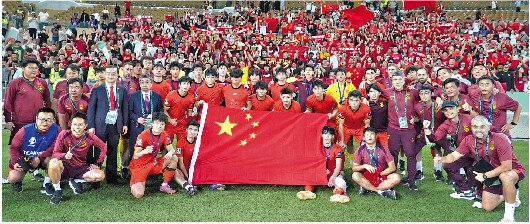
记住星光不凡 记住泪水不甘
Xin Lang Cai Jing· 2026-01-25 18:14
Group 1 - The Chinese U23 national football team achieved a significant breakthrough by securing the runner-up position in the 2026 U23 Asian Cup, marking the first time in 22 years that a Chinese national team reached the finals of an international tournament [1] - The team's journey included advancing from the group stage to the semifinals and ultimately to the finals, showcasing their potential as a fourth-seeded team and creating a historical narrative [1] - Despite the final match loss of 0:4, the performance of the U23 team has reignited hope and enthusiasm for Chinese football among fans, highlighting the importance of discipline and determination [1] Group 2 - The success of the U23 national team is attributed to years of consistent effort, professional management, and a commitment to developing a professional spirit, emphasizing that breakthroughs are the result of sustained dedication [2] - The need for continued investment in youth training is underscored, as the gap with top Asian teams like Japan is significant, stemming from their long-term commitment to youth development [1][2]
U23主教练说给队伍打10分
Xin Lang Cai Jing· 2026-01-25 16:12
Group 1 - The U23 Chinese football team, despite losing to Japan in the Asian Cup final, demonstrated significant potential and hope during the tournament [1] - Head coach Antonio rated the team's overall performance a perfect score of ten out of ten, highlighting their growth and future prospects [1] - Antonio expressed confidence that the senior national team can improve its ranking in Asia, aiming for a position within the top eight [1]
U23国足回应拿亚军,都提到一句话!
Xin Lang Cai Jing· 2026-01-25 02:51
Core Viewpoint - The U23 Chinese national football team finished as runners-up in the U23 Asian Cup after losing 0-4 to Japan, highlighting the need for reflection and improvement in their performance [1][19]. Group 1: Team Performance and Reflection - Coach Hu Hetao expressed regret for not achieving the desired level in such a crucial match and emphasized the importance of recognizing their strengths and weaknesses [1][19]. - Players acknowledged the gap in skill and performance compared to Japan, with goalkeeper Li Hao receiving attention from European scouts despite not winning the "Best Goalkeeper" award [5][12]. - The team showed respect to Japan during the award ceremony, indicating a sportsmanlike attitude despite the loss [3][19]. Group 2: Future Aspirations and Commitment - Players expressed determination to improve and train harder, with statements reflecting a commitment to overcoming challenges and striving for better results in the future [14][16]. - The sentiment among the team is one of resilience, with players vowing to continue fighting and learning from their experiences [12][19]. - The overall message from the team is one of hope and a desire to build on this experience, with a focus on future success [22][24].
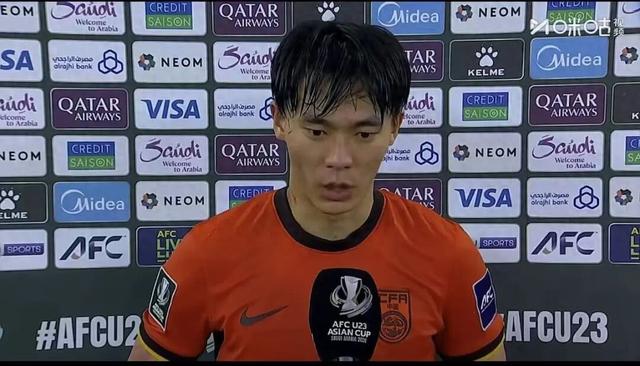
这支U23,保留建制?
Xin Lang Cai Jing· 2026-01-25 02:50
Core Viewpoint - The U23 Chinese national football team achieved its best-ever result in the U23 Asian Cup by finishing as runners-up, despite a significant 0-4 loss to Japan, highlighting the gap in football strength between China and Japan [1] Group 1: Performance and Historical Context - The U23 team’s performance throughout the tournament has been commendable, providing hope for fans despite the final loss [1] - Historically, Chinese football has seen instances of initial success followed by a decline, raising concerns about sustaining momentum after this achievement [1] - Previous successes in Chinese football, such as the 2004 Asian championships, did not lead to long-term improvements, indicating a pattern of inconsistency [1] Group 2: Future Challenges and Opportunities - The upcoming U23 Asian Cup is set to change to a quadrennial format, with the next tournament likely to be held in 2027, which may serve as an Olympic qualifying event [1] - The 2028 Los Angeles Olympics will only allow 12 teams in the men's football category, with Asia receiving only 2 spots, making qualification for the Chinese team particularly challenging [1] - There is a discussion within the football community about the necessity of maintaining the current U23 team structure to ensure continued development and opportunities for players [1] Group 3: Development and Talent Pipeline - The current U23 players are gaining experience in domestic leagues, but the pressure to perform may hinder their development due to the reliance on foreign players in key positions [1] - The future roles of these U23 players in their clubs and their potential for international development remain uncertain and require ongoing observation [1] - The team’s captain emphasized that while they have made history, their future trajectory will depend on their own efforts and performance [1]