
跨境生活圈

Search documents
深圳莲塘口岸成跨境旅行团高效通关“快车道”
Xin Lang Cai Jing· 2026-01-06 13:19
Core Insights - Lian Tang Port is becoming a key cross-border tourism hub in the Guangdong-Hong Kong-Macao Greater Bay Area, with projected inbound and outbound passenger traffic exceeding 30 million by 2025, representing a year-on-year growth of over 15% [1][3] Group 1: Operational Efficiency - Lian Tang Port is expected to receive over 100,000 cross-border travel groups and educational groups in 2025, serving more than 4 million team travelers [3] - The port has implemented a "dynamic adaptation" mechanism to manage peak traffic, improving the efficiency of group passage through dedicated channels, reducing the time for group clearance from 30 minutes to under 15 minutes [3][4] - The introduction of a new inspection platform and mobile inspection terminals has increased inspection efficiency by 40% during peak times [3] Group 2: Regional Economic Impact - Lian Tang Port is strategically located near the eastern tourism belt of Shenzhen and the northern ecological area of Hong Kong, promoting a new "one trip, multiple stops" cross-border lifestyle [4] - The port serves as a primary crossing for Hong Kong residents traveling to mainland cities, enhancing cultural exchange and local consumption [6] - The port's unique "direct access" feature for cyclists has attracted many cycling enthusiasts, with an average of over 1,000 cyclists crossing monthly since its opening in February 2023 [6]

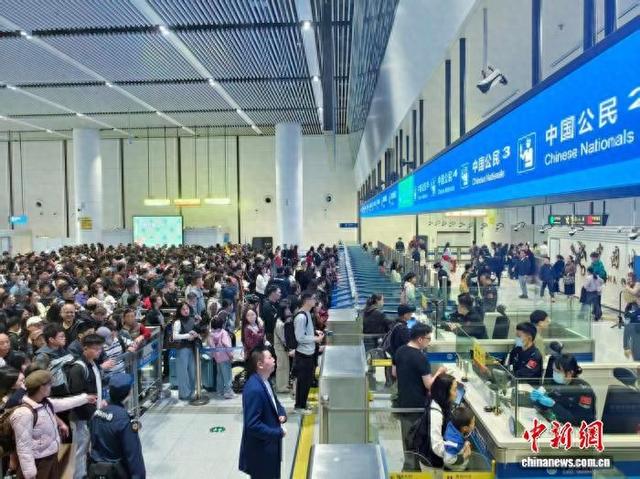
双城生活“深”得“港”心
Jing Ji Ri Bao· 2025-11-15 22:00
Core Insights - The implementation of the "one visa multiple entries" policy has significantly increased cross-border travel between Shenzhen and Hong Kong, with over 2.24 billion trips recorded this year, a 14.16% increase year-on-year [1][2] - The policy allows Shenzhen residents to travel to Hong Kong unlimited times within a year, enhancing tourism and cross-border consumption [2] - The introduction of smart border control technologies, such as facial recognition, has improved the efficiency of border crossings, with a 30% increase in processing speed compared to traditional methods [9][10] Group 1: Policy Impact - The "one visa multiple entries" policy was officially implemented in December 2024, allowing Shenzhen residents to visit Hong Kong multiple times within a year, with each stay not exceeding 7 days [2] - As of now, 141.7 million "one visa multiple entries" have been issued, indicating strong demand and a boost in cross-border tourism [2] - The policy has led to a notable increase in both inbound and outbound tourism, with Hong Kong's hotel occupancy rates exceeding 90% during holidays and retail and dining revenues growing by over 20% [3][4] Group 2: Cross-Border Economic Activity - The cross-border economic interaction has evolved from a one-way shopping trend to a two-way consumption model, creating a unique cross-border commercial and living circle [4] - The increase in cross-border travel has stimulated local economies, with Shenzhen's shopping options attracting many Hong Kong residents [3][4] - The establishment of the Lok Ma Chau Loop and the development of the Hong Kong-Shenzhen Innovation and Technology Park have further facilitated economic collaboration between the two regions [5][7] Group 3: Technological Advancements - The introduction of the "one channel" for cross-border personnel has reduced the customs clearance time by approximately 40%, benefiting nearly 100 research institutions and over a thousand researchers [7] - The smart border control system at Shenzhen Bay has processed over 10 million travelers using facial recognition technology, enhancing the travel experience [9][10] - A new data management platform has been developed to predict and manage cross-border traffic, achieving a 95% accuracy rate in passenger flow predictions [11]