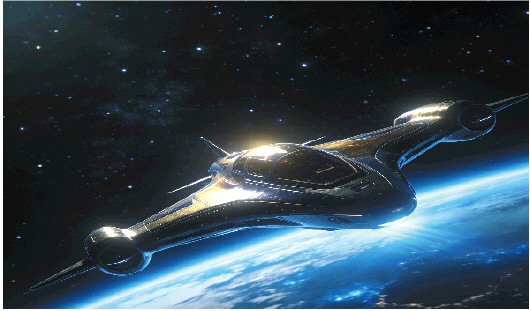
轨道级商业飞船

Search documents
飞越“卡门线”
Qi Lu Wan Bao· 2026-01-30 18:24
Core Insights - The article discusses the rapid development of commercial space tourism in China, particularly focusing on suborbital flights as a new opportunity for the public to experience space travel [3][5][10] - Beijing Chuangyue Space Technology Co., Ltd. announced its "Chuangyue No. 1" suborbital flight plan, marking a significant step in China's commercial space tourism [3][5] - The article highlights the competitive landscape of suborbital flight providers in China, including the "Chuangyue No. 1" and the "Lihong No. 2" from China Aerospace Science and Technology Corporation [5][6] Suborbital Flight Experience - Suborbital flight involves reaching the edge of space, approximately 100 kilometers high, with a total journey time of about 2.5 hours, including a core experience of around 12 minutes in space [3][4] - Passengers will experience 3-4G of overload during ascent and a 3-6 minute period of weightlessness after crossing the Kármán line, providing a unique sensation of floating [4][6] - The flight experience is enhanced by specially designed windows that offer a 45-degree wide view while filtering harmful radiation [4] Key Players in the Market - "Chuangyue No. 1" is a focal point in the market, weighing 8 tons with a maximum diameter of 5 meters, and aims for a commercial launch in 2028 with a ticket price of approximately 3 million yuan [5][6] - The "Lihong No. 2" is another significant player, designed for both tourism and scientific experiments, with a maximum flight height of 108 kilometers and a capacity for 7 passengers [6][8] - Other companies, such as Deep Blue Aerospace, are also entering the commercial space market, with plans for suborbital flight ticket sales starting in 2024 [6][7] Cost Reduction and Market Growth - The article notes that the ticket prices for suborbital flights are currently in the hundreds of thousands of yuan range but are expected to decrease to tens of thousands of yuan due to technological advancements and policy support [7][8] - The use of reusable spacecraft can potentially reduce launch costs by over 70%, making space travel more accessible [7][8] - The establishment of the Commercial Space Administration in November 2025 is expected to further support the growth of the commercial space industry in China [7][8] Future Developments - The article mentions that the development of orbital-class commercial spacecraft is on the agenda, aiming to allow tourists to stay in space for several days and participate in scientific experiments [10][11] - The long-term vision of Beijing Chuangyue includes plans for a space hotel and lunar orbit tourism by 2038, with a goal to reduce ticket prices to around 300,000 yuan [11][12] - The advancements in space technology are expected to extend beyond tourism, impacting various industries such as materials science and biotechnology [9][10]