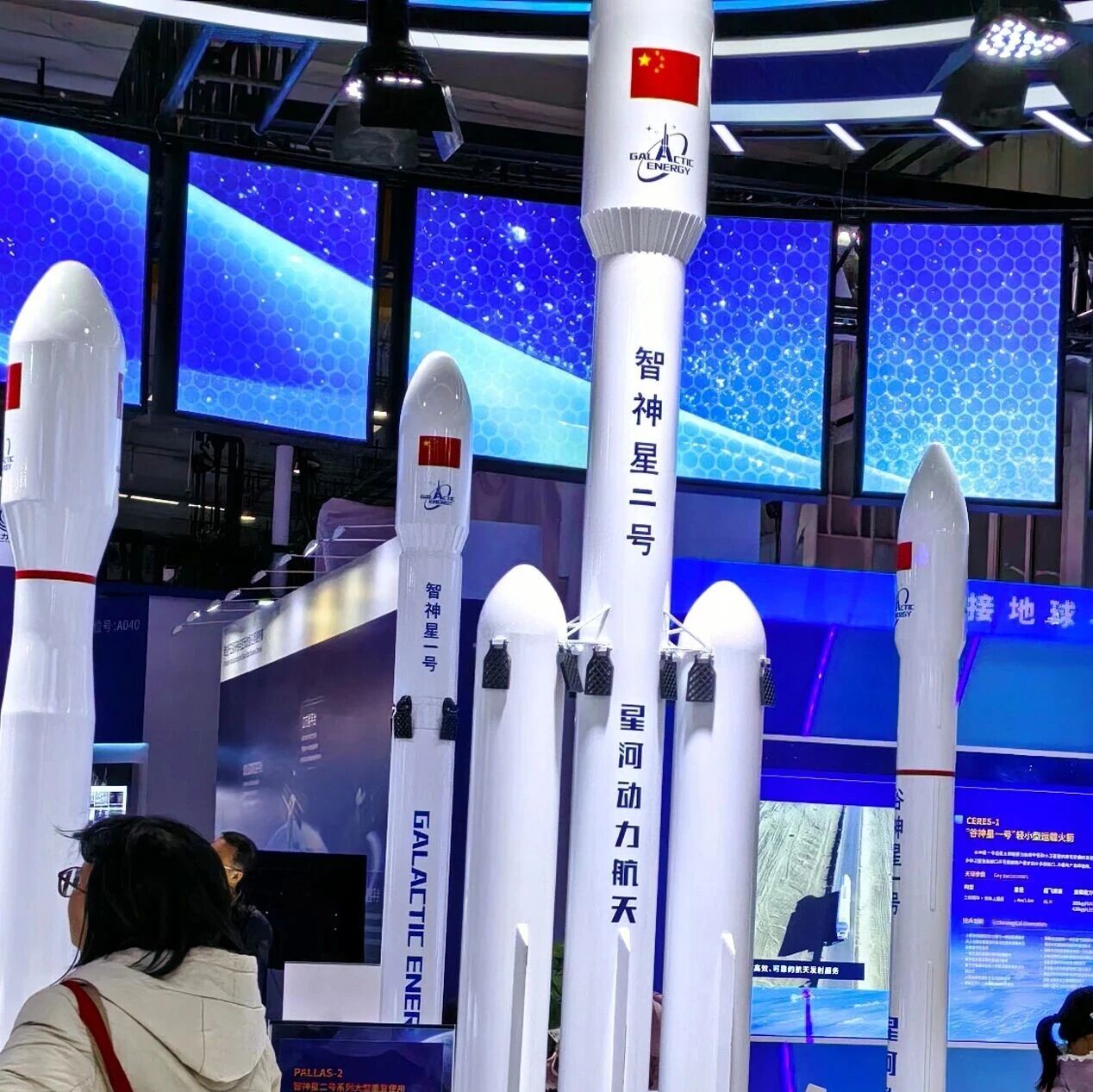
力鸿二号

Search documents
“太空游”启航,首航票价300万元
Shen Zhen Shang Bao· 2026-02-05 23:01
Core Viewpoint - The commercial space tourism market is rapidly developing, with companies like Beijing Chuan Yue Zhe and others planning to launch suborbital flights by 2028, targeting high-net-worth individuals with ticket prices around 3 million yuan [1][5]. Group 1: Company Developments - Beijing Chuan Yue Zhe has unveiled its commercial manned spacecraft "Chuan Yue Zhe No. 1" and announced its first batch of 11 space tourists, including notable figures [1]. - The company has pre-sold nearly 20 tickets for its planned suborbital flights, which are set to begin in 2028 [1]. - Other domestic companies such as Ziwei Technology and Zhongke Aerospace are also focusing on the suborbital travel market, aiming for the same 2028 target [3]. Group 2: Market Structure - The global space tourism market has established three main product forms: suborbital tourism, orbital tourism, and deep space tourism, each with distinct technical requirements and pricing [2]. - Suborbital tourism is currently the most commercially viable option, allowing passengers to experience a few minutes of weightlessness without entering orbit [2]. - Orbital tourism, which involves longer stays in space, is currently only offered by SpaceX, with ticket prices reaching approximately 55 million yuan [3]. Group 3: Competitive Landscape - Chinese commercial space companies are engaged in a comprehensive competition involving technology, capital, and supply chains, with 2028 as a critical milestone [4]. - Different technological approaches are being pursued, with Zhongke Aerospace focusing on integrated rocket and spacecraft systems, while Chuan Yue Zhe is adopting a model that separates spacecraft and rocket functions [4]. - Companies are also exploring various commercialization strategies, such as ticket pre-sales and technology reuse to lower costs [5]. Group 4: Consumer Considerations - Space tourism remains a high-end consumer product, with significant physiological and economic barriers for the average person [6]. - The physical requirements for suborbital flights are less stringent than for professional astronauts, but participants still need to undergo training [6]. - The current pricing structure is primarily aimed at wealthy individuals, but advancements in technology may eventually lead to lower costs and broader accessibility [6].

潮玩成为“太空乘客”,“航天+”探索更多可玩性
第一财经· 2026-02-05 11:36
Core Viewpoint - The collaboration between China Aerospace Technology Co., Ltd. and Pop Mart has successfully launched the SPACE MOLLY toy, marking a significant milestone in the intersection of space technology and cultural consumption, enhancing public interest in space tourism [2][3]. Group 1: Company Developments - China Aerospace Technology Co., Ltd. is the first mixed-ownership rocket enterprise in China, involved in the development, production, and launch of medium to large rockets, suborbital scientific experiments, and space tourism [3]. - The company has completed the counseling work for its IPO with Guotai Junan Securities, as confirmed by the China Securities Regulatory Commission [3]. - The "Lihong No. 2" is a reusable spacecraft developed by the company, designed for space tourism with the capability of over 30 flights, serving as a platform for scientific research and supporting major national projects like manned lunar missions [5]. Group 2: Industry Trends - The commercial space sector is focusing on space tourism as a key emerging business model, with initiatives to develop suborbital and orbital space tourism vehicles and establish a comprehensive operational system for space tourism [6]. - The China Aerospace Science and Technology Corporation plans to implement five major projects during the 14th Five-Year Plan period, including the development of space tourism and related infrastructure [6]. - The National Space Administration's action plan for 2025-2027 emphasizes support for commercial space entities in areas such as space resource development, space manufacturing, and space tourism, promoting innovation and new business models [6].


潮玩成为“太空乘客”,“航天+”探索更多可玩性
Di Yi Cai Jing· 2026-02-05 10:24
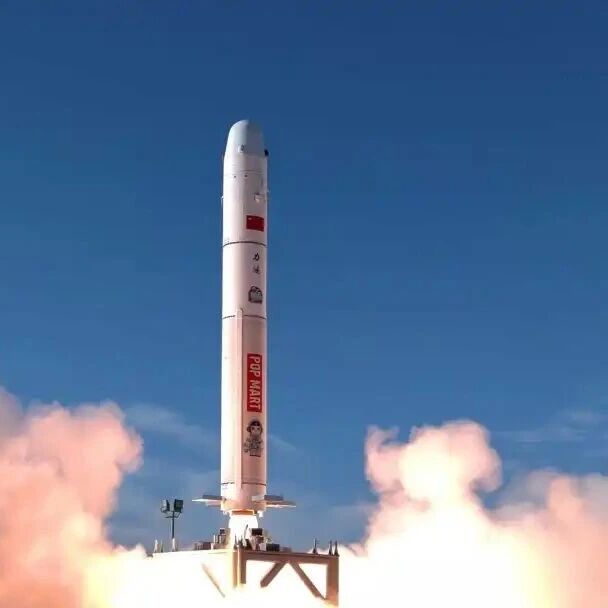
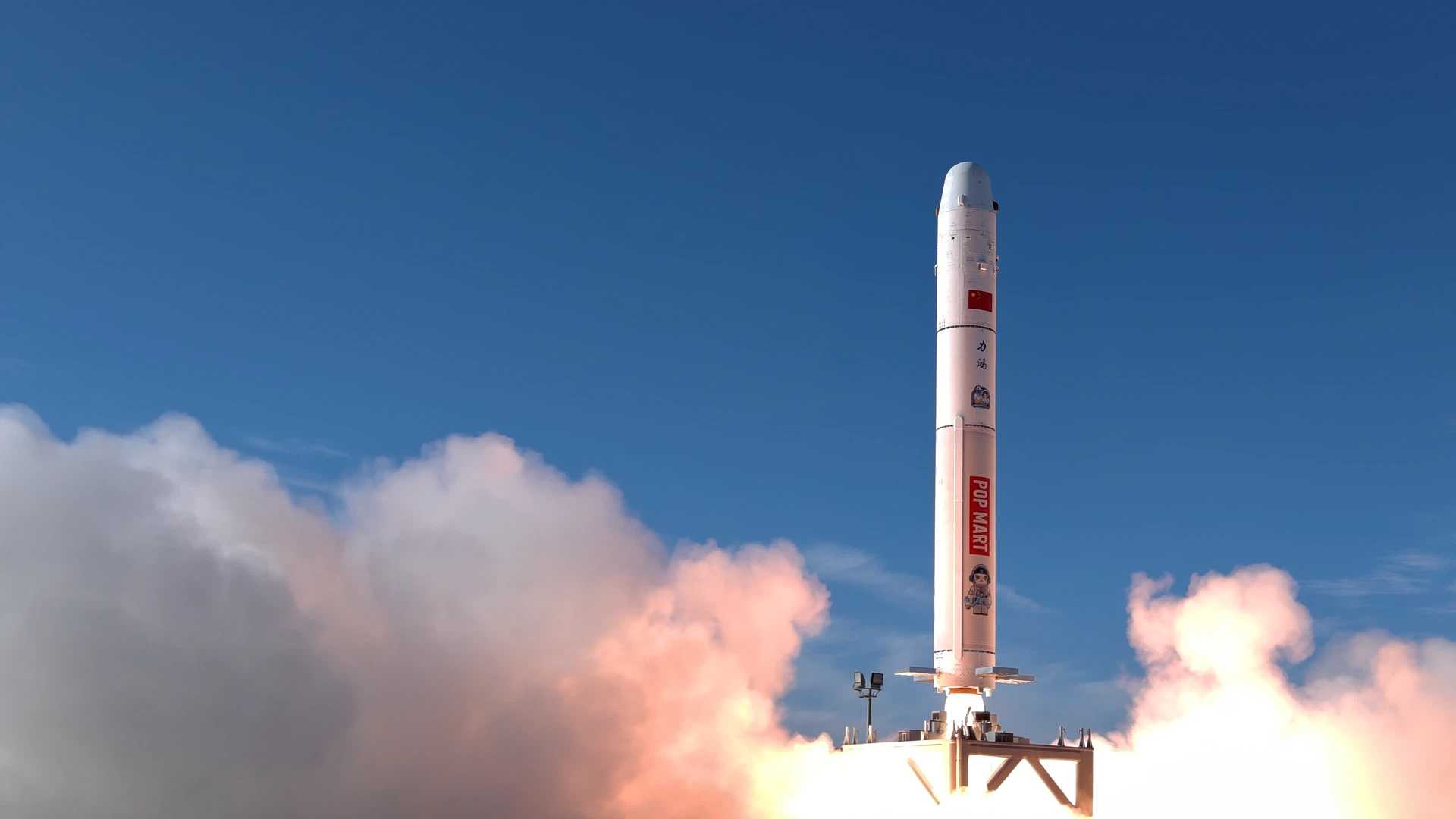
Group 1 - The collaboration between China Aerospace Technology Co., Ltd. (中科宇航) and Pop Mart has resulted in the design of a co-branded toy, SPACE MOLLY, which has completed a round trip to space and is now available at the Beijing Pop Mart Park [1] - The toy was delivered on February 5, following the successful suborbital flight test of the Li Hong No. 1 rocket on January 12, where it was the first toy IP to complete a space round trip [1][3] - This cross-industry collaboration is expected to provide important technical references and marketing paradigms for the upcoming development of the Li Hong No. 2 rocket, aimed at public space tourism services [1][3] Group 2 - China Aerospace is the first mixed-ownership rocket enterprise in the country, focusing on the development, production, and launch of medium to large rockets, suborbital scientific experiments, and space tourism [3] - The company has completed its listing counseling work as of January 24, as reported by the China Securities Regulatory Commission [3] - The Li Hong No. 2 rocket is designed to be a fully reusable spacecraft for space tourism, capable of over 30 flights, and will support major strategic projects such as manned lunar landings and deep space exploration [7] Group 3 - The commercial space sector is expected to focus on space tourism as a key emerging business area, with initiatives planned during the 14th Five-Year Plan period to develop space tourism infrastructure and operations [8] - The National Space Administration's action plan for 2025-2027 emphasizes support for commercial space entities in areas such as space resource development, space manufacturing, and space tourism, aiming to innovate business models and develop new industries [8]
普通人离“太空游”还有多远?
Huan Qiu Shi Bao· 2026-01-30 22:38
Core Viewpoint - The development of commercial space tourism in China is gaining momentum, with several companies launching initiatives to make space travel accessible to the general public, including the introduction of the "CYZ1" spacecraft by Beijing ChuanYue Space Technology Co., which aims for its first commercial flight by 2028 [1][2][5]. Group 1: Company Initiatives - The "CYZ1" spacecraft is the first domestically designed reusable manned spacecraft targeting end consumers, with a maximum capacity of 7 passengers and a flight height of up to 220 kilometers [2][5]. - Other companies, such as Beijing Ziwei Yutong Technology Co. and China Aerospace Technology Co., are also developing space tourism projects, with plans for manned flights by 2028 [5][6]. - The "Li Hong 2" spacecraft, developed by China Aerospace Technology Co., is designed for both scientific experiments and space tourism, with a reusability target of at least 30 flights [6]. Group 2: Technical Aspects - The "CYZ1" spacecraft features a unique escape design and a reusable system, with a spacious return cabin of 21 square meters [5]. - Key technologies for successful space tourism include safety redundancy, reliable subsystems, and repeatable verification processes, which are still under development [9]. - The spacecraft's landing system incorporates multiple safety features to ensure that ordinary people can endure the experience [5][9]. Group 3: Market Potential - The global space tourism market is expanding, with a focus on suborbital flights, which have become a hot topic in commercial space endeavors [11]. - Internationally, companies like Virgin Galactic and Blue Origin have established operational space tourism programs, indicating a growing demand for such experiences [12][13]. - The pre-sale price for tickets on the "CYZ1" is set at 3 million RMB, with nearly 20 tickets already pre-sold, reflecting strong market interest [15].

飞越“卡门线”
Qi Lu Wan Bao· 2026-01-30 18:24
Core Insights - The article discusses the rapid development of commercial space tourism in China, particularly focusing on suborbital flights as a new opportunity for the public to experience space travel [3][5][10] - Beijing Chuangyue Space Technology Co., Ltd. announced its "Chuangyue No. 1" suborbital flight plan, marking a significant step in China's commercial space tourism [3][5] - The article highlights the competitive landscape of suborbital flight providers in China, including the "Chuangyue No. 1" and the "Lihong No. 2" from China Aerospace Science and Technology Corporation [5][6] Suborbital Flight Experience - Suborbital flight involves reaching the edge of space, approximately 100 kilometers high, with a total journey time of about 2.5 hours, including a core experience of around 12 minutes in space [3][4] - Passengers will experience 3-4G of overload during ascent and a 3-6 minute period of weightlessness after crossing the Kármán line, providing a unique sensation of floating [4][6] - The flight experience is enhanced by specially designed windows that offer a 45-degree wide view while filtering harmful radiation [4] Key Players in the Market - "Chuangyue No. 1" is a focal point in the market, weighing 8 tons with a maximum diameter of 5 meters, and aims for a commercial launch in 2028 with a ticket price of approximately 3 million yuan [5][6] - The "Lihong No. 2" is another significant player, designed for both tourism and scientific experiments, with a maximum flight height of 108 kilometers and a capacity for 7 passengers [6][8] - Other companies, such as Deep Blue Aerospace, are also entering the commercial space market, with plans for suborbital flight ticket sales starting in 2024 [6][7] Cost Reduction and Market Growth - The article notes that the ticket prices for suborbital flights are currently in the hundreds of thousands of yuan range but are expected to decrease to tens of thousands of yuan due to technological advancements and policy support [7][8] - The use of reusable spacecraft can potentially reduce launch costs by over 70%, making space travel more accessible [7][8] - The establishment of the Commercial Space Administration in November 2025 is expected to further support the growth of the commercial space industry in China [7][8] Future Developments - The article mentions that the development of orbital-class commercial spacecraft is on the agenda, aiming to allow tourists to stay in space for several days and participate in scientific experiments [10][11] - The long-term vision of Beijing Chuangyue includes plans for a space hotel and lunar orbit tourism by 2038, with a goal to reduce ticket prices to around 300,000 yuan [11][12] - The advancements in space technology are expected to extend beyond tourism, impacting various industries such as materials science and biotechnology [9][10]

多枚可重复使用火箭今年有望首飞
Zheng Quan Ri Bao· 2026-01-29 17:29
Core Viewpoint - The Chinese commercial rocket industry is poised for significant advancements in reusable rocket technology, with multiple launches and recovery attempts expected in 2026, marking a critical year for the sector [1][4]. Group 1: Company Developments - China Aerospace Science and Technology Corporation (CASC) emphasizes the importance of 2026 as a foundational year for the commercial rocket sector, focusing on resource integration and successful launches and recoveries [1]. - The successful launch of the Zhuque-3 rocket by private company Landspace and the Long March 12 rocket by CASC highlights the collaborative efforts between state-owned and private enterprises in advancing reusable rocket technology [2][3]. - The Long March 12 rocket, measuring approximately 70.4 meters in length and weighing about 437 tons, aims for "first-stage reuse" as a core feature, although it did not achieve the recovery goal during its recent flight [2]. Group 2: Industry Trends - The collaboration between state-owned and private enterprises is fostering a strong synergy in the development of reusable rockets, combining the technical expertise of state firms with the agility of private companies [3]. - The anticipated launches of multiple domestic reusable rockets, including the Hyperbola-3 and Xingyun-1, are expected to occur in 2026, further pushing the boundaries of China's capabilities in this field [4]. - The breakthrough in reusable rocket technology is seen as a key factor in reducing launch costs, which could lead to new opportunities in satellite networking and space infrastructure [5]. Group 3: Future Opportunities - The successful recovery of reusable rockets is expected to open up new avenues in the commercial space sector, with companies actively preparing for developments such as space tourism [5][6]. - The Lihong-2 vehicle is set to conduct a 100-kilometer recovery technology verification in 2026, aiming to significantly lower launch costs and validate recovery technologies [6]. - Ongoing research and development in commercial space technology will require substantial investment and collaboration among government, local authorities, and private capital to achieve breakthroughs in core technologies [6].

现场直击!北京商业航天展来了!民营商业航天公司集中展示
Zhong Guo Ji Jin Bao· 2026-01-25 23:43
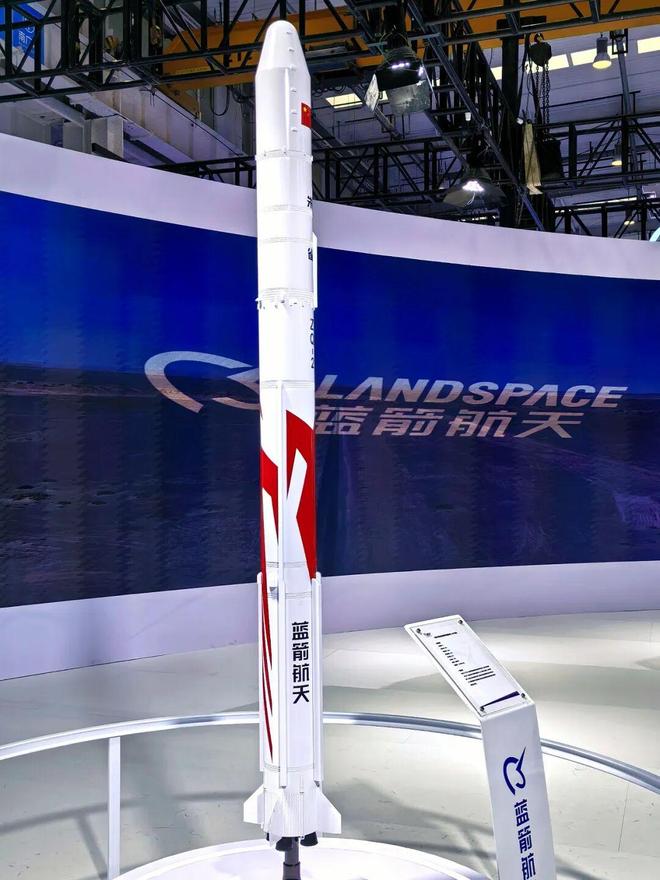
Core Viewpoint - The 2026 Beijing International Commercial Aerospace Exhibition showcased leading private commercial aerospace companies, highlighting advancements in reusable rocket technology and satellite communication capabilities in China [1][2]. Group 1: Company Developments - Blue Arrow Aerospace presented the world's first continuously successful liquid oxygen-methane rocket, the Zhuque-2, and the Zhuque-3 model, which has completed China's first reusable rocket orbital launch verification [2][3]. - Galaxy Aerospace showcased its flexible solar wing technology and the Lingxi-03 satellite model, which is designed for mobile direct connection, aiming to compete with SpaceX's Starlink [2][3]. - Zhongke Aerospace displayed its reusable spacecraft, the Lihong-2, which is intended for space tourism, indicating advancements in safe travel between Earth and space [3][6]. Group 2: Market Trends - The global commercial aerospace IPO market is accelerating, with significant advancements in satellite manufacturing and rocket launch capabilities led by companies like SpaceX and Blue Origin [4][5]. - In the U.S., Rocket Lab, which went public in 2021, reported a revenue of $436 million in 2024, marking a 78% year-over-year increase, with a current market valuation of $47.4 billion [5][6]. - Blue Arrow Aerospace is progressing rapidly towards its IPO, having entered the "inquired" stage as of January 22, 2026, with its application for the Science and Technology Innovation Board accepted on December 31, 2025 [6].
人气爆表!现场直击!北京商业航天展来了
Zhong Guo Ji Jin Bao· 2026-01-25 15:00
Group 1 - The 2026 Beijing International Commercial Aerospace Exhibition was held from January 23 to January 25, focusing on "gathering global resources to promote commercial aerospace" [1] - Major private commercial aerospace companies such as Blue Arrow Aerospace, Galaxy Aerospace, and others showcased their technologies at the exhibition, attracting significant public interest [1][2] - Blue Arrow Aerospace's IPO is in the "inquiry" stage, while other companies like Zhongke Aerospace and Galaxy Aerospace are in the IPO counseling phase [1][12] Group 2 - Blue Arrow Aerospace presented the world's first continuously successfully launched liquid oxygen-methane rocket, the Zhuque-2, and the Zhuque-3 model, which has completed China's first reusable rocket orbital launch verification [2] - From 2023 to 2025, Blue Arrow Aerospace plans to achieve four consecutive successful launches of the Zhuque-2 and its improved version, marking significant advancements in reusable rocket technology [2] - Galaxy Aerospace showcased its flexible solar wing technology and a mobile direct-connect broadband communication satellite, aiming to compete with Starlink in the mobile direct-connect satellite technology [4] Group 3 - Zhongke Aerospace's "Lihong-2" reusable spacecraft was displayed, which is designed for space tourism, indicating advancements in safe travel between Earth and space [6] - Star River Power presented its "Zhishenxing" series of medium-sized reusable liquid launch vehicles and "Gushenxing" series of small solid launch vehicle models [6] - Zhongke Xingtou is planning to launch related satellites this year as part of its commercial satellite constellation strategy [7] Group 4 - The global commercial aerospace IPO market is accelerating, with the U.S. leading in satellite manufacturing and rocket launch capabilities [9] - SpaceX, founded in 2002, is a leader in commercial aerospace, with plans for an IPO by July 2026, and a secondary market valuation reaching $800 billion by December 2025 [9] - Rocket Lab, listed in 2021, reported a revenue of $436 million in 2024, with a significant portion from its space systems business, and its stock has seen a price increase of over 25 times since its IPO [10][12]
人气爆表!现场直击!北京商业航天展来了
中国基金报· 2026-01-25 14:52
Core Viewpoint - The article highlights the significant advancements and developments in China's commercial space industry, particularly focusing on the participation of leading private companies at the Beijing International Commercial Space Exhibition, showcasing their innovative technologies and upcoming IPOs [2][13]. Group 1: Company Developments - Blue Arrow Aerospace showcased the world's first continuously successful liquid oxygen-methane rocket, the Zhuque-2, and the Zhuque-3 model, which has completed China's first reusable rocket orbital launch verification [4]. - Galaxy Aerospace presented its flexible solar wing technology and the Lingxi-03 satellite model, aiming to enhance mobile direct connection capabilities with low-orbit broadband satellites [6]. - Zhongke Aerospace displayed its reusable spacecraft, the Lihong-2, which is designed for space tourism, indicating advancements in safe travel between Earth and space [8]. - Star River Power exhibited its "Zhishenxing" series of medium-sized reusable liquid launch vehicles and "Gushenxing" series of small solid launch vehicle models [8]. Group 2: Market Trends and IPOs - The article notes that two U.S. commercial space companies are already listed, with Rocket Lab's market value at $47.4 billion (approximately 330 billion RMB) and SpaceX expected to go public in 2026 [2][12]. - In China, Blue Arrow Aerospace's IPO is in the "inquiry" stage, while Zhongke Aerospace has completed IPO counseling, and other companies like Tianbing Technology and Star River Power are also in the IPO counseling phase [13][15]. - The article emphasizes that the development of reusable technology and future market potential are critical factors influencing the growth of China's commercial space sector [15].