
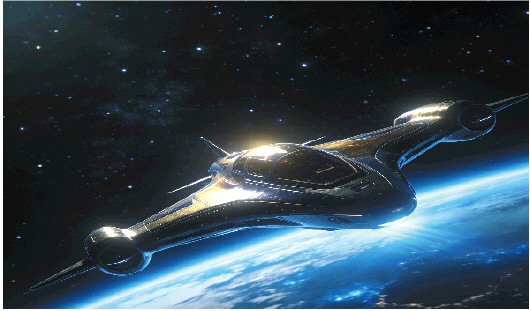
穿越者壹号

Search documents
准备好 两年后我们太空旅游
Xin Lang Cai Jing· 2026-02-07 06:20
Core Viewpoint - The development of commercial space tourism in China is advancing, with the first batch of ordinary tourists expected to experience space travel by 2028 through the "Chuan Yue" spacecraft, which has begun ticket pre-sales [1] Group 1: Space Tourism Forms - Space tourism currently includes three main forms: suborbital, orbital, and deep space tourism [1] - Suborbital tourism allows passengers to experience weightlessness and view the Earth from about 100 kilometers above, with companies like Virgin Galactic and Blue Origin leading in this area [2] - Orbital tourism involves longer stays in low Earth orbit, with SpaceX conducting missions that include commercial spacewalks [2][3] Group 2: Technical Challenges - Key technical challenges for space tourism include reliable launch systems, safety escape mechanisms, life support systems, and reusability of spacecraft [4] - Successful implementation of these technologies is crucial for the planned 2028 manned flights by domestic companies [5] - Internationally, companies like Virgin Galactic and Blue Origin have transitioned from unmanned to manned flights in 3 to 5 years, but uncertainties remain [4] Group 3: Domestic Developments - "Chuan Yue" has completed the overall scheme verification for a reusable suborbital spacecraft and is set to conduct critical technology validations by 2026 [5] - Other domestic companies, such as Ziwei Technology and Zhongke Aerospace, are also making progress in suborbital flight tests and technology verification [6] Group 4: Requirements for Participation - Participants in suborbital flights need to meet certain health criteria, including the ability to withstand 3 to 4 Gs of overload and short-term weightlessness [7] - The cost of space tourism remains high, with ticket prices starting at 3 million RMB for "Chuan Yue" and exceeding 50 million USD for orbital flights [7] Group 5: Future Price Predictions - The price of space tourism is expected to decrease over the next 20 years, potentially reaching 50,000 to 100,000 RMB as the industry matures and scales [8]
“太空游”启航,首航票价300万元
Shen Zhen Shang Bao· 2026-02-05 23:01
Core Viewpoint - The commercial space tourism market is rapidly developing, with companies like Beijing Chuan Yue Zhe and others planning to launch suborbital flights by 2028, targeting high-net-worth individuals with ticket prices around 3 million yuan [1][5]. Group 1: Company Developments - Beijing Chuan Yue Zhe has unveiled its commercial manned spacecraft "Chuan Yue Zhe No. 1" and announced its first batch of 11 space tourists, including notable figures [1]. - The company has pre-sold nearly 20 tickets for its planned suborbital flights, which are set to begin in 2028 [1]. - Other domestic companies such as Ziwei Technology and Zhongke Aerospace are also focusing on the suborbital travel market, aiming for the same 2028 target [3]. Group 2: Market Structure - The global space tourism market has established three main product forms: suborbital tourism, orbital tourism, and deep space tourism, each with distinct technical requirements and pricing [2]. - Suborbital tourism is currently the most commercially viable option, allowing passengers to experience a few minutes of weightlessness without entering orbit [2]. - Orbital tourism, which involves longer stays in space, is currently only offered by SpaceX, with ticket prices reaching approximately 55 million yuan [3]. Group 3: Competitive Landscape - Chinese commercial space companies are engaged in a comprehensive competition involving technology, capital, and supply chains, with 2028 as a critical milestone [4]. - Different technological approaches are being pursued, with Zhongke Aerospace focusing on integrated rocket and spacecraft systems, while Chuan Yue Zhe is adopting a model that separates spacecraft and rocket functions [4]. - Companies are also exploring various commercialization strategies, such as ticket pre-sales and technology reuse to lower costs [5]. Group 4: Consumer Considerations - Space tourism remains a high-end consumer product, with significant physiological and economic barriers for the average person [6]. - The physical requirements for suborbital flights are less stringent than for professional astronauts, but participants still need to undergo training [6]. - The current pricing structure is primarily aimed at wealthy individuals, but advancements in technology may eventually lead to lower costs and broader accessibility [6].

“太空游”启航 首航票价300万元
Shen Zhen Shang Bao· 2026-02-05 17:57
Core Insights - Beijing ChuanYueZhe Manned Space Technology Co., Ltd. (referred to as "ChuanYueZhe") held a global press conference for space tourism, showcasing its commercial manned spacecraft "ChuanYueZhe No. 1" and announcing the first batch of 11 space tourists, including notable figures [1] - The company plans to achieve commercial suborbital manned flights by 2028, with ticket prices set at 3 million yuan each, and has already pre-sold nearly 20 tickets [1] - Other domestic commercial space companies, such as Ziwei Technology and China Aerospace Science and Technology Corporation, are also targeting 2028 as a key milestone for suborbital travel [1] Suborbital Tourism Market - The global space tourism market has developed three distinct product forms: suborbital tourism, orbital tourism, and deep space tourism, each differing in technical barriers, experience, and pricing [2] - Suborbital tourism is the most commercially viable form, allowing tourists to experience a few minutes of weightlessness and view the Earth from the edge of space, with a flight duration of only several minutes [2] - Internationally, companies like Virgin Galactic and Blue Origin are leading in suborbital tourism, with ticket prices ranging from approximately $450,000 to over $1.5 million [2] Domestic Competition - Domestic companies like ChuanYueZhe and Ziwei Technology are focusing on suborbital tourism, aiming for manned flights by 2028 [3] - The orbital tourism segment, requiring advanced technology to achieve first cosmic velocity, is currently dominated by SpaceX, with ticket prices reaching $55 million [3] - Deep space tourism remains in the planning stages, with no commercial operations yet, but companies like SpaceX are developing technologies for future missions [3] Industry Dynamics - Chinese commercial space enterprises are engaged in a comprehensive competition across technology, capital, and supply chains, with 2028 as a pivotal year [4] - Different technical paths are emerging, with companies like China Aerospace Science and Technology Corporation focusing on integrated rocket and spacecraft systems, while ChuanYueZhe emphasizes optimizing the spacecraft experience [4] - The commercialization process is advancing through various strategies, including ticket pre-sales and cost reduction through technology reuse [4] Infrastructure Development - The establishment of commercial space launch facilities and recovery bases is crucial for the industry's growth, with Hainan's commercial space launch site already operational [5] - ChuanYueZhe is developing a manned environment testing base to simulate space conditions, complementing national efforts to create a space tourism operational system [5] Market Accessibility - Space tourism remains a high-end consumer product, with significant physiological and economic barriers for the average person [6] - The physical requirements for suborbital flights are less stringent than for professional astronauts, but training is still necessary [7] - The breakthrough in pricing will depend on technological advancements and economies of scale, with current ticket prices being prohibitive for most [7]
飞越“卡门线”
Qi Lu Wan Bao· 2026-01-30 18:24
Core Insights - The article discusses the rapid development of commercial space tourism in China, particularly focusing on suborbital flights as a new opportunity for the public to experience space travel [3][5][10] - Beijing Chuangyue Space Technology Co., Ltd. announced its "Chuangyue No. 1" suborbital flight plan, marking a significant step in China's commercial space tourism [3][5] - The article highlights the competitive landscape of suborbital flight providers in China, including the "Chuangyue No. 1" and the "Lihong No. 2" from China Aerospace Science and Technology Corporation [5][6] Suborbital Flight Experience - Suborbital flight involves reaching the edge of space, approximately 100 kilometers high, with a total journey time of about 2.5 hours, including a core experience of around 12 minutes in space [3][4] - Passengers will experience 3-4G of overload during ascent and a 3-6 minute period of weightlessness after crossing the Kármán line, providing a unique sensation of floating [4][6] - The flight experience is enhanced by specially designed windows that offer a 45-degree wide view while filtering harmful radiation [4] Key Players in the Market - "Chuangyue No. 1" is a focal point in the market, weighing 8 tons with a maximum diameter of 5 meters, and aims for a commercial launch in 2028 with a ticket price of approximately 3 million yuan [5][6] - The "Lihong No. 2" is another significant player, designed for both tourism and scientific experiments, with a maximum flight height of 108 kilometers and a capacity for 7 passengers [6][8] - Other companies, such as Deep Blue Aerospace, are also entering the commercial space market, with plans for suborbital flight ticket sales starting in 2024 [6][7] Cost Reduction and Market Growth - The article notes that the ticket prices for suborbital flights are currently in the hundreds of thousands of yuan range but are expected to decrease to tens of thousands of yuan due to technological advancements and policy support [7][8] - The use of reusable spacecraft can potentially reduce launch costs by over 70%, making space travel more accessible [7][8] - The establishment of the Commercial Space Administration in November 2025 is expected to further support the growth of the commercial space industry in China [7][8] Future Developments - The article mentions that the development of orbital-class commercial spacecraft is on the agenda, aiming to allow tourists to stay in space for several days and participate in scientific experiments [10][11] - The long-term vision of Beijing Chuangyue includes plans for a space hotel and lunar orbit tourism by 2038, with a goal to reduce ticket prices to around 300,000 yuan [11][12] - The advancements in space technology are expected to extend beyond tourism, impacting various industries such as materials science and biotechnology [9][10]

在中国,一个普通人上太空要花多少钱?
Xin Lang Cai Jing· 2026-01-27 12:25
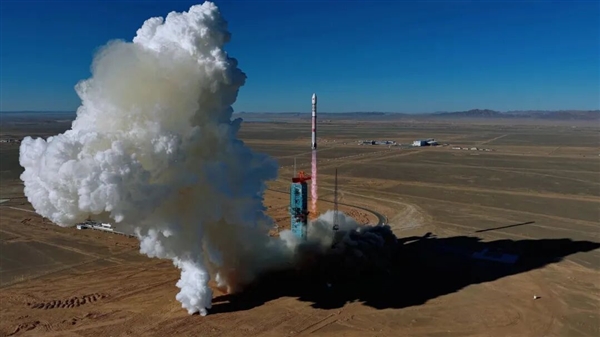
Core Viewpoint - The Chinese commercial space industry is experiencing a significant surge, with substantial capital inflow and a collective push towards IPOs among various companies, marking a new era for the sector [20][25]. Group 1: Industry Developments - The successful launch of the reusable Zhuque-3 rocket by private company Blue Arrow Aerospace has garnered widespread attention, marking a milestone in China's commercial space endeavors [21][25]. - Numerous commercial space companies are preparing for their inaugural flights, showcasing a vibrant ecosystem in the industry [21][25]. - The public's growing interest in space exploration is being fueled by policy support and capital market openings, allowing private companies to finally step onto the IPO starting line [7][25]. Group 2: IPO Landscape - At least ten commercial space enterprises have initiated the IPO process, with five leading companies—Blue Arrow Aerospace, Star Glory, China Aerospace Science and Technology Corporation, Star River Power, and Tianbing Technology—forming a competitive landscape [8][26]. - Blue Arrow Aerospace is ahead in the IPO race, having its application accepted by the Shanghai Stock Exchange, aiming to raise up to 7.5 billion yuan, with significant investments planned for reusable rocket technology [8][26]. - Other companies like China Aerospace Science and Technology Corporation and Star Glory are also in various stages of the IPO process, focusing on developing reusable rocket technologies [10][28]. Group 3: Historical Context - The journey of leading companies in the commercial space sector has been challenging, with initial financing struggles and skepticism from investors [29][31]. - A turning point for Blue Arrow Aerospace came with significant investments from industry players, leading to breakthroughs in technology and favorable policy changes that opened the door for IPOs [31][32]. Group 4: Challenges Ahead - The transition from successful trials to large-scale services in commercial space requires overcoming challenges related to cost control, the maturity of reusable technology, and the establishment of a commercial ecosystem [14][32]. - Current launch costs in China range from 50,000 to 100,000 yuan per kilogram, significantly higher than the estimated costs of SpaceX, highlighting the need for advancements in reusable technology to reduce costs [15][33]. - Achieving cost-effective reusable technology is critical for the industry, with predictions suggesting that costs could drop significantly with further technological advancements [34][36]. Group 5: Financial and Ecosystem Support - A robust financial support system is being established, with major banks offering tailored financing solutions for the commercial space sector [35]. - The formation of a comprehensive industrial ecosystem, particularly in regions like Beijing, is facilitating collaboration and reducing costs, which is essential for the industry's growth [34][35]. - The industry is exploring innovative business models to enhance market penetration and profitability, moving beyond traditional launch services to integrated solutions [36].
前瞻全球产业早报:我国人工智能专利有效量居全球前列
Qian Zhan Wang· 2026-01-26 11:19
Group 1: Space Industry Developments - Beijing Chuanweizhe Manned Space Technology Co., Ltd. announced the pre-sale of tickets for its commercial manned spacecraft "Chuanweizhe No. 1" at 3 million yuan each, with over 20 paid tourists already signed up [2] - Elon Musk stated at the World Economic Forum that SpaceX aims to achieve full reusability of its "Starship" technology this year, which could reduce the cost of accessing space by 100 times [3] - China's first complete metal component was manufactured in microgravity conditions using laser additive manufacturing technology aboard the "Lihong No. 1" spacecraft [10] Group 2: Economic and Financial Updates - Shandong Province's GDP surpassed 10 trillion yuan, reaching 10,319.7 billion yuan in 2025, marking a 5.5% increase from the previous year [5] - China Construction Bank (Asia) plans to hire 100 wealth management employees in Hong Kong over the next one to two years, anticipating a 97% increase in private banking clients and a 25% growth in asset management scale by 2025 [6] Group 3: Robotics and AI Innovations - Yushun announced that it expects to ship over 5,500 humanoid robots in 2025, with more than 6,500 units expected to be mass-produced [4] - China's effective number of AI patents ranks among the highest globally, with a total of 2.292 million high-value invention patents reported [4] Group 4: Retail and Consumer Trends - IKEA launched a "seconds delivery" service on JD.com, initially available in 13 stores across nine cities including Beijing and Shanghai [8] - JD's Qixian Xiaochu has expanded rapidly, opening new stores in five cities including Beijing and Shenzhen [9] Group 5: Automotive Industry Insights - Reports indicate that Li Auto plans to close some underperforming retail centers, currently in the evaluation stage [7] - Tesla's market share in California dropped to 9.9% in 2025, down from 11.6% in 2024 [16][17]

300万 送一个普通人“上天”
Feng Huang Wang· 2026-01-26 06:47
Core Viewpoint - The commercial space industry in China is experiencing a significant transformation, with private companies gaining momentum and preparing for IPOs, marking a new era of opportunities and challenges in the sector [5][24]. Group 1: Industry Developments - The successful launch of the reusable Zhuque-3 rocket by Blue Arrow Aerospace has garnered widespread attention, marking a milestone in China's commercial space endeavors [1]. - Numerous commercial space companies are actively preparing for their maiden flights, indicating a surge in industry activity [3]. - The commercial space sector is becoming more accessible to the public, with companies like Chuanqiu offering paid space tourism experiences [3]. Group 2: IPO Landscape - At least ten commercial space companies have initiated the IPO process, with five leading firms, including Blue Arrow Aerospace and Star Glory, particularly noteworthy [6][8]. - Blue Arrow Aerospace is ahead in the IPO race, having submitted its application to the Shanghai Stock Exchange, aiming to raise up to 7.5 billion yuan for technology and capacity enhancements [6][12]. - Other companies, such as Zhongke Aerospace and Star Glory, are also in various stages of the IPO process, focusing on reusable rocket technologies [8][9]. Group 3: Historical Context - The journey of leading companies in the commercial space sector has been challenging, with initial skepticism about their viability and funding difficulties [12][13]. - Significant investments from industry players like Goldwind Technology have played a crucial role in supporting these companies during their formative years [15]. - The turning point for the industry came with technological breakthroughs and favorable policies, allowing companies to pursue public listings [17][24]. Group 4: Challenges Ahead - The transition from successful testing to large-scale commercial services presents significant challenges, including cost control and the maturity of reusable technology [18][21]. - A robust industrial ecosystem and financial support system are essential to address these challenges and facilitate growth [19][22]. - The industry must innovate its business models to ensure profitability and market penetration, moving beyond traditional launch services [23][24].
国证国际港股晨报-20260126
国投证券(香港)· 2026-01-26 05:48
Group 1: Market Overview - The Hong Kong stock market continued its recovery trend with all three major indices posting slight gains: Hang Seng Index up 0.45%, Hang Seng China Enterprises Index up 0.51%, and Hang Seng Tech Index up 0.62% [2] - Market hotspots are driven by "frontier technology" and "safe-haven assets," with concentrated buying interest in specific sectors [2] - The total trading volume was approximately HKD 240.9 billion, showing a slight decline compared to the previous week [2] Group 2: Sector Performance - The commercial aerospace and renewable energy sectors gained attention due to the public display of China's first commercial manned spacecraft and support from Elon Musk for "space photovoltaics" [3] - JunDa Co. (2865.HK) surged over 51%, leading the market concept stocks, while the photovoltaic industry chain also saw significant gains with Xinyi Solar (968.HK) and Flat Glass Group (6865.HK) recording notable increases [3] - Geopolitical risks have driven gold prices above the historical threshold of USD 5,000, with continued inflows into precious metals indicating strong demand for safe-haven assets [3] Group 3: Company Analysis - Anta Sports (2020.HK) - Anta's main brand reported a low single-digit decline in retail sales for Q4 2025, consistent with fluctuations in the consumer environment and delayed winter and Spring Festival consumption [7] - The inventory-to-sales ratio slightly exceeded 5, with offline discounts at 71% and online discounts deepening to 50% [7] - Anta plans to increase investment in brand building in anticipation of the upcoming Milan Winter Olympics [7] Group 4: Company Analysis - FILA - FILA recorded a mid-single-digit growth in retail sales for Q4 2025, showing stronger resilience against a backdrop of consumer fatigue [8] - E-commerce maintained steady growth, achieving leading performance on platforms like Tmall and Douyin without significant discounting during major sales events [8] - The inventory-to-sales ratio remained healthy, with offline discounts at 73% and online at 55% [8] Group 5: Other Brands - Other brands reported a year-on-year sales growth of 35-40% for Q4 2025, with an annual growth of 45-50% [8] - Descente became the third brand within the group to surpass a retail scale of HKD 10 billion, achieving 25-30% growth in Q4 [8] - The focus for future growth will shift from rapid expansion to sustainable development, with a strong emphasis on brand strength and product performance [8] Group 6: Investment Recommendations - Given the uncertainties in the consumer environment, the EPS estimates for 2025-2027 have been adjusted to HKD 4.65/5.00/5.45 [8] - Based on industry average valuations and considering the premium for leading brands, a target price of HKD 110 is set for 2026, maintaining a "Buy" rating [8]
太空旅游离大众还有多远?中企开启“太空船票”预售
Ke Ji Ri Bao· 2026-01-26 01:17
Core Viewpoint - The commercial space tourism industry is evolving from concept to reality, with companies like Beijing Chuan Yue Zhe and others planning to offer manned space flights by 2028, as evidenced by the recent global launch event for the "Chuan Yue Zhe No. 1" spacecraft [1] Group 1: Forms of Space Tourism - Current international space tourism activities are categorized into three forms: suborbital, orbital, and deep space tourism [2] - Suborbital tourism allows passengers to experience a brief weightlessness at altitudes around 100 kilometers, with companies like Virgin Galactic and Blue Origin leading in this area [2] - Orbital tourism involves longer stays in low Earth orbit, with SpaceX conducting missions that include commercial spacewalks [2][3] Group 2: Technical Challenges for Space Tourism - Several domestic commercial space companies are targeting the space tourism sector, with Chuan Yue Zhe having completed key design and testing phases for its reusable suborbital spacecraft [4] - The company plans to conduct critical technology validations by 2026 and aims for manned flights in 2028 [4] - Other companies like Ziwei Technology and Zhongke Aerospace are also making progress in suborbital flight tests and technology validations [4] Group 3: Requirements for Ordinary People to Enter Space - Ordinary individuals do not need to be "superhuman" but must meet certain health criteria, including no severe underlying conditions and the ability to withstand 3 to 4 Gs of force [7] - The primary physiological challenges include the physical overload during launch and re-entry, as well as potential motion sickness in weightlessness [7] - The cost of space tourism remains a significant barrier, with prices for tickets currently exceeding millions, but there is potential for price reductions in the future as the industry matures [8]

科技日报:太空旅游离大众还有多远?
Ke Ji Ri Bao· 2026-01-26 00:42
Core Viewpoint - The commercial space tourism industry is evolving from concept to reality, with companies like Beijing Chuan Yue Zhe and others planning to offer manned space flights by 2028, as evidenced by the recent global launch event for the "Chuan Yue Zhe No. 1" spacecraft [1] Group 1: Forms of Space Tourism - Current international space tourism activities are categorized into three forms: suborbital, orbital, and deep space tourism [2] - Suborbital tourism allows passengers to experience a brief weightlessness at altitudes around 100 kilometers, with companies like Virgin Galactic and Blue Origin leading in this area [2] - Orbital tourism involves flights at altitudes of 200 to 400 kilometers, where passengers can experience long-term weightlessness, exemplified by SpaceX's recent activities [2][3] Group 2: Technical Challenges for Space Tourism - Several domestic commercial space companies are targeting the space tourism sector, with Chuan Yue Zhe having completed the overall scheme verification for its reusable suborbital spacecraft [4] - Key technical challenges include ensuring safety redundancy, high reliability subsystems, and repeatable verification processes, with a focus on critical technologies such as escape systems and life support [5] - The timeline for achieving manned flights by 2028 is contingent on overcoming these technical hurdles and meeting national aerospace standards [5][6] Group 3: Requirements for Ordinary People to Enter Space - Ordinary individuals do not need to possess extraordinary physical capabilities to participate in suborbital flights, but must meet certain health criteria, including the ability to withstand 3 to 4 Gs of force [7] - The primary physiological challenges include managing the physical overload during launch and re-entry, as well as potential motion sickness in weightlessness [7] - Serious underlying health conditions are absolute disqualifiers, while mild chronic conditions may require medical evaluation [7] Group 4: Cost Factors in Space Tourism - Currently, space tourism is primarily accessible to the wealthy, with ticket prices for orbital tourism exceeding $50 million and suborbital flights costing hundreds of thousands [8] - The ticket price for the "Chuan Yue Zhe No. 1" is set at 3 million yuan, indicating the high cost associated with this emerging industry [8] - The expectation is that prices will decrease over the next 20 years as the industry matures and scales, potentially making space tourism a niche but attainable luxury [8]