
轴辐式集散模式

Search documents
甘肃羊肉发成都要在南京“打一头” 诡异快递路线背后 枢纽城市之争暗流涌动
Mei Ri Jing Ji Xin Wen· 2025-12-11 04:57
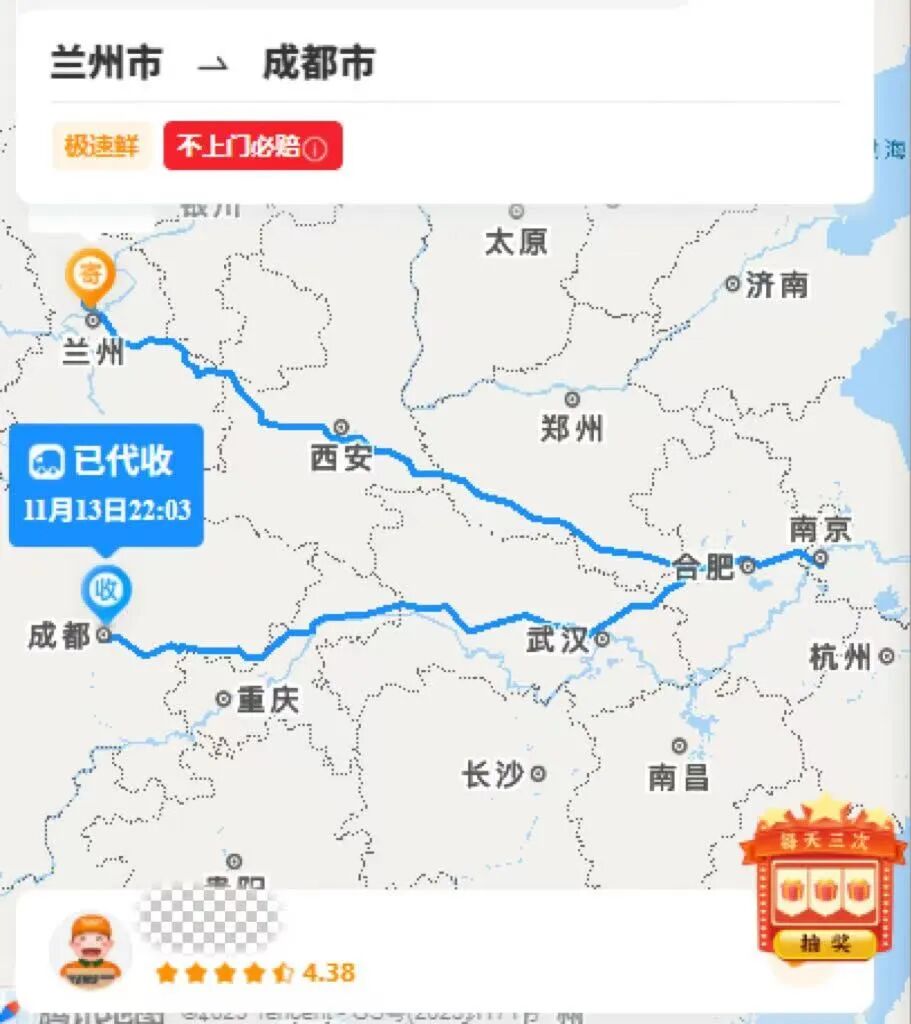
Core Viewpoint - The article discusses the perplexing logistics route taken by a package of lamb from Gansu to Chengdu, which first traveled to Nanjing before reaching its final destination, raising questions about the efficiency and rationale behind such routing in modern logistics [1][2][3]. Group 1: Logistics Operations - The package's journey involved a total distance of over 2900 kilometers, despite the direct distance being only 600 kilometers [1][2]. - The logistics route followed a "Y" shape, indicating a non-linear path that confuses consumers regarding the efficiency of modern logistics systems [2][3]. - The response from logistics companies indicates that this routing is a standard operational procedure, not an error [4]. Group 2: Industry Practices - Many logistics companies, including EMS and SF Express, utilize a hub-and-spoke model, where packages are first sent to a central hub (Nanjing in this case) for sorting before being dispatched to their final destinations [5][8]. - The choice of Nanjing as a central hub dates back to a 2006 agreement, establishing it as a key logistics center in China [5][10]. - This routing strategy is not unique to China Post; other companies like SF Express also employ similar methods for efficiency and cost-effectiveness [5][7]. Group 3: Economic Considerations - The "detour" in logistics is explained as a calculated decision to achieve economies of scale, reducing costs while maintaining service efficiency [8][9]. - The logistics industry operates on a model where the concentration of packages at a hub allows for lower average shipping costs, as demonstrated by the cost comparison of shipping single versus multiple packages [9][10]. - The hub-and-spoke model significantly reduces the number of required direct flight routes, optimizing logistics operations [9][10]. Group 4: Future Outlook - The article suggests that future logistics systems should aim for a more interconnected network to minimize unnecessary detours while balancing cost and efficiency [13]. - The integration of national logistics frameworks with corporate logistics strategies is essential for enhancing operational efficiency [12][13]. - The ultimate goal is to create a smarter logistics system that can dynamically optimize routes based on data, rather than relying on fixed hub-and-spoke models [13][14].
甘肃羊肉发成都要在南京“打一头” 诡异快递路线背后,枢纽城市之争暗流涌动
Mei Ri Jing Ji Xin Wen· 2025-12-09 14:42
Core Viewpoint - The article discusses the perplexing logistics routes taken by express deliveries in China, highlighting a case where a package of lamb from Gansu to Chengdu took an indirect route via Nanjing, raising questions about efficiency and resource allocation in modern logistics [1][2][3]. Group 1: Logistics Operations - The delivery route for the lamb involved a journey of over 2900 kilometers instead of the direct 600 kilometers, illustrating a complex logistics operation that seems counterintuitive to consumers [1][2]. - The logistics process involves packages being routed through major hubs, such as Nanjing, which serves as a central distribution point for express deliveries in China [5][6]. - The "Y" shaped route taken by the package symbolizes the modern logistics challenges where consumers question the efficiency of such operations despite technological advancements [2][3]. Group 2: Economic Considerations - The logistics companies utilize an "axle-radial distribution model" to consolidate packages at central hubs, which helps in achieving economies of scale and reducing costs [6][7]. - The cost of shipping a single package is significantly higher when not consolidated, emphasizing the need for logistics companies to optimize routes for cost efficiency [8][9]. - The logistics industry's approach to routing is a calculated decision balancing cost, efficiency, and network stability, which may appear irrational to consumers but is strategically sound [7][8]. Group 3: Hub Selection and Strategy - Major logistics companies, including China Post and SF Express, have strategically chosen hub locations based on factors like traffic infrastructure, regional economic potential, and government planning [9][10]. - The establishment of logistics hubs in cities like Nanjing and Hubei is part of a broader national strategy to enhance logistics efficiency across the country [11][12]. - The future of logistics in China aims to create a more interconnected and efficient network that minimizes unnecessary detours while maximizing operational efficiency [12][13].


“直飞660公里 却绕行了2800公里” 甘肃羊肉寄到成都 快递为啥绕道南京?
Mei Ri Jing Ji Xin Wen· 2025-12-04 11:53
Core Viewpoint - The article discusses the perplexing logistics route taken by a package of lamb from Lanzhou to Chengdu, which first diverted to Nanjing, highlighting inefficiencies in modern logistics despite advanced technology [1][3]. Group 1: Logistics Operations - The package's journey involved a total distance of approximately 2800 kilometers instead of the direct 660 kilometers, raising questions about the efficiency of logistics operations [1][3]. - The response from EMS indicated that this routing is standard practice, as Nanjing serves as a central hub for their national air network [4][5]. - Many logistics companies, including SF Express, also utilize similar routing strategies, consolidating packages at central hubs before final delivery [5][6]. Group 2: Economic Rationale - The "hub-and-spoke" model is employed to achieve economies of scale and reduce costs, which may appear inefficient to consumers but is a calculated decision from a logistics perspective [7][8]. - The cost of shipping multiple packages together significantly reduces the average cost per item, demonstrating the financial logic behind the routing choices [9][10]. Group 3: Hub Selection and Strategy - Major logistics companies have strategically chosen locations for their hubs based on factors like cargo flow, land costs, and transportation infrastructure, with a focus on new first-tier cities and key economic regions [11][12]. - The government's logistics hub planning aligns with the choices made by companies, creating a supportive environment for efficient logistics operations [13][14]. Group 4: Future Outlook - The integration of national logistics networks with corporate logistics systems is expected to enhance efficiency, allowing for smarter routing decisions that balance cost, speed, and reliability [14].


“直飞660公里,却绕行了2800公里”,甘肃羊肉寄到成都,快递为啥绕道南京?EMS回应,业内:很多快递都这样
Mei Ri Jing Ji Xin Wen· 2025-12-04 11:15
Core Viewpoint - The article discusses the perplexing logistics routes taken by express deliveries in China, highlighting a case where a package from Lanzhou to Chengdu was routed through Nanjing, raising questions about efficiency and resource allocation in modern logistics systems [1][3][5]. Group 1: Logistics Operations - The delivery route taken by the package involved a detour of over 2800 kilometers instead of a direct flight of 660 kilometers, which confuses consumers expecting direct shipping [1][3]. - The response from EMS indicated that the routing through Nanjing is standard procedure, as it serves as a central hub for their national air network [5][6]. - This routing strategy is not unique to China Post; other companies like SF Express also utilize centralized hubs for efficiency, particularly for long-distance deliveries [6][7]. Group 2: Economic Rationale - The "detour" in logistics is explained by the "hub-and-spoke" model, which allows for cost reduction and efficiency through centralized sorting and distribution [7][8]. - The cost of shipping is significantly lower when packages are consolidated; for instance, shipping 100 packages from Lanzhou to Chengdu costs approximately 3200 yuan, averaging 32 yuan per package, compared to 744 yuan for a single package [9]. - The logistics industry operates on a model where timely delivery is prioritized, and as long as packages arrive within the promised timeframe, the routing decisions are deemed optimal from a cost-efficiency perspective [8][9]. Group 3: Hub Selection and Strategy - Major logistics companies have strategically chosen locations for their hubs based on factors like traffic conditions, land costs, and regional economic potential, with a focus on new first-tier cities and key nodes [12][13]. - The establishment of logistics hubs aligns with national planning, as seen in the selection of cities like Nanjing and Changsha, which are part of the national logistics hub framework [15][16]. - The future of logistics aims to create a more interconnected network that minimizes unnecessary detours while optimizing for cost and efficiency, leveraging data-driven decision-making [16][17].
