选举动员

Search documents
特朗普撒下弥天大谎!连续3次喊话中国后,把3亿多美国人当猴耍了
Sou Hu Cai Jing· 2026-02-26 12:53
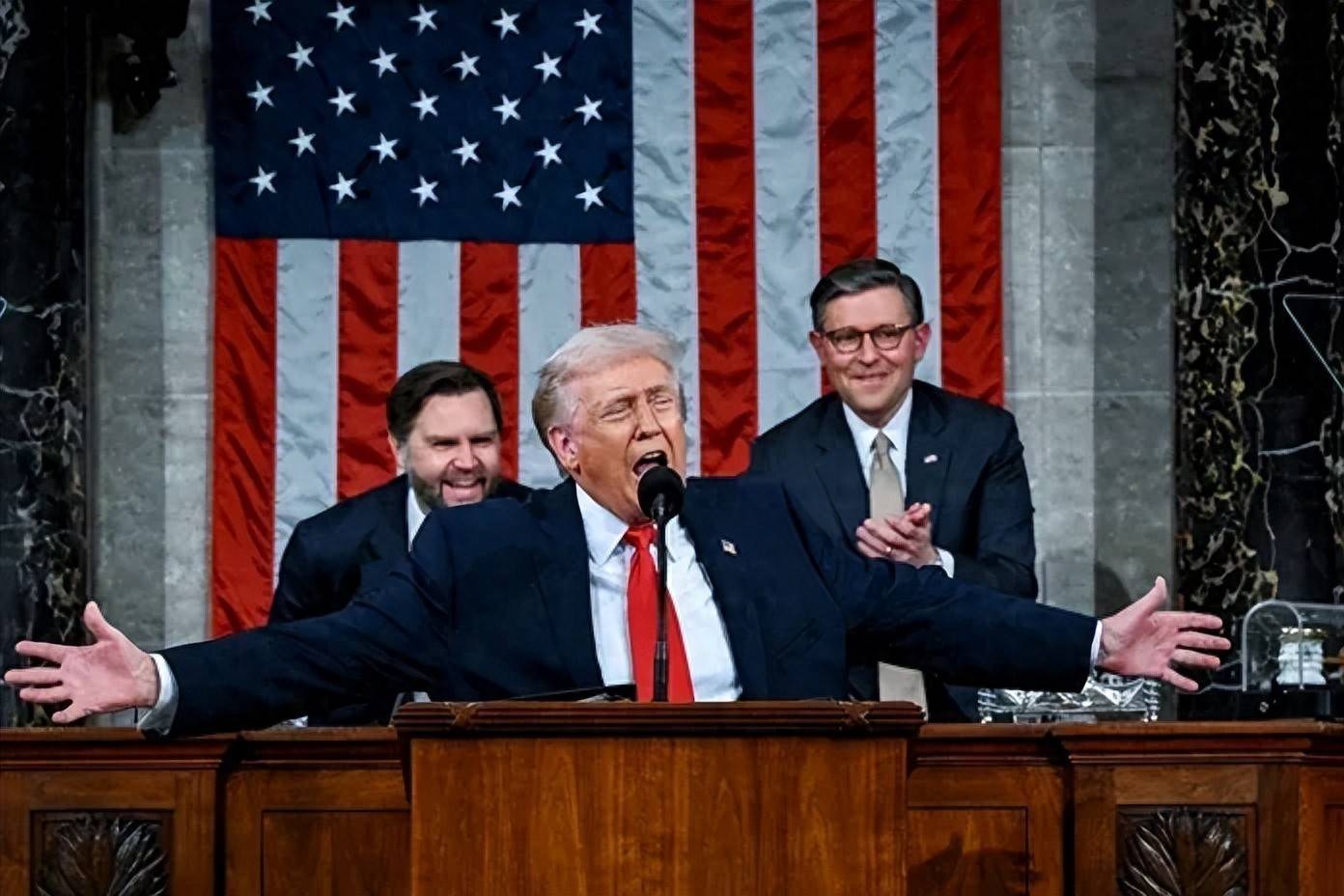
Group 1 - The U.S. Supreme Court's ruling against "tariff equivalence" has weakened the White House's leverage on tariffs, indicating internal divisions within the U.S. government [1][3] - Following the ruling, U.S. officials have made multiple statements urging China to maintain existing trade arrangements, reflecting a desire to stabilize the situation [3][5] - The pressure from allies such as the EU, Brazil, and Japan for tariff reductions complicates the U.S. administration's ability to manage both domestic and international expectations [5][21] Group 2 - Trump's lengthy State of the Union address aimed to project a narrative of American prosperity, despite conflicting economic data showing lackluster growth and persistent inflation [7][9] - The administration's messaging has been characterized by exaggeration, with discrepancies between claimed investment figures and official data, suggesting a strategy to distract from economic realities [9][19] - The avoidance of direct references to China during the address indicates a strategic decision to mitigate risks associated with the recent court ruling and to preserve diplomatic avenues ahead of upcoming negotiations [13][15] Group 3 - The U.S. has specific needs from China, including stable rare earth supplies, management of U.S. debt, and increased purchases of American agricultural and energy products, which are crucial for domestic political narratives [15][17] - The administration's reliance on storytelling to manage both internal and external pressures has become more pronounced following the court ruling, with a focus on maintaining a stable narrative rather than addressing complex details [21][23] - China's approach of maintaining a low profile while observing the U.S. situation allows it to retain strategic advantages, as the U.S. struggles to balance its internal and external pressures [19][24]