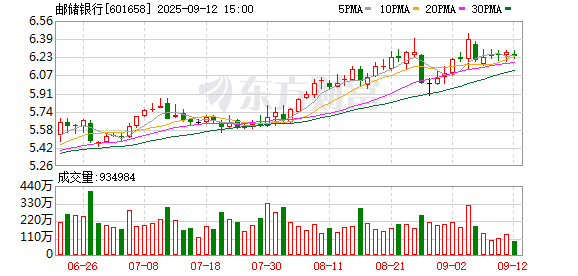
邮银协同

Search documents
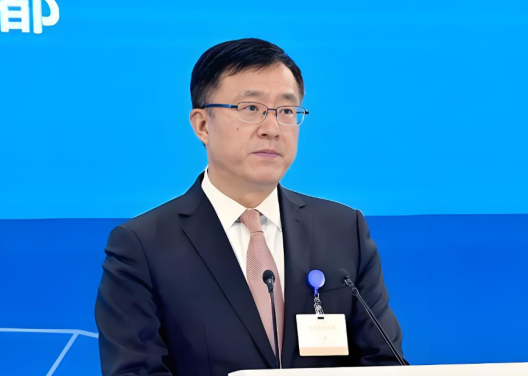
邮政集团副总经理刘建军退休,深耕金融领域三十余载
Xin Lang Cai Jing· 2025-12-24 01:13
Core Viewpoint - The recent leadership changes at China Postal Group, with Lu Wei appointed as Vice President and Liu Jianjun removed from the position, highlight a strategic shift in the company's management as it continues to focus on retail banking and wealth management growth. Group 1: Leadership Changes - Liu Jianjun has been relieved of his duties as Vice President and Party Member of China Postal Group, effective immediately [1] - Lu Wei has been appointed as the new Vice President and Party Member of China Postal Group [1] Group 2: Liu Jianjun's Background - Liu Jianjun, born in August 1965, has extensive experience in state-owned and joint-stock banks, starting his career at China Construction Bank in 1988 [2][4] - He played a significant role in the retail banking transformation at China Merchants Bank, contributing to its reputation as a leader in retail banking [5] Group 3: Postal Savings Bank Performance - Under Liu Jianjun's leadership, Postal Savings Bank reported a retail AUM of 17.89 trillion yuan, a growth of over 7% compared to the previous year [8] - The bank's net income for Q3 reached 767.94 billion yuan, with a year-on-year increase of 1.07% [6] - The bank maintained a low non-performing loan ratio of 0.94%, significantly lower than its peers [6] Group 4: Strategic Focus on Retail Banking - Liu Jianjun emphasized the importance of transforming Postal Savings Bank from a "savings bank" to a "wealth management bank," leveraging its extensive network and customer base [7] - The bank's new organizational structure includes a dedicated wealth management department to enhance its service offerings [7] Group 5: Technological Integration - Liu Jianjun highlighted the role of technology in transforming financial services, advocating for the integration of AI, big data, and cloud computing into banking operations [9] - The bank aims to become a digital ecosystem bank, focusing on innovation and technology-driven financial services [9] Group 6: Support for Technology Enterprises - Postal Savings Bank has developed a comprehensive service strategy for technology enterprises, serving over 100,000 tech firms and achieving a technology loan balance exceeding 940 billion yuan [10] - The bank is committed to promoting inclusive finance, with significant investments in rural and small micro-enterprise loans [11]


谋定而后动 解码邮储银行财富管理的稳健发展体系
Zhong Guo Zheng Quan Bao· 2025-09-12 09:56
Core Viewpoint - China Postal Savings Bank is undergoing a "second upgrade" in retail banking, focusing on wealth management to enhance value and deepen customer engagement, supported by a robust asset base exceeding 18 trillion yuan [2][14]. Wealth Management Strategy - The bank established a wealth management department to enhance its core layout, achieving a personal asset management (AUM) of 17.67 trillion yuan, a 5.87% increase from the previous year [2][14]. - Wealth management has become a crucial link connecting 670 million retail customers, integrating inclusive finance with professional services [2][14]. Intermediate Business Income Growth - The bank's intermediate business income reached 16.918 billion yuan, with a year-on-year growth of 11.59%, outperforming peers [4][5]. - Wealth management-related income, particularly from financial advisory and custody services, saw significant growth, with financial advisory fees increasing by 47.89% [4][5]. High-Value Business Focus - The bank's growth in intermediate business income is driven by high-value sectors such as investment banking and transaction banking, with corporate segment income growing by 42% [5][6]. - The bank's asset quality remains stable, with a non-performing loan ratio of 0.30%, indicating strong credit management [5][6]. Market Opportunities and Growth - The bank capitalized on national policies aimed at boosting consumption and supporting innovation, resulting in a personal loan total of 4.86 trillion yuan, a 1.86% increase [6][7]. - The bank's investment management capabilities have improved, with non-interest income growing by 4.51% [7]. Unique Channel Advantages - The bank's extensive network of nearly 40,000 outlets and a customer base of over 670 million provides a competitive edge in wealth management, enabling precise customer targeting and service delivery [8][9]. - The "self-operated + agency" model creates a strong customer and channel moat, enhancing service capabilities [8][9]. Capital Strength and Efficiency - The bank's capital base was bolstered by a 130 billion yuan injection, raising its core tier one capital adequacy ratio to 10.52% [11][12]. - Cost management initiatives have led to a reduction in agency fees and an improvement in the cost-to-income ratio, allowing for reinvestment in wealth management capabilities [12][13]. Future Directions - The bank is focusing on a lightweight transformation strategy to enhance its non-interest income through improved capabilities rather than relying solely on resources [13][14]. - A clear path for wealth management transformation has been established, emphasizing the importance of customized asset allocation based on customer needs [14].