量子云计算

Search documents
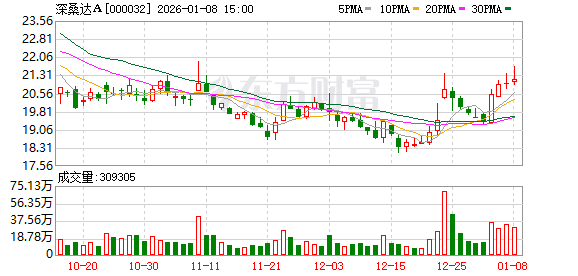
深桑达A:中国电子云公司未从事量子通信及计算业务
Mei Ri Jing Ji Xin Wen· 2026-01-08 09:14
Group 1 - The core viewpoint is that China Electronics Cloud Company does not engage in quantum communication and computing business [2] Group 2 - An investor inquired about the software products and applications related to quantum communication and quantum cloud computing from China Electronics Cloud [2] - The response from Shen Sanda A indicated that there are no such business activities conducted by the company [2]


2025量子互联网展望:探索算网协同新架构的白皮书深度解读
Sou Hu Cai Jing· 2025-08-26 04:27
Core Insights - A comprehensive white paper titled "2025 Quantum Internet and Computing Network Collaborative Architecture" has garnered significant attention, detailing the foundational framework of quantum information technology and its applications [1][2]. Quantum Information Technology - The report outlines three primary application areas of quantum information technology: quantum communication, quantum computing, and quantum precision measurement [1]. - In quantum communication, technologies such as Quantum Key Distribution (QKD), quantum teleportation, and Quantum Secure Direct Communication (QSDC) are elaborated [1]. - The quantum computing section reviews the development history and existing physical platforms like superconductors and ion traps, along with key quantum algorithms such as Shor's and Grover's algorithms [1]. - Quantum precision measurement is highlighted for its ability to surpass standard quantum limits, with applications in quantum clock networks and long-baseline telescopes [1]. Quantum Internet Architecture - The report discusses the multi-stage development of the quantum internet, including trusted relay networks and the evolution of quantum relays to the fourth generation [2]. - It analyzes various protocol stacks for the quantum internet, including the Van Meter and Wehner five-layer models, and introduces packet-switching technology for data transmission [2]. - An initial resource-scarce operational model for the quantum internet is proposed, featuring a centralized control system with user and main networks [2]. Quantum Computing Network Collaboration - The report focuses on three collaborative trends: quantum cloud computing, integration of quantum and supercomputing, and distributed quantum computing [3]. - It emphasizes the necessity of computing network collaboration to meet the unique demands of quantum applications [3]. - Key research directions include resource abstraction and modeling, quantum business modeling, and scheduling framework modeling [3].