量子力学诠释问题

Search documents
当闭上眼,世界还存在吗?量子力学百年终极答案:全靠你“脑补”
3 6 Ke· 2025-12-18 10:00
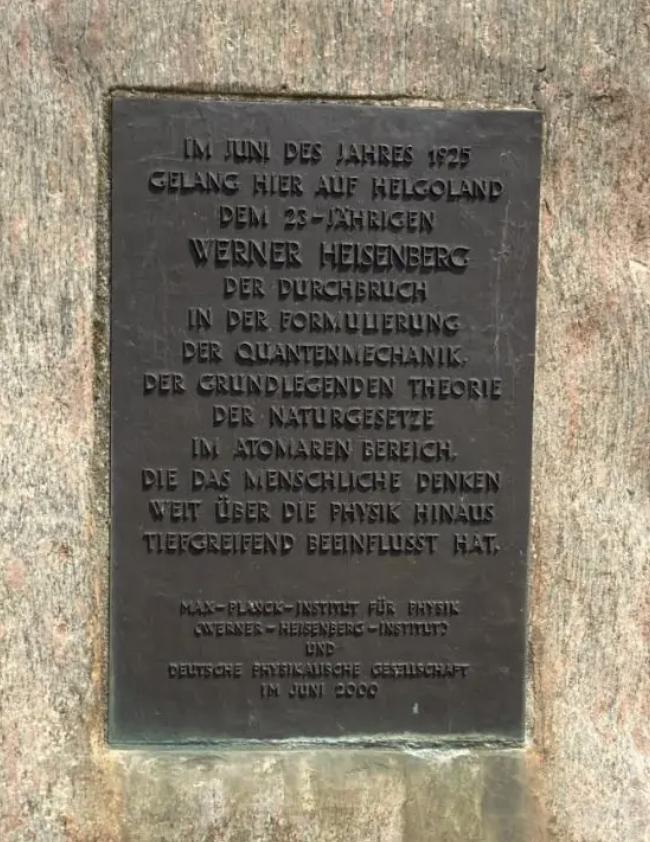
Core Viewpoint - The article discusses the ongoing debate in quantum mechanics regarding the interpretation of quantum phenomena, particularly focusing on the perspectives of relational quantum mechanics (RQM) and subjective Bayesianism (QBism) as they relate to the observer's role in defining reality [10][31]. Group 1: Historical Context and Developments - In 1925, physicist Werner Heisenberg made significant contributions to quantum mechanics on Heligoland Island, moving away from classical models to a mathematical framework known as matrix mechanics [2]. - The establishment of quantum mechanics was further advanced by Erwin Schrödinger's wave equation, which introduced the concept of probability in determining the position of electrons [4]. - A century later, in 2025, over 300 leading physicists gathered on the same island to celebrate the centenary of quantum mechanics and to revisit foundational questions about the nature of reality [6]. Group 2: Quantum Mechanics Interpretation Debate - The core of the debate centers on whether quantum equations describe the world itself or merely our understanding of it, with various interpretations such as the Copenhagen interpretation, many-worlds interpretation, and hidden variable theories [11][13]. - The thought experiment "Wigner's friend" illustrates the complexities of measurement and reality in quantum mechanics, questioning whose observation constitutes the "true" reality [15][19]. Group 3: Relational Quantum Mechanics (RQM) - Carlo Rovelli's RQM posits that reality is not an absolute entity but is constructed through relationships between observers and systems, suggesting that different observers can have valid but distinct accounts of the same phenomenon [20][23]. - RQM emphasizes that physical properties are not inherent to isolated entities but arise from interactions, challenging traditional notions of objective reality [25]. Group 4: Subjective Bayesianism (QBism) - Chris Fuchs' QBism redefines the wave function as a personal probability guide rather than an objective state of the world, asserting that it reflects an observer's beliefs about future measurements [28][30]. - This perspective places the observer at the center of quantum mechanics, suggesting that the wave function is a tool for individuals to navigate their interactions with the quantum world [31]. Group 5: Future Directions and Implications - The article highlights a growing acceptance of RQM and QBism among younger researchers, with a notable percentage supporting these interpretations in recent surveys [31]. - The potential for empirical testing of these theories through advanced quantum computing and AI is discussed, indicating a shift towards integrating observer-dependent frameworks into future physics [33]. - The concluding remarks suggest that reality is a collaborative narrative between observers and the world, marking a new beginning for quantum mechanics [34].