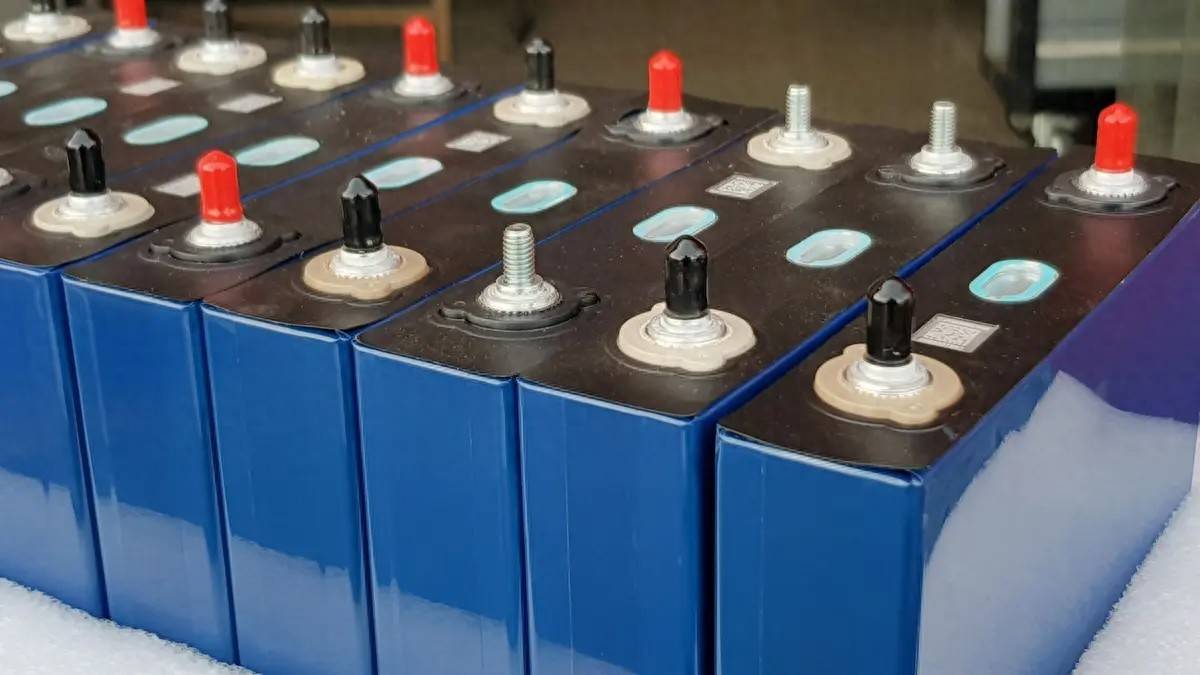
钠电池技术突破

Search documents
南方基金旗下电池ETF南方(159147)上涨2.04%,多氟多涨超6%,钠电池技术突破打开发展新空间
Xin Lang Cai Jing· 2026-02-25 03:36
Group 1 - The battery ETF Southern (159147) increased by 2.04% with a transaction volume of 27.09 million yuan, while key stocks in the index, such as Defu Technology, Tianhua New Energy, and Duofluoride, saw significant gains of 10.19%, 7.61%, and 6.32% respectively [1] - The U.S. government is considering imposing new tariffs on approximately six industries, including batteries, citing "national security" as the reason. This move follows the Trump administration's use of Section 232 to expand tariffs beyond the existing 15% global rate [1] - Analysts indicate that if tariffs are implemented, the President can unilaterally adjust them, providing greater operational flexibility in policy continuity and execution. The tariffs will significantly increase export costs, prompting overseas clients to accelerate orders [1] Group 2 - Sodium battery technology has shown breakthroughs and mass production capabilities, demonstrating resilience in supply diversity. Sodium batteries offer superior low-temperature performance and lower costs, complementing lithium batteries and showing promising prospects in energy storage and power battery applications [2] - The price of lithium carbonate has rebounded significantly, with battery-grade lithium carbonate increasing by 6.9% and industrial-grade by 7.46% in the last week. This price surge is driven by a temporary improvement in supply-demand dynamics, with downstream production expected to increase by over 15% starting in March [2] - The Southern Battery ETF (159147) closely tracks the CSI Battery Theme Index, which includes listed companies involved in power batteries, energy storage batteries, consumer electronics batteries, and related upstream and downstream industries. The top ten weighted stocks in the index include CATL, Sungrow Power, and others [2]




英国钠电池技术获突破
Zhong Guo Hua Gong Bao· 2025-11-24 03:26
Core Insights - A significant breakthrough in sodium battery technology has been announced by a research team from the University of Surrey, which has doubled the energy storage capacity and enhanced stability while also enabling seawater desalination [1] Group 1: Technological Advancements - The research team retained the natural moisture in sodium vanadate hydrate (NVOH), leading to improved battery performance compared to traditional methods that remove moisture through heating [1] - The new sodium battery exhibits twice the energy storage capacity of conventional models, faster charging speeds, and maintains stability after 400 charge-discharge cycles [1] Group 2: Market Context - Currently, lithium batteries dominate 70% of the rechargeable device market due to their high energy density and excellent low-temperature performance, but they face environmental concerns and supply chain vulnerabilities [1] - Sodium batteries have been in development for several years as a sustainable alternative, with abundant resources and lower costs compared to lithium [1] Group 3: Environmental Impact - The extraction process for sodium requires significantly less water than lithium, with the water consumption for producing one ton of lithium being 682 times greater than that for sodium [1]
简单盐浓度调整推动钠电池突破500次循环,容量保持率达70%
Sou Hu Cai Jing· 2025-09-12 06:53
Core Insights - A research team led by Hong Kong universities has announced a breakthrough in sodium battery technology, addressing the instability issues that have hindered its development for decades [3][4] - The new design allows for a charging rate of 10C and maintains over 70% capacity after 500 charge-discharge cycles, significantly improving the performance of sodium batteries [3][4] Group 1: Breakthrough in Sodium Battery Technology - The research team, including Lingnan University and Tsinghua University, has solved the critical issues of short-circuiting and capacity drop during fast charging by increasing the electrolyte salt concentration [3][4] - This adjustment enables sodium ions to deposit in a smoother and more controlled manner, enhancing safety and longevity while drastically improving charging speed [3][4] Group 2: Economic and Environmental Benefits - Sodium, being more abundant and cheaper than lithium, could significantly reduce the costs associated with electric vehicles and energy storage systems [4][9] - The cost of sodium is less than one-tenth that of lithium, and its availability in seawater makes it a more sustainable option for future energy solutions [4][9] Group 3: Challenges Ahead - Despite the significant advancements, sodium batteries still face challenges such as needing to improve cycle life by 2-3 times to compete with lithium-ion batteries and the high cost and lower conductivity of high-concentration electrolytes [6] - Energy density remains a barrier, as sodium's energy storage capacity per kilogram is still inferior to that of lithium [6] Group 4: Alignment with Global Goals - The research aligns with global and local energy transition needs, supporting greener and more economical mobile solutions while reducing dependence on imported lithium [9] - The project is in line with Hong Kong's carbon neutrality and electrification goals, as well as the United Nations' sustainable development objectives for clean energy and climate action [9]