银行合并

Search documents
Mayo Says This Is a 'New Era for Bank Consolidation'
Youtube· 2026-02-04 16:39
Core Insights - The current regulatory environment is facilitating bank mergers, which is seen as a positive development for the industry [2][14] - There is a significant need for economies of scale among banks, with the potential for consolidation expected to accelerate in the coming years [3][4] - The number of banks in the U.S. has decreased from 15,000 to 4,600 over the past few decades, and this number could be halved in the next decade [4] Industry Trends - The recent merger activity indicates the beginning of a new era for bank consolidation, with many banks trading below their franchise values, suggesting potential for higher stock prices [5][6] - Foreign banks, such as Banco Santander, are also entering the U.S. market, indicating a competitive landscape and pent-up demand for acquisitions [7][8] - Smaller regional banks are primarily involved in recent mergers, but there is speculation about larger banks acquiring smaller ones in the future [6] Regulatory Outlook - The new regulatory leadership is expected to simplify rules and reduce bureaucratic hurdles, which could enhance banks' ability to pursue mergers and lending opportunities [13][14] - The current political and regulatory environment is viewed as favorable for banks considering mergers or acquisitions, with a window of opportunity anticipated to last for the next couple of years [14][15]



Pinnacle Financial Partners(PNFP) - 2025 Q4 - Earnings Call Transcript
2026-01-22 14:30
Financial Data and Key Metrics Changes - Pinnacle reported fourth quarter adjusted EPS of $2.24, stable quarter over quarter and up 18% year over year [8] - Net interest income increased 3% from the third quarter and 12% year over year [8] - The net interest margin increased one basis point to 3.27% [8] - Synovus reported strong fourth quarter adjusted diluted EPS of $1.45, stable quarter over quarter and increased 16% year over year [9] Business Line Data and Key Metrics Changes - Pinnacle's period-end loans grew at a strong 3% from the prior quarter and 10% year over year [8] - Core deposit growth was healthy at 3% quarter over quarter and 10% year over year [8] - Synovus's period-end loan growth was $872 million, or 2% from the prior quarter and 5% from the previous year [10] - Synovus's core deposits grew $895 million, or up 2% quarter over quarter [10] Market Data and Key Metrics Changes - The merger between Pinnacle and Synovus was completed on January 1, 2026, demonstrating effective integration [6] - Both organizations have successfully completed key milestones over the past two quarters, reinforcing a solid foundation for continued growth [6] Company Strategy and Development Direction - Pinnacle aims to produce strong, above-peer revenue, earnings per share, and tangible book value growth [4] - The company plans to hire 250 total revenue producers in 2026, with expectations of loan growth to reach $91-$93 billion, up 9%-11% versus year-end 2025 [15] - The adjusted revenue outlook for 2026 is projected at $5-$5.2 billion [16] Management's Comments on Operating Environment and Future Outlook - Management expressed confidence in achieving loan growth targets despite competitive pressures and economic uncertainties [40] - The company anticipates a constructive credit environment with net charge-offs estimated to be in the range of 20-25 basis points for the year [18] - Management highlighted the importance of maintaining high net promoter scores to ensure client satisfaction and service quality [30] Other Important Information - The company expects to realize 40% or $100 million of annualized merger-related expense savings in 2026 [18] - A $400 million common share repurchase program has been authorized to manage capital in multiple growth scenarios [19] - The quarterly common equity dividend will be $0.50 per share starting in the first quarter [19] Q&A Session Summary Question: What can the combined bank not do today that it will be able to do a year from now post-conversion? - The combined bank will move to an in-state platform that takes the best of both organizations, allowing for new capabilities and products [29] Question: When do you think you would actually initiate buybacks? - The company is likely to accrete capital for a time period and reassess buybacks later in the year, with no purchases expected in the first or second quarter [32] Question: Can you walk us through your degree of confidence in achieving loan growth targets? - The company generated 10% loan growth in the fourth quarter and expects growth from existing team members and recent hires [40] Question: What is embedded in the fee income guidance for the capital markets business? - The capital markets platforms are seen as a significant area of opportunity, with expectations of strong growth in capital markets fees in 2026 [46] Question: How do you plan to handle higher hold limits? - The company plans to increase hold limits slightly, allowing for larger loan sizes while continuing to manage risk through syndication [67]

Fifth Third, Comerica plan to close $10.9B merger on Feb. 1
American Banker· 2026-01-14 17:44
Core Viewpoint - Fifth Third Bancorp and Comerica are set to complete their $10.9 billion merger on February 1, following the final regulatory approval from the Federal Reserve, marking a significant expansion for Fifth Third as it becomes the 16th-largest insured depository organization in the U.S. with $290 billion in assets [1][2][4]. Regulatory Approval - The merger received approval from the Federal Reserve, the Office of the Comptroller of the Currency, and the Texas Department of Banking, with shareholders from both companies overwhelmingly voting in favor [2][3]. - The Federal Reserve's review indicated that the merger would not have significantly adverse effects on competition, following a Department of Justice assessment [4]. Financial Aspects - Analysts have noted the transaction's financial benefits, including immediate earnings accretion, no dilution to tangible book value per share, and a potential for over $500 million in annual revenue synergies [6]. - Since the announcement of the merger, Fifth Third's stock has increased by approximately 8%, while Comerica's stock has surged by about 27% [6]. Integration Plans - Integration teams from both banks have begun working on transition plans, with expectations to complete full system and brand conversions later in the year [3]. Legal Challenges - An activist investor, HoldCo Asset Management, has filed a lawsuit against Comerica and Fifth Third, alleging breaches of fiduciary duties and inadequate disclosures regarding the merger [7][10]. - The lawsuit claims that Comerica rushed into the merger to avoid a proxy contest and negotiated an excessive compensation package for its CEO, Curt Farmer [10][14]. - A hearing regarding the ongoing litigation is scheduled for later in February, which may impact the merger's timeline [12]. Leadership Transition - Following the merger, Comerica's CEO Curt Farmer will serve as vice chair and later in an advisory role at Fifth Third, with an annual compensation of $8.75 million [15].



日本财务大臣敦促地区银行在加息环境中支持当地经济
Xin Lang Cai Jing· 2025-12-23 02:45
Core Viewpoint - Japan's Finance Minister, Shunichi Suzuki, urges regional banks to take more measures to promote local economic development in the context of rising interest rates, emphasizing that without loans supporting local growth, rural areas will have no future [1][4]. Group 1: Economic Context - Japan's local economy has long been troubled by population decline and aging, with the severity far exceeding that of major cities like Tokyo [1][4]. - After decades of ultra-loose monetary policy, the Bank of Japan is gradually raising interest rates, but this may not be a panacea for regional banks facing weak deposit and loan demand [1][4]. Group 2: Banking Sector Challenges - The recent increase in the benchmark overnight rate to 0.75%, the highest in 30 years, has led to a significant rise in Japanese bank stocks due to market expectations of improved loan profitability [2][5]. - However, higher interest rates have intensified competition for deposits, posing risks to local banks that rely on these institutions for cheap funding [3][6]. Group 3: Government Initiatives - The Financial Services Agency recently released a document outlining measures to strengthen regional lending institutions, with one of the main pillars being the expansion of fiscal support to cover merger and integration costs [5]. - Suzuki stated that the government will not force regional banks to merge, emphasizing the need for sound investment in the system to achieve profitability [1][4].
Synovus Financial (NYSE:SNV) Conference Transcript
2025-12-09 17:20
Summary of the Conference Call Company and Industry - **Companies Involved**: Pinnacle and Synovus - **Industry**: Banking and Financial Services Key Points and Arguments 1. **Merger Announcement and Leadership**: Pinnacle and Synovus announced a transformational merger in July, with regulatory approval received and expected closure early next year. Kevin Blair will be the CEO of the combined company, while Terry Turner will serve as chairman [1][4][5]. 2. **Investor Concerns**: Key concerns from investors include fears that the merger will lead to value destruction similar to past mergers of equals (MOEs). The leadership has worked to address these concerns by emphasizing a clear go-to-market strategy and a commitment to maintaining the Pinnacle brand [4][6][9]. 3. **Cultural Integration**: A significant challenge identified is the integration of different corporate cultures, particularly between the fast-growing Pinnacle and the slower-growing Synovus. Both companies have a strong focus on creating a positive work environment and client loyalty, which they believe will facilitate a successful merger [11][12][14]. 4. **Growth Projections**: The combined company expects loan and deposit growth of 9%-11% for 2026, with Pinnacle's historical growth rate around 12% and Synovus at approximately 3%. The leadership aims to align Synovus's growth with Pinnacle's model [16][22][23]. 5. **Revenue Synergies**: The merger is expected to generate $100-$130 million in revenue synergies over 2-3 years, driven by cross-selling opportunities and the introduction of new products. The leadership is focused on leveraging the strengths of both companies to achieve these synergies [37][38]. 6. **Hiring Strategy**: The combined company plans to hire approximately 500 new revenue producers over the next two years, utilizing a continuous recruitment model to attract experienced bankers. This approach aims to enhance growth and maintain a strong company culture [38][40][41]. 7. **Capital Management**: The company anticipates a CET1 ratio of around 10% at closing, with plans to grow it to 10.5%. The leadership emphasizes the importance of using capital for growth rather than share repurchases, although they remain open to share buybacks if excess capital is available [84][89]. 8. **Market Positioning**: The leadership believes that the combined company will be well-positioned to compete effectively in the regional banking sector, aiming to be the fastest-growing regional bank with high profitability and efficiency by 2027 [123]. Other Important Content 1. **Regulatory Approval**: The merger received regulatory approval in just 124 days, indicating strong relationships with regulators [120][122]. 2. **Client Experience**: Both companies have high net promoter scores, indicating strong client loyalty and satisfaction, which they aim to maintain post-merger [11][12]. 3. **Turnover Rates**: The leadership is focused on minimizing employee turnover during the merger, with historical turnover rates between 3%-7% for Pinnacle and a current low of 11% for Synovus [71][73]. 4. **BHG Investment**: There is ongoing discussion regarding the potential liquidity event for BHG, which could impact capital availability and revenue streams for the combined company [115][118]. 5. **Market Opportunities**: The leadership identifies significant growth opportunities in various markets, including Jacksonville, Atlanta, and Richmond, emphasizing the potential for increased market density [58][59].

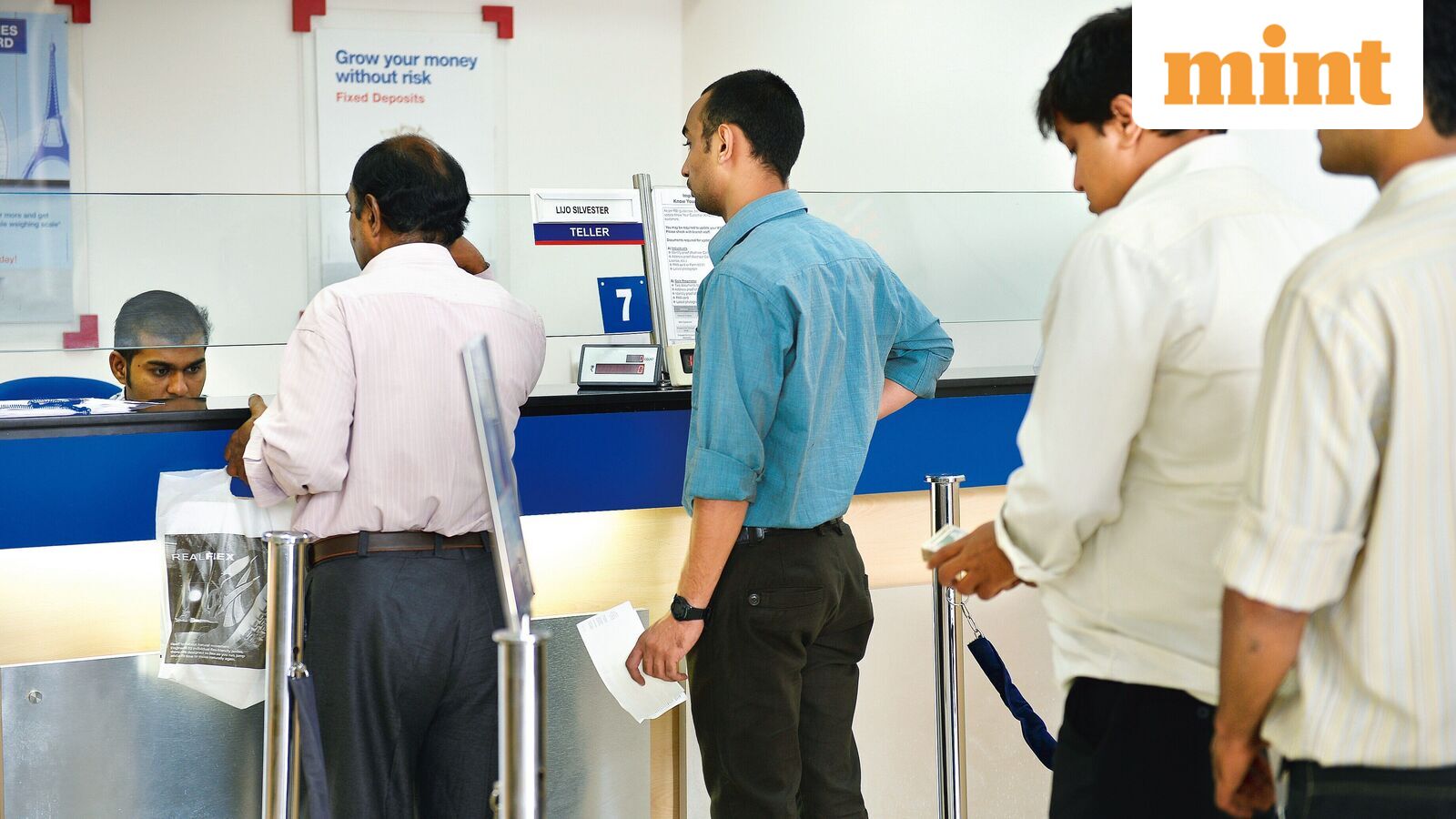
India wants bigger banks to match global giants—But size alone doesn't assure better outcomes
MINT· 2025-11-12 02:00
Group 1 - The Indian government is considering increasing the size of public sector banks (PSBs) through consolidation, contrary to the idea that smaller banks may be more effective [1][4] - The aspiration for Indian banks to rank among the top global banks reflects a broader desire for India to ascend in the global economic hierarchy [2] - Size alone does not guarantee effective service delivery or financial inclusion, which are critical for both economic growth and banking efficiency [3] Group 2 - Currently, only two Indian banks, SBI and HDFC Bank, are in the top 100 global banks by total assets, with SBI ranked 43rd and needing to triple its size to enter the top 10 [5] - The argument for larger banks is that they can better fund infrastructure projects and meet the credit needs of large corporates, but this perspective is flawed [6] - Banks are not ideally suited for long-term infrastructure financing due to asset-liability mismatches, and the economy has diversified financing options beyond traditional bank loans [7][8] Group 3 - Large banks are not necessarily more stable; their failure could have systemic implications, making them "too big to fail" and potentially requiring government intervention [9] - Mergers in the banking sector should be based on commercial viability rather than government mandates [10]
Pinnacle Financial Partners, Inc. (PNFP) Presents at The BancAnalysts Association of Boston Conference Transcript
Seeking Alpha· 2025-11-06 22:16
Core Viewpoint - Pinnacle Financial Partners and Synovus Financial announced an all-stock transaction to combine, creating a regional bank with a focus on high-growth markets in the Southeast, with combined assets of $116 billion [1]. Group 1: Company Overview - Pinnacle Financial Partners was founded in 2000, with Terry Turner serving as President and CEO since its inception [2]. - Synovus Financial's leadership includes Kevin Blair, who became CEO and President in 2021 and Chairman in 2023, having held various roles since joining in 2016 [2]. Group 2: Financial Projections - The combined entity is expected to achieve top quartile revenue and net income growth, along with the best efficiency ratio among its peers by 2027 [1].

Synovus Financial (NYSE:SNV) Conference Transcript
2025-11-06 20:15
Summary of Synovus Financial and Pinnacle Financial Partners Conference Call Industry and Companies Involved - **Industry**: Banking and Financial Services - **Companies**: Synovus Financial (NYSE: SNV) and Pinnacle Financial Partners Key Points and Arguments Merger Announcement and Shareholder Support - In July, Synovus and Pinnacle announced a merger agreement in an all-stock transaction, creating a regional bank with combined assets of $116 billion [1][4] - Shareholder meetings showed strong support, with approximately 79% of votes cast at Pinnacle and 93% in favor, while Synovus had around 75%-76% votes with 69%-70% affirmative [3][4] Employee and Client Retention - Both companies reported a 95% retention rate for employees since the merger announcement, indicating stability and confidence among staff [5][6] - The merger has attracted new revenue producers, with both sides successfully hiring despite the merger discussions [6][9] Merger Strategy and Organizational Structure - The merger is expected to succeed due to minimal market overlap (only 6% of pro forma deposits) and both companies being high-performing [10][11] - A commitment to transparency and early communication about organizational structure has been made to reduce uncertainty and turnover [12][13] Operational Conversion and Growth Targets - The operational conversion is scheduled for March 2027, with a focus on ensuring service quality during the transition [33][34] - Pro forma annualized balance sheet growth is targeted at high single digits to low double digits, leveraging the strengths of both companies [39][40] Cost and Revenue Synergies - Expected cost synergies amount to $250 million, with 50% realized in 2026 and 75% by 2027 [41][42] - Revenue synergies are projected to be between $100 million and $130 million over the next several years, driven by core revenue growth and full utilization of both companies' capabilities [43][44] Capital Management and Stock Repurchase - The company anticipates having sufficient capital to support growth and potentially repurchase stock, with a CET1 ratio estimated at 10.1% at the close of the merger [46][47] Regulatory Environment and Compliance - The tone of regulatory discussions has been constructive, with both companies having strong track records in risk management and community development [79][80] - Compliance with enhanced prudential standards will require significant investment, estimated at $35 million in run rate and $45 million in upfront costs [71][72] Market Sentiment and Execution - There is skepticism in the market regarding the merger, with a focus on execution as the key to proving the merger's value [68][76] - The leadership emphasizes the importance of delivering results in the upcoming quarters to build confidence among investors [77][78] Additional Important Insights - The merger is seen as a "prove it story," with both companies committed to demonstrating their ability to execute the merger successfully [76] - The integration of BHG (Bankers Healthcare Group) is viewed positively, with expectations for sustainable contributions to revenue [80][81] This summary encapsulates the key discussions and insights from the conference call, highlighting the strategic direction and expectations for the combined entity of Synovus and Pinnacle.
Synovus Financial (NYSE:SNV) 2025 Extraordinary General Meeting Transcript
2025-11-06 15:00
Summary of Synovus Financial Corporation Special Meeting Company and Industry - **Company**: Synovus Financial Corporation - **Industry**: Regional Banking Core Points and Arguments 1. **Merger Proposal**: The special meeting was convened to vote on the proposed merger between Synovus Financial Corporation and Pinnacle Financial Partners, Incorporated [1][2] 2. **Strategic and Financial Rationale**: The merger is described as strategically and financially compelling, aiming to create the fastest-growing and most profitable regional bank in the U.S. [2] 3. **Shared Principles**: Both companies share foundational principles of team member engagement and client loyalty, which have historically driven strong financial results [2] 4. **Growth and Market Expansion**: The merger is expected to expand Synovus's footprint in attractive markets and deepen its presence in existing ones, enhancing growth through Pinnacle's talent acquisition model [2][3] 5. **Technological Advancements**: The merger will provide additional scale for developing new tools and technology, improving client experiences and driving organic revenue growth [3] 6. **Regulatory Compliance**: The merger supports Synovus's multi-year investments to meet regulatory requirements as it transitions to a $100 billion-plus asset institution [3] 7. **Board Recommendation**: The Board of Directors has approved the merger agreement and recommends shareholders vote in favor of it [3] Important but Overlooked Content 1. **Voting Details**: Proxies representing over 76% of the votes entitled to be cast were present, confirming a quorum for the meeting [8] 2. **Voting Results**: The merger proposal was approved by over 69% of the votes cast, while the advisory approval for merger-related compensation payments received over 51% [11][12] 3. **Adjournment Not Required**: The meeting did not require adjournment as the merger proposal was approved [12] 4. **Inspector of Elections**: Jane Costello was appointed as the Inspector of Elections, ensuring the integrity of the voting process [6]
Why FirstSun Capital Bancorp Stock Dived by Almost 17% Today
Yahoo Finance· 2025-10-28 21:46
Group 1 - FirstSun Capital, owner of Sunflower Bank, reported a quarterly earnings miss and announced a merger, leading to a nearly 17% drop in stock price [1][6] - The company reported total revenue of $107.3 million for Q3, an increase from $98.2 million in the same period of 2024, but net income slightly decreased to under $23.2 million, or $0.84 per share, compared to $22.4 million a year ago [2][3] - Analysts had expected revenue of $106.7 million and adjusted profitability of $0.89 per share, indicating a mixed quarter for FirstSun [3] Group 2 - FirstSun announced a merger with First Foundation in an all-stock transaction, where First Foundation shareholders will receive slightly more than 0.16 shares of FirstSun for each share they hold [4] - The total transaction value of the merger is approximately $785 million, with current FirstSun investors expected to own just under 60% of the merged entity, which will retain the FirstSun name [5] - The merger is subject to approval from shareholders and regulatory bodies, with an expected closing in early Q2 of the following year [5]