银行风险管控

Search documents
2025,银行大罚单明显变多了
Xin Lang Cai Jing· 2026-01-04 12:48
Core Insights - A significant trend observed in 2025 is the increase in large fines imposed on banks, reflecting compliance shortcomings and risk points during the transition to high-quality development in the banking industry [2][16] - In 2025, regulatory authorities issued a total of 454 fines exceeding one million yuan to banking institutions and personnel, an increase of 58 from the previous year, with the total amount of fines nearly doubling [2][16] - The main areas of violations in 2025 were concentrated in credit business, anti-money laundering, and internal control systems, with anti-money laundering violations seeing the most notable increase, reaching 894 fines, a rise of 185.09% compared to the previous year [2][16] Summary of Fines Over 20 Million Yuan - In 2025, there were 12 fines disclosed with amounts exceeding 20 million yuan, primarily related to compliance management issues in traditional business areas such as loans and bills, indicating deficiencies in basic business risk control and regulatory cooperation [4][17] - Common violations included issues with account management and anti-money laundering, highlighting flaws in customer identity verification and transaction monitoring processes [3][17] Summary of Fines Between 10 Million and 20 Million Yuan - This category of fines predominantly involved joint-stock banks, reflecting a conflict between business innovation and compliance management [6] - Violations were mainly related to compliance operations (account and anti-money laundering) and business management (internet loans and agency sales), with cross-border foreign exchange violations being a secondary concern [7] Summary of Fines Between 5 Million and 10 Million Yuan - Fines in this range were primarily concentrated among city commercial banks, joint-stock banks, and rural commercial banks [10] - The most common violations included anti-money laundering and customer identity verification issues, alongside traditional problems related to credit "three checks" failures [10]






渤海银行中期报告解析:营收利润双升背后的结构性挑战
Guan Cha Zhe Wang· 2025-09-10 09:42
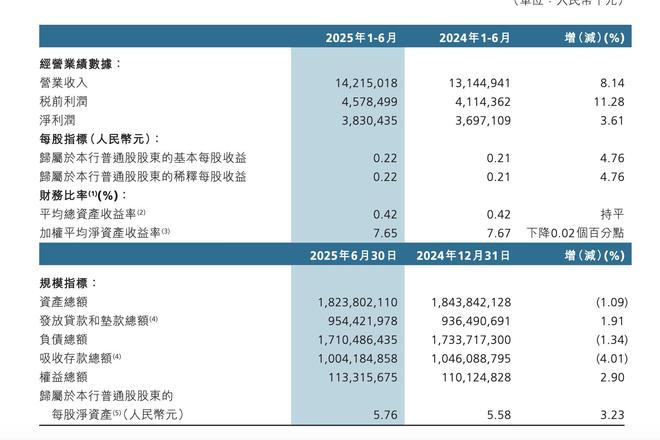
Core Viewpoint - Bohai Bank is one of the few national joint-stock banks that achieved both revenue and net profit growth amid widespread operational pressures in the banking sector [1] Financial Performance - For the first half of 2025, Bohai Bank reported operating revenue of 14.215 billion RMB, a year-on-year increase of 8.14%, and net profit of 3.830 billion RMB, up 3.61% [2][3] - The bank's net interest income continued to decline, reaching 8.046 billion RMB, a decrease of 0.43% year-on-year, primarily due to adjustments in high-yield asset allocation [2][3] Business Segment Analysis - The bank's corporate financial business is experiencing weak growth, with revenue from this segment at 8.105 billion RMB, only a 0.93% increase year-on-year, and a pre-tax profit of 3.74 billion RMB, growing just 0.08% [4][6] - The retail business showed signs of improvement, with a pre-tax loss of 348 million RMB, significantly reduced from a loss of 709 million RMB in the same period last year [7] Financial Market Business - The financial market business was a key driver of overall performance, achieving revenue of 4.193 billion RMB, a substantial increase of 73.7% year-on-year, largely due to a 63.16% rise in financial investment income to 4.836 billion RMB [6] - Despite the revenue growth, the operating profit for the financial market segment was only 1.787 billion RMB, a slight decrease of 0.06% year-on-year, indicating a "revenue growth without profit growth" scenario due to rising costs [6] Risk Management and Strategic Adjustments - The bank has been reducing personal consumer loan sizes to manage risks from previous aggressive expansions, with consumer loan balances down 9.29% year-to-date [4] - Bohai Bank is focusing on transforming its corporate financial business by emphasizing three service models: "industry bank, professional bank, and ecological bank," targeting key industries such as new energy and biomedicine [4][6] Future Outlook - The bank's ability to optimize its business structure and enhance profitability while maintaining risk control will be crucial for its long-term investment value [7]
民生银行中层人事调整涉及总行多部门和一级分行
Xin Lang Cai Jing· 2025-08-06 09:33
Group 1: Management Changes - Recently, Minsheng Bank experienced its first management change of the year, with Vice President Shi Jie retiring due to age, and Li Wenshi appointed as the new Vice President [1] - The bank's middle management has also undergone significant adjustments, with several general managers from various departments being assigned to local branches, and some branch presidents being transferred to headquarters [1] - Notable appointments include Deng Shasha as the new General Manager of the Transaction Banking Department and Shi Feixiong as a senior manager in the Inclusive Finance Department [2][3] Group 2: Branch Management Adjustments - Multiple vice presidents across various branches have received approval for their appointments, including Zhao Meng at the Xining branch and Zhao Xiaowang and Qiu Juan at the Chengdu branch [3] - New appointments also include Lei Meng as Vice President of the Nanning branch and Zhao Weijia as Vice President of the Nanjing branch, both with prior experience in different roles within the bank [4][5] Group 3: Regulatory Issues - Several branches of Minsheng Bank have recently faced fines, totaling 1.8 million yuan in August alone, indicating potential weaknesses in risk assessment mechanisms [6] - Specific fines include 300,000 yuan for the Jilin branch due to improper loan risk classification and 95,000 yuan for the Haikou branch for inadequate loan management [6] - The bank is actively working to optimize its credit approval and post-loan management processes to address external risk factors and maintain asset quality [6]

又见无卡现金类业务被叫停!或有更多银行跟进
券商中国· 2025-04-08 07:48
Core Viewpoint - The banking industry is tightening control over cashless transactions, leading to a significant reduction in cardless cash services across multiple banks [1][3]. Group 1: Bank Policy Changes - China Merchants Bank announced it will stop ATM QR code deposit services starting April 9, 2025, to enhance customer safety and convenience [2]. - Over 30 banks, including major state-owned and joint-stock banks, have adjusted or closed cardless cash services in the past year, indicating a broader trend in the industry [3]. Group 2: Risk Management and Cost Considerations - The tightening of cardless cash services is primarily driven by financial risk concerns, as these services can lead to potential financial risks for banks [3]. - The operational costs associated with maintaining ATM systems and managing cardless cash services are also a factor in the decision to scale back these offerings [3]. Group 3: Customer Reactions and Usage Patterns - Customer responses to the cancellation of cardless services are mixed; while some prefer the convenience of QR code transactions, many still opt for traditional card usage [4]. - The demographic using ATM services tends to be older individuals who are more accustomed to using physical cards, indicating a potential gap in service adaptation among different age groups [6]. Group 4: Security Concerns - Experts highlight that the security of QR code deposits is relatively low, contributing to the decision to discontinue cardless cash services [4][5]. - The potential for identity verification issues and the risk of money laundering are significant concerns that banks must address in their cash handling processes [6].