长红城市

Search documents
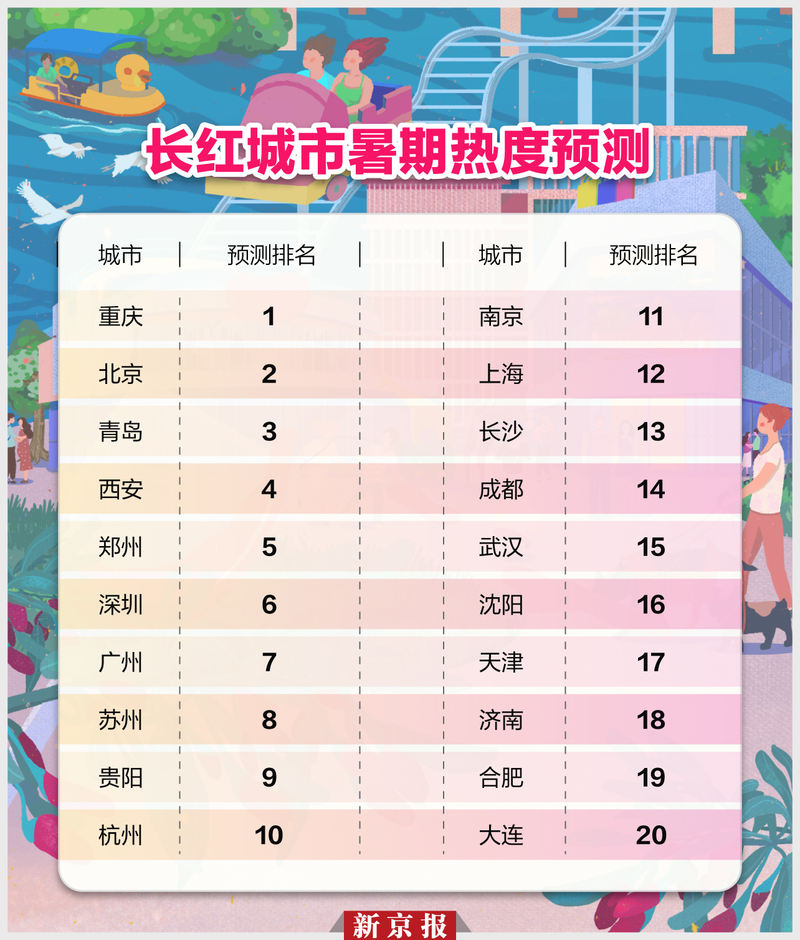
2025暑期“长红城市”热度预测:谁在持续霸榜你的旅行清单
Xin Jing Bao· 2025-07-22 02:54
Core Insights - The Chinese cultural and tourism market has experienced explosive recovery since 2023, with national tourist numbers nearing 2019 levels during the summer of 2023 and expected to see significant growth in 2024 and reach historical highs in 2025 [1] Group 1: Market Trends - The analysis predicts that the domestic tourism numbers will enter a peak season mode across various regions, with a focus on cities that have stable attractiveness and mature tourism ecosystems [1] - The "Long Red Cities" top 20 list highlights cities that have shown consistent popularity and growth, derived from a comprehensive scoring system based on various data sources, including Douyin's keyword search indices and user engagement metrics [1][2] Group 2: City Rankings - Chongqing ranks first, showcasing its rapid growth in tourism appeal, driven by popular attractions and a vibrant food scene [4][5] - Beijing follows in second place, benefiting from its rich cultural heritage and a resurgence in international tourism, particularly during the summer [5] - Qingdao ranks third, leveraging its coastal attractions and summer festivals to draw significant tourist traffic [6] Group 3: Competitive Landscape - The top 20 cities primarily consist of traditional first-tier and provincial capital cities, which possess robust tourism infrastructure and cultural resources [8] - Long Red Cities maintain a "stock advantage" on social media platforms, reflecting their established popularity and diverse content creation ecosystems [8][9] - The growth of these cities is attributed to their deep tourism resource endowments, comprehensive infrastructure, and mature market operations, allowing them to handle large tourist volumes effectively [9]

五一假期,泉州大连等6座新晋“长红城市”持续释放文化IP价值
Xin Jing Bao· 2025-05-08 09:07
Core Insights - The report released by New Beijing Think Tank highlights the potential of "Long Red Cities" in 2025, showcasing cities like Zhengzhou, Dalian, Xiamen, Quanzhou, Kunming, Shijiazhuang, Lanzhou, and Handan that made it to the list for the first time [2] Group 1: Performance Metrics - During the recent May Day holiday, cities on the "Long Red Cities" list demonstrated strong tourism performance, with Zhengzhou receiving 11.44 million visitors, Kunming 12.61 million, and Xiamen 8.64 million [3] - Xiamen achieved a tourism revenue of 10.276 billion yuan during the holiday, while Quanzhou's tourism spending exceeded 6 billion yuan, marking a nearly 30% year-on-year increase [4] - Lanzhou reported a tourism income of 4.363 billion yuan, a 14.77% increase, and Zhengzhou's retail and catering sales reached 1.87 billion yuan [4] Group 2: Diverse Offerings - The cities are leveraging diverse attractions beyond traditional landmarks, including night markets, intangible cultural heritage experiences, and immersive events to enhance their tourism appeal [5] - Lanzhou has developed strong cultural tourism IPs, hosting 208 cultural events that attracted over a million participants, while Dalian integrated sports and cultural activities to create a vibrant tourism scene [6] Group 3: Innovative Cultural Events - Quanzhou launched over 300 cultural performances and 30 premium tourism routes during the holiday, emphasizing a blend of heritage and modern experiences [7] - Kunming attracted younger tourists with events like coffee culture festivals and night markets, leading to increased visitor spending [7] Group 4: Enhanced Services - Cities are improving public services to enhance visitor experiences, with Xiamen hosting over 700 cultural events and achieving high hotel occupancy rates during the holiday [8] - Zhengzhou's focus on integrating cultural experiences with tourism services has led to significant increases in museum-related spending [8] - Lanzhou's cultural venues extended their hours and offered free guided tours, contributing to a vibrant cultural atmosphere [9] Group 5: Long-term Sustainability - The "Long Red Cities" initiative emphasizes sustainable tourism development, moving away from reliance on viral trends to a more integrated and enduring tourism model [9]