阳光志愿信息服务系统

Search documents
详解·2026年普通高校招生 促进入学机会公平 为不同禀赋学生提供多元通道
Yang Shi Wang· 2026-01-22 08:17
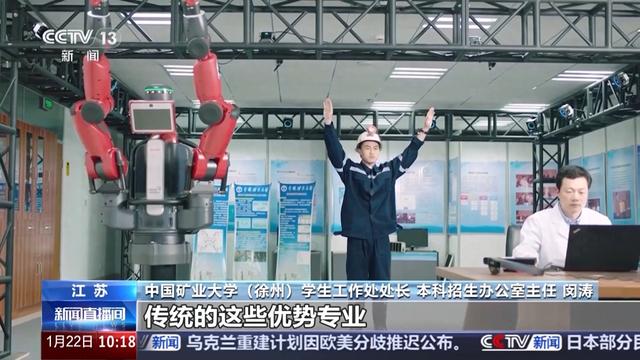
Core Viewpoint - The Ministry of Education has announced plans for the 2026 college admissions process, emphasizing the need for macro-control of enrollment plans and the optimization of academic programs to better align with talent cultivation needs. Group 1: Enrollment and Program Adjustments - The 2026 national college entrance examination will take place on June 7 and 8 [1] - Universities are required to focus on basic, emerging, interdisciplinary, and urgently needed academic disciplines, accelerating the iteration and optimization of existing programs [3] - Beijing Forestry University has discontinued seven programs and plans to discontinue one more, while introducing programs in national park management and artificial intelligence to meet national demands [5] - China University of Mining and Technology is reducing enrollment in programs with three consecutive years of employment warnings and prioritizing enrollment in interdisciplinary fields [7] Group 2: Equity in Access to Education - The Ministry of Education continues to implement plans to support enrollment collaboration in central and western regions, promoting equitable access to education [10] - The focus is on narrowing the educational resource gap between regions, allowing more students from central and western areas to access quality higher education [12] Group 3: Optimization of Admission Processes - The Ministry requires strict control over the number and scale of broad category admissions, optimizing professional group settings to enhance student satisfaction with their major choices [14][16] - The notification emphasizes the need for a reasonable size of professional groups and grouping related majors together to better meet student needs [16] Group 4: Examination and Curriculum Reform - The notification calls for further reform of examination content and formats to better assess students' key abilities and academic qualities [19] - There is a push for a comprehensive reform of the college entrance examination system, including better guidance for students in selecting subjects based on national development needs and personal strengths [19] Group 5: Special Admissions and Vocational Education - The Ministry aims to strengthen and improve special admissions processes and standardize vocational education entrance examinations [21][28] - There is a focus on providing diverse pathways for students with different talents and potentials, exploring more effective evaluation methods [24] Group 6: Information Sharing and Support Systems - The notification emphasizes the need for improved examination and admissions service systems, including the establishment of a "sunshine volunteer" information service system [32] - Local education authorities are encouraged to enhance their volunteer reporting support systems to provide comprehensive services to students [34] Group 7: Security and Integrity in Admissions - The Ministry stresses the importance of a robust examination and admissions security management system to ensure fairness and integrity in the college entrance examination process [29][35] - There is a call for strict monitoring of examination environments and the regulation of examination training institutions to maintain order in the admissions process [35]

事关2026高考 专业设置和招生制度有何变化?专家解读
Xin Lang Cai Jing· 2026-01-22 04:45
Core Viewpoint - The Ministry of Education of China has announced the deployment of the 2026 college admissions work, emphasizing the need for macro-control of enrollment plans and optimization of academic programs to better align with national strategic needs and industry development [1][5]. Group 1: Enrollment and Program Optimization - The 2026 national college entrance examination will take place on June 7 and 8, with a focus on optimizing academic program settings to enhance talent cultivation [1]. - Universities are required to adjust their enrollment strategies to prioritize basic, emerging, interdisciplinary, and urgently needed academic disciplines [1][6]. - A mechanism for evaluating the linkage between enrollment, training, and employment has been established, allowing for the reduction or cessation of enrollment in programs with three consecutive years of employment warnings [3]. Group 2: Regional Equity and Special Programs - The Ministry will continue to implement plans to support enrollment in central and western regions, as well as special enrollment programs for rural and impoverished areas, promoting equitable access to education [5][6]. - The notification emphasizes the need to improve special type enrollment and vocational education entrance examinations, focusing on serving national strategies and regional development [9][13]. Group 3: Examination and Admission System Reform - The notification calls for further reform of the examination and admission system, including changes to examination content and format to better assess students' key abilities and overall development [8]. - There is a push for a more scientific and systematic student development guidance system to help students make informed choices regarding their subjects and exams [8]. Group 4: Information and Safety Management - The Ministry emphasizes the need to enhance the "Sunshine Volunteer" information service system to improve the accessibility and convenience of enrollment services [14]. - A robust examination safety management system is to be established to ensure the fairness and integrity of the college entrance examination process [16].