职教高考

Search documents
贵州职教高考回归“技能立身”
Xin Lang Cai Jing· 2026-02-14 03:00
Core Viewpoint - The implementation of the vocational education college entrance examination (职教高考) in Guizhou aims to establish a dual-track system alongside the traditional college entrance examination, providing a pathway for vocational education to advance and meet the needs of local economic development [1][2]. Group 1: Key Highlights of Guizhou's Vocational Education Examination Policy - The policy breaks the educational ceiling for secondary vocational students, allowing them to bypass the traditional college entrance examination and directly apply to vocational undergraduate institutions, thus creating a comprehensive educational pathway from secondary vocational to higher vocational and vocational undergraduate levels [2][3]. - The examination structure will consist of two parts: "cultural quality" and "vocational skills," with vocational skills accounting for at least 50% of the total score, emphasizing practical skills over theoretical knowledge [3][4]. - The introduction of 20 parallel choices and major-based applications aims to alleviate the pressure of students being locked into a single career path from the outset [4]. Group 2: Differentiated Development Path for Vocational Education in Western Regions - The vocational education development path in western regions like Guizhou should be tailored to local industrial characteristics, focusing on core industries and avoiding homogeneous competition with eastern regions in high-end manufacturing [5][6]. - Guizhou's vocational education reform has shown significant progress through initiatives like the "Skill Guizhou" action plan, which has led to the establishment of 1,596 provincial vocational education projects with over 860 million yuan invested [7]. - The province has optimized its professional layout to better align vocational education with regional economic needs, creating high-level professional groups and fostering industry-education integration [7].
详解·2026年普通高校招生 促进入学机会公平 为不同禀赋学生提供多元通道
Yang Shi Wang· 2026-01-22 08:17
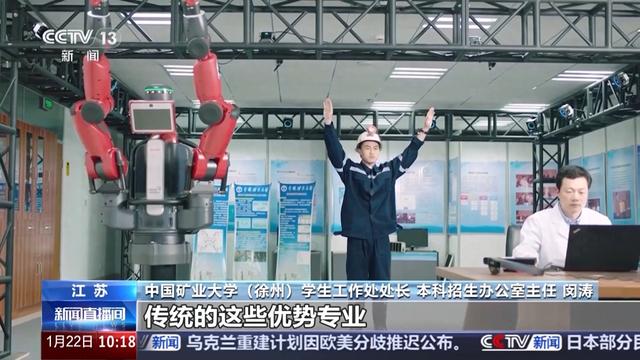
Core Viewpoint - The Ministry of Education has announced plans for the 2026 college admissions process, emphasizing the need for macro-control of enrollment plans and the optimization of academic programs to better align with talent cultivation needs. Group 1: Enrollment and Program Adjustments - The 2026 national college entrance examination will take place on June 7 and 8 [1] - Universities are required to focus on basic, emerging, interdisciplinary, and urgently needed academic disciplines, accelerating the iteration and optimization of existing programs [3] - Beijing Forestry University has discontinued seven programs and plans to discontinue one more, while introducing programs in national park management and artificial intelligence to meet national demands [5] - China University of Mining and Technology is reducing enrollment in programs with three consecutive years of employment warnings and prioritizing enrollment in interdisciplinary fields [7] Group 2: Equity in Access to Education - The Ministry of Education continues to implement plans to support enrollment collaboration in central and western regions, promoting equitable access to education [10] - The focus is on narrowing the educational resource gap between regions, allowing more students from central and western areas to access quality higher education [12] Group 3: Optimization of Admission Processes - The Ministry requires strict control over the number and scale of broad category admissions, optimizing professional group settings to enhance student satisfaction with their major choices [14][16] - The notification emphasizes the need for a reasonable size of professional groups and grouping related majors together to better meet student needs [16] Group 4: Examination and Curriculum Reform - The notification calls for further reform of examination content and formats to better assess students' key abilities and academic qualities [19] - There is a push for a comprehensive reform of the college entrance examination system, including better guidance for students in selecting subjects based on national development needs and personal strengths [19] Group 5: Special Admissions and Vocational Education - The Ministry aims to strengthen and improve special admissions processes and standardize vocational education entrance examinations [21][28] - There is a focus on providing diverse pathways for students with different talents and potentials, exploring more effective evaluation methods [24] Group 6: Information Sharing and Support Systems - The notification emphasizes the need for improved examination and admissions service systems, including the establishment of a "sunshine volunteer" information service system [32] - Local education authorities are encouraged to enhance their volunteer reporting support systems to provide comprehensive services to students [34] Group 7: Security and Integrity in Admissions - The Ministry stresses the importance of a robust examination and admissions security management system to ensure fairness and integrity in the college entrance examination process [29][35] - There is a call for strict monitoring of examination environments and the regulation of examination training institutions to maintain order in the admissions process [35]

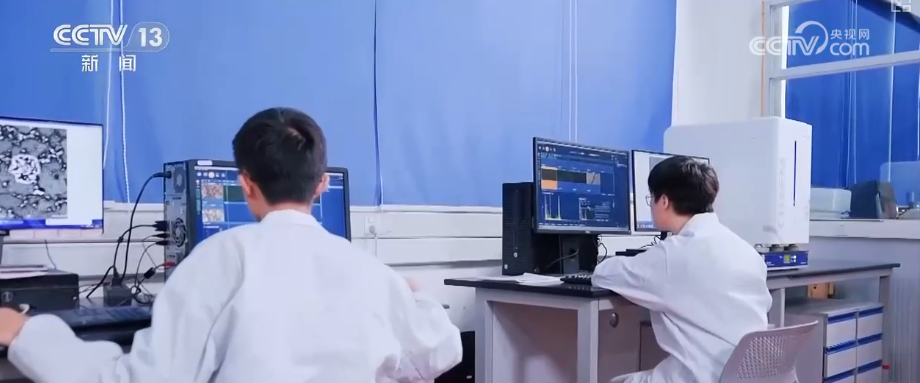
事关2026高考 专业设置和招生制度有何变化?专家解读
Xin Lang Cai Jing· 2026-01-22 04:45
Core Viewpoint - The Ministry of Education of China has announced the deployment of the 2026 college admissions work, emphasizing the need for macro-control of enrollment plans and optimization of academic programs to better align with national strategic needs and industry development [1][5]. Group 1: Enrollment and Program Optimization - The 2026 national college entrance examination will take place on June 7 and 8, with a focus on optimizing academic program settings to enhance talent cultivation [1]. - Universities are required to adjust their enrollment strategies to prioritize basic, emerging, interdisciplinary, and urgently needed academic disciplines [1][6]. - A mechanism for evaluating the linkage between enrollment, training, and employment has been established, allowing for the reduction or cessation of enrollment in programs with three consecutive years of employment warnings [3]. Group 2: Regional Equity and Special Programs - The Ministry will continue to implement plans to support enrollment in central and western regions, as well as special enrollment programs for rural and impoverished areas, promoting equitable access to education [5][6]. - The notification emphasizes the need to improve special type enrollment and vocational education entrance examinations, focusing on serving national strategies and regional development [9][13]. Group 3: Examination and Admission System Reform - The notification calls for further reform of the examination and admission system, including changes to examination content and format to better assess students' key abilities and overall development [8]. - There is a push for a more scientific and systematic student development guidance system to help students make informed choices regarding their subjects and exams [8]. Group 4: Information and Safety Management - The Ministry emphasizes the need to enhance the "Sunshine Volunteer" information service system to improve the accessibility and convenience of enrollment services [14]. - A robust examination safety management system is to be established to ensure the fairness and integrity of the college entrance examination process [16].
这所职高,为何这么有魅力(民生一线·职业教育观察)
Ren Min Ri Bao· 2025-09-14 22:03
Core Viewpoint - The article highlights the growing appeal of vocational education in Changsha, Hunan, particularly at Changsha Finance School, which reflects societal expectations for high-quality vocational education development [1][2]. Group 1: Enrollment and Demand - Changsha Finance School planned to enroll 1,800 students but received over 10,000 applications, ultimately admitting 1,890 students [1][3]. - The school emphasizes a dual-track approach, balancing academic advancement and employment opportunities for students [2][3]. Group 2: Educational Philosophy and Curriculum - The school aims to cultivate a new generation of vocational students who are confident and capable, focusing on individual talents and providing a supportive learning environment [2][4]. - Changsha Finance School offers a distinct educational model that includes a comprehensive professional system, practical training facilities, and a focus on holistic development through various campus activities [2][3]. Group 3: Pathways for Students - Students at Changsha Finance School can choose between academic advancement and employment, with tailored courses for each path [3][4]. - The vocational college entrance examination allows students to pursue higher education, with 422 students advancing to undergraduate programs in 2024, representing nearly half of the city's vocational school graduates [3][4]. Group 4: Skills Competitions and Achievements - The school has a strong track record in vocational skills competitions, winning multiple awards, including four gold medals in the National Vocational College Skills Competition [5][6]. - Students participate in various skill competitions to enhance their employability, with notable success stories emerging from these experiences [5][6]. Group 5: Innovation and Entrepreneurship - Changsha Finance School promotes innovation and entrepreneurship through a series of activities, including training camps and competitions, fostering a culture of creativity among students [7][8]. - The school has successfully incubated 79 student entrepreneurship projects since 2016, providing support and resources for aspiring entrepreneurs [7][8]. Group 6: Industry Integration - The school emphasizes the importance of integrating education with industry, collaborating with businesses to develop curriculum standards and training programs [8]. - This approach not only enhances the quality of vocational education but also aligns with societal expectations for skilled professionals in the workforce [8].
2025职教拐点:分数超211? “三江合流”奔赴职校
2 1 Shi Ji Jing Ji Bao Dao· 2025-07-11 11:46
Core Viewpoint - The article highlights the significant transformation and rising popularity of vocational education in China, particularly in the context of the 2025 admissions cycle, where vocational colleges are increasingly seen as viable and attractive options for students, challenging traditional perceptions of vocational education as inferior [1][4][12]. Group 1: Vocational Education Development - By 2025, the number of vocational colleges at the undergraduate level has reached 87, with plans to expand the "New Double High Plan" to 220 institutions, indicating a steady improvement in the quality of vocational education [1][4][6]. - Vocational colleges are becoming essential in supplying skilled workers, with over 70% of new employees in modern manufacturing and emerging industries coming from vocational school graduates [1][9]. - The trend of "upgrading from vocational to undergraduate" is emerging, where some undergraduate students are returning to vocational schools to gain practical skills, reflecting a shift in the perception of vocational education [4][12]. Group 2: Quality and Integration - The "New Double High Plan" aims to enhance the quality of vocational education by promoting high-level vocational schools and integrating education with industry needs [6][9]. - Vocational education is increasingly focusing on research and technology transfer, moving beyond just skill teaching to include applied research, which aligns with industry demands [10][11]. - The integration of vocational education with industry is crucial, as it ensures that the skills taught are relevant to current job market needs, thereby improving employability for graduates [9][10]. Group 3: Student Attraction and Perception - The admission scores for vocational colleges are rising, with some institutions attracting high-scoring students, indicating a shift in perception and increasing competitiveness [1][12]. - The establishment of a dedicated vocational examination system is being proposed to further legitimize vocational education and attract more students [13][14]. - The article emphasizes the need to break down societal biases against vocational education, promoting it as a legitimate and valuable educational pathway [1][7][12].
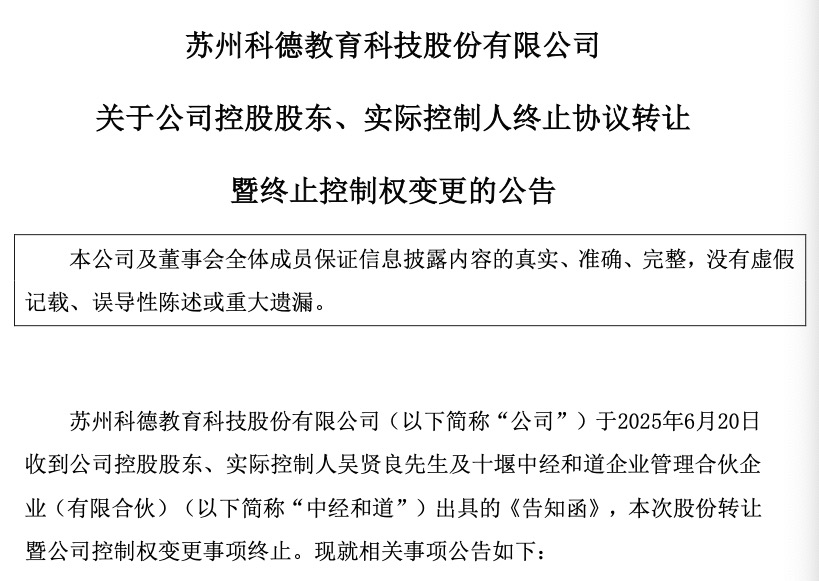
突发终止!300192,控制权转让告吹
Zheng Quan Ri Bao Wang· 2025-06-20 14:32
Group 1 - The core point of the article is that Suzhou Kede Education Technology Co., Ltd. has terminated the share transfer agreement with Zhongjing Hedao, which was intended to transfer control of the company at a price of 14.72 yuan per share, totaling 1.142 billion yuan for 23.57% of the shares [1][3] - The company had previously announced the intention to transfer control to Zhongjing Hedao, which was seen as a strategic move during a critical period of transformation in vocational education [3] - The termination of the agreement means that the current control remains with the existing major shareholder, Wu Xianliang, which may impact the company's ability to attract external strategic investors [3][4] Group 2 - Kede Education has a dual business model, having transitioned from an ink chemical company to the vocational education sector in 2017, with 2024 revenue reported at 795 million yuan and a gross margin of 46.28% for the education business, significantly higher than the 22.27% margin for the ink business [3] - In Q1 2025, the company experienced a year-on-year decline in revenue and net profit by 2.27% and 6.80%, respectively, primarily due to seasonal fluctuations in the ink business [3] - The vocational education sector is facing challenges from the influx of K12 transformation institutions and the upgrading of corporate training demands, which may pressure Kede Education's growth [4] Group 3 - The company is exploring the application of AI technology in teaching, and as technologies like AI and virtual reality penetrate training, companies with a dual focus on "education + technology" will gain competitive advantages [4] - There is a growing demand for skills training in areas such as industrial internet, new energy vehicle maintenance, and digital media technology, which Kede Education needs to address by focusing on high-skill training in manufacturing and enhancing its smart teaching product development [4] - The company is advised to optimize its financing structure to alleviate funding pressures through the introduction of industrial capital and issuance of special bonds [4][5] Group 4 - As of June 20, the company's stock price closed at 13.79 yuan per share, down 1.5%, with a total market capitalization of 4.539 billion yuan [6]