降息周期结束

Search documents
哈塞特“快速降息”承诺变画饼?降息预期遭重挫,全球长期国债收益率飙至16年高点
智通财经网· 2025-12-10 07:10
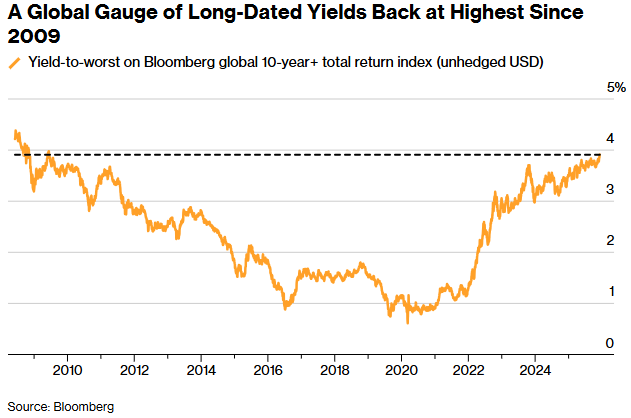
Core Viewpoint - Global bond yields have reached their highest levels since 2009, indicating market concerns that the interest rate cut cycles in developed markets may be nearing an end [1][4]. Group 1: Market Sentiment - A long-term government bond yield index has rebounded to a 16-year high, with market bets reinforcing the sentiment that further rate cuts by central banks are unlikely [1]. - Traders are pricing in that the European Central Bank is almost certain not to cut rates further, while the Bank of Japan is expected to raise rates this month [1][5]. - The market is rapidly evolving, with investors reassessing monetary policy, inflation, and fiscal discipline, leading to a rise in the 30-year U.S. Treasury yield to multi-month highs [1]. Group 2: Economic Implications - Robert Tipp, Chief Investment Strategist at PGIM Fixed Income, noted that multiple developed markets are experiencing "disappointment trades" as investors accept the reality that rate cut cycles may be ending [5]. - The bond market is reflecting increasing consensus that the rate cuts initiated last year to stimulate economic growth are coming to a close, which had previously driven global stock markets to record highs [5]. - Investors are reassessing global growth prospects and the inflation risks stemming from trade tensions, as well as the impact of soaring government debt in countries like Japan, the UK, and Germany [5]. Group 3: U.S. Treasury Focus - Ahead of the Federal Reserve meeting, U.S. Treasuries have become a focal point, with policymakers expected to cut rates for the third consecutive time, yet the 10-year Treasury yield remains near its highest level since September [5]. - Concerns about the U.S. debt burden and the potential successor to Chairman Powell, with Kevin Hassett being a leading candidate, are influencing market dynamics [5]. Group 4: Global Trends - Gordon Shannon from TwentyFour Asset Management highlighted the emergence of the "Hassett trade," characterized by a weaker dollar, steepening yield curves, and a rebound in risk assets, although the market remains cautious about the extent of policy easing [6]. - The bond market signals that borrowing cost pressures are likely to persist, with significant government spending plans in Germany and Japan being digested by investors [6]. - The Reserve Bank of Australia has nearly ruled out the possibility of rate cuts, leading to a rise in Australian bond yields to the highest levels among developed markets [6].