
长期政府债券

Search documents
德商银行:西班牙料将短期内进行长期债券银团发行
Jin Rong Jie· 2026-02-13 06:54
Core Viewpoint - Spain is identified as a primary candidate for the next long-term government bond syndication in the Eurozone, according to a report by Rainer Guntermann and Hauke Siemssen from Deutsche Bank [1] Group 1 - The recent bond auction in Spain did not include the issuance of 30-year bonds, indicating a conservative approach to upcoming issuances [1] - The upcoming issuance is expected to feature a "conservative maturity mix," suggesting a cautious strategy in the current market environment [1] - It is noted that Spain typically does not issue new benchmark bonds within a few weeks of an auction, implying that the next issuance will likely occur in the week following the next [1]
哈塞特“快速降息”承诺变画饼?降息预期遭重挫,全球长期国债收益率飙至16年高点
智通财经网· 2025-12-10 07:10
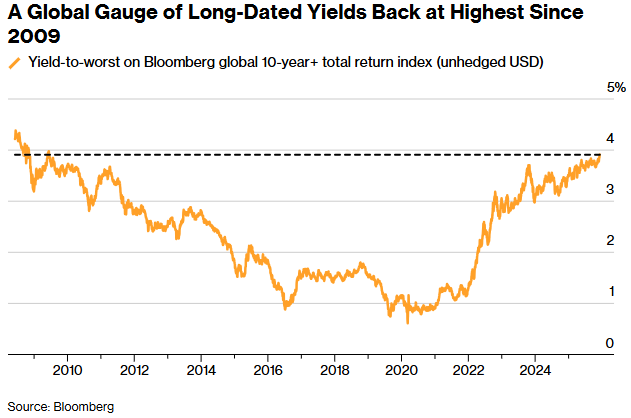
Core Viewpoint - Global bond yields have reached their highest levels since 2009, indicating market concerns that the interest rate cut cycles in developed markets may be nearing an end [1][4]. Group 1: Market Sentiment - A long-term government bond yield index has rebounded to a 16-year high, with market bets reinforcing the sentiment that further rate cuts by central banks are unlikely [1]. - Traders are pricing in that the European Central Bank is almost certain not to cut rates further, while the Bank of Japan is expected to raise rates this month [1][5]. - The market is rapidly evolving, with investors reassessing monetary policy, inflation, and fiscal discipline, leading to a rise in the 30-year U.S. Treasury yield to multi-month highs [1]. Group 2: Economic Implications - Robert Tipp, Chief Investment Strategist at PGIM Fixed Income, noted that multiple developed markets are experiencing "disappointment trades" as investors accept the reality that rate cut cycles may be ending [5]. - The bond market is reflecting increasing consensus that the rate cuts initiated last year to stimulate economic growth are coming to a close, which had previously driven global stock markets to record highs [5]. - Investors are reassessing global growth prospects and the inflation risks stemming from trade tensions, as well as the impact of soaring government debt in countries like Japan, the UK, and Germany [5]. Group 3: U.S. Treasury Focus - Ahead of the Federal Reserve meeting, U.S. Treasuries have become a focal point, with policymakers expected to cut rates for the third consecutive time, yet the 10-year Treasury yield remains near its highest level since September [5]. - Concerns about the U.S. debt burden and the potential successor to Chairman Powell, with Kevin Hassett being a leading candidate, are influencing market dynamics [5]. Group 4: Global Trends - Gordon Shannon from TwentyFour Asset Management highlighted the emergence of the "Hassett trade," characterized by a weaker dollar, steepening yield curves, and a rebound in risk assets, although the market remains cautious about the extent of policy easing [6]. - The bond market signals that borrowing cost pressures are likely to persist, with significant government spending plans in Germany and Japan being digested by investors [6]. - The Reserve Bank of Australia has nearly ruled out the possibility of rate cuts, leading to a rise in Australian bond yields to the highest levels among developed markets [6].

法国政治动荡会引爆新一轮欧元区债务危机吗?
Hua Er Jie Jian Wen· 2025-09-04 13:25
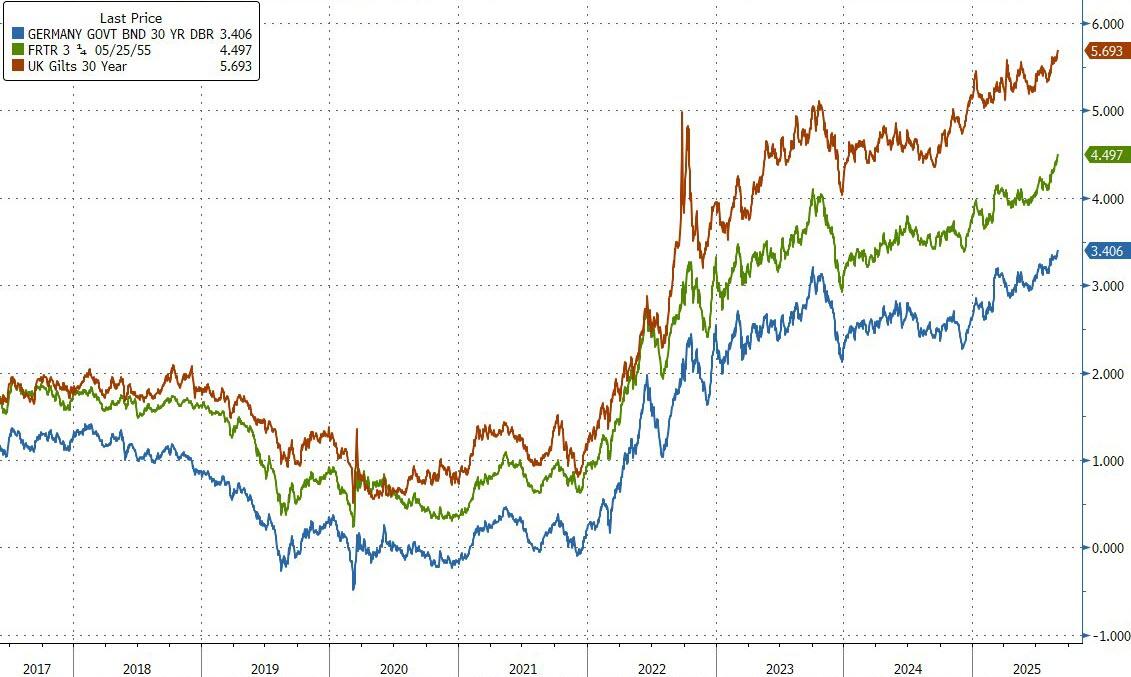
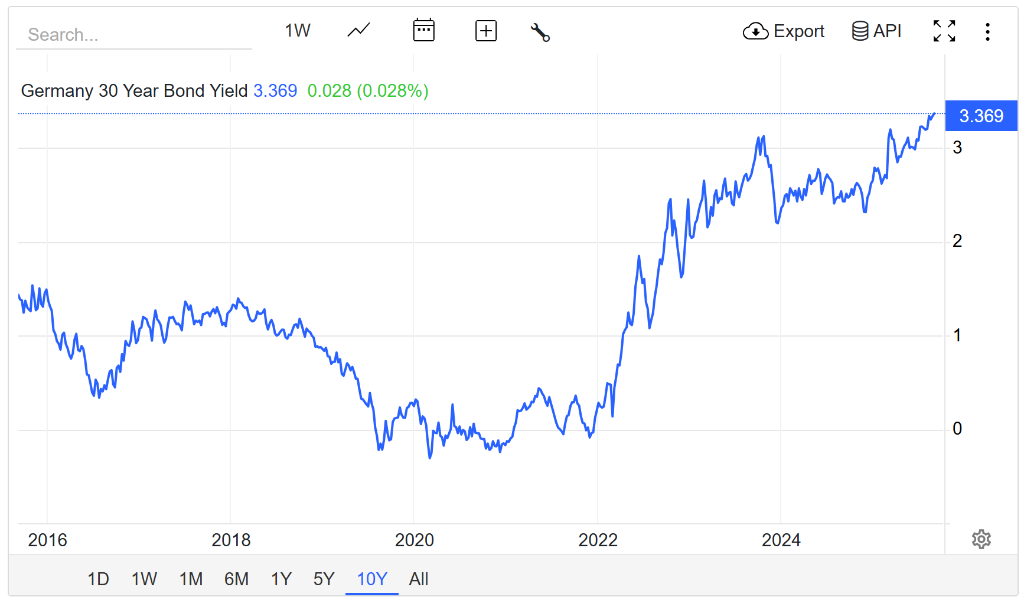
Core Insights - Europe is facing a new wave of sovereign debt crisis threats, with major economies like France experiencing significant selling pressure on long-term government bonds, leading to rising yields and increased refinancing costs for heavily indebted nations [1][2][5] - Political turmoil in France is exacerbating the crisis, with a failed confidence vote expected on September 8 regarding Prime Minister François Bayrou's austerity budget, alongside planned nationwide strikes [1][5] - Germany, once praised for its conservative fiscal policies, has opened the door to severe market turmoil through a trillion-euro debt plan, risking its credibility and that of its EU partners [1][5] Group 1 - Long-term government bonds are facing widespread selling pressure across major economies, including the US, Japan, the UK, and France, resulting in rising yields [2] - The stability of the global financial architecture relies on long-term bonds from the US, Japan, and the Eurozone, with banks, sovereign pension funds, and insurance systems suffering heavy losses from the sell-off [3] - The loss of market trust in long-term government bonds, once considered safe, is evident as investors flee to safe-haven assets like precious metals or cash, typically in USD or Swiss Francs [5] Group 2 - The next round of the debt crisis may follow a pattern similar to the crisis 15 years ago, with contagion spreading from one country to another, testing the stability and resilience of each nation amid a wave of bond sell-offs [6] - The European Central Bank (ECB) is preparing to utilize its emergency toolbox, including long-term refinancing operations (LTRO) and emergency liquidity assistance (ELA), to stabilize the government bond market and prevent a banking crisis [6] - ECB's focus remains on stabilizing the government bond market, which is the most vulnerable sector during the crisis, with measures including public sector purchase programs (PSPP) and the newly introduced Transmission Protection Instrument (TPI) [6][7]
季节性下跌?全球长债迎来“黑九月”
Hua Er Jie Jian Wen· 2025-09-02 07:23
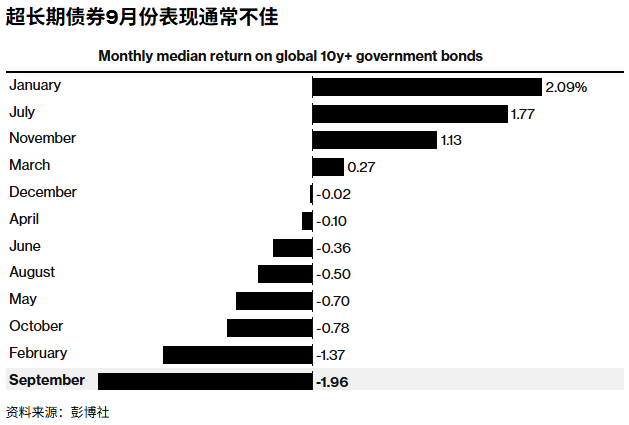
Core Viewpoint - Global long-term government bonds are experiencing one of the worst months in history due to seasonal selling pressure and multiple structural factors, leading to a continuous rise in long-term bond yields [1] Group 1: Seasonal Trends - September has historically been a "cursed month" for long-term bonds, with a median loss of 2% for government bonds with maturities over 10 years in the past decade [2] - The typical increase in long-term bond issuance in September is a primary reason for the seasonal decline, as there is little issuance in July and August [2] Group 2: Structural Factors - The structural reform of the Dutch pension system is significantly impacting the European long-term bond market, with indicators of future 30-year euro swaps recently rising [4] - The new pension system requires younger members to invest more in risk assets like stocks, reducing the demand for long-term hedging tools, while older members prefer safe assets like bonds but will shorten their duration hedges [6] Group 3: Market Challenges - Global long-term bond markets face additional challenges, including scrutiny over Japan's 10-year and 30-year bond auctions amid leadership uncertainties and expectations of central bank interest rate hikes [7] - In the U.S., upcoming employment data is a key risk point for the market, as traders await confirmation regarding the Federal Reserve's interest rate decisions [7]
供给、政治与数据三重施压下历史魔咒再现?全球长期债券或迎“最危险九月”
Zhi Tong Cai Jing· 2025-09-02 00:58
Group 1 - Historical data indicates that long-term bonds may face a dangerous September, with a median decline of 2% for global government bonds with maturities over 10 years in September over the past decade, marking it as the worst monthly performance of the year [1] - The expectation of government debt expansion is becoming a primary source of pressure, as increased fiscal spending by multiple countries leads to a rise in long-term bond supply, diminishing the yield advantage of shorter-term bonds [5] - Geopolitical disturbances are exacerbating market uncertainty, including persistent inflation in Japan, political turmoil in France due to Prime Minister Borne's confidence vote, and potential pressure from the Trump administration on the Federal Reserve to lower interest rates, which could further elevate domestic price pressures [5] Group 2 - Market sentiment is showing cautious signs, with institutional investors adopting a defensive posture, focusing on two major risk events: the upcoming U.S. non-farm payroll data that will validate the reasonableness of Federal Reserve rate cut expectations, and potential unexpected fluctuations in Eurozone inflation data that could disrupt the consensus on maintaining interest rates by the European Central Bank [5] - Seasonal supply patterns are also a key focus for strategists, as the weak performance of long-term bonds in September is closely related to issuance rhythms, with low issuance in July and August followed by a rebound in September, which explains the seasonal decline from a supply-demand perspective [5][6] - Multiple challenges must be overcome in the bond market this month, including the possibility that continued strong U.S. economic data may delay Federal Reserve rate cuts, and hawkish signals from the Bank of Japan could lead to a repricing of global interest rates, making September a notably risky month for bonds [6]
报道:日本财务省就削减部分长期债券供应询问一级交易商意见
Sou Hu Cai Jing· 2025-08-30 16:32
Core Viewpoint - The Japanese Ministry of Finance is seeking feedback from primary dealers on the potential reduction of long-term government bond issuance, indicating a shift in fiscal policy aimed at enhancing liquidity [1] Group 1: Bond Issuance - The Ministry has issued a survey regarding the possible reduction of bond auctions related to enhancing liquidity [1] - There is a proposal to decrease the issuance scale of bonds with maturities between 15.5 to 39 years by 100 billion yen (approximately 680 million USD) [1] - The Ministry is also inquiring about the cancellation of auctions for these maturity bonds scheduled for October [1]