
哈塞特交易

Search documents
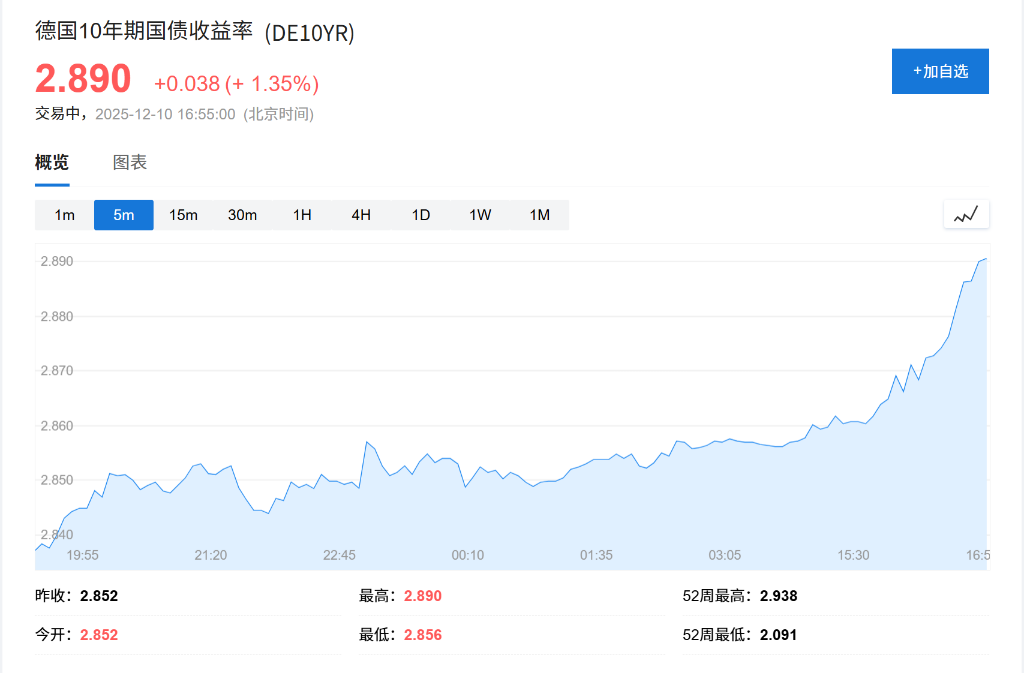
全球长债收益率飙升至16年新高,市场押注全球降息周期即将终结
Hua Er Jie Jian Wen· 2025-12-10 14:29
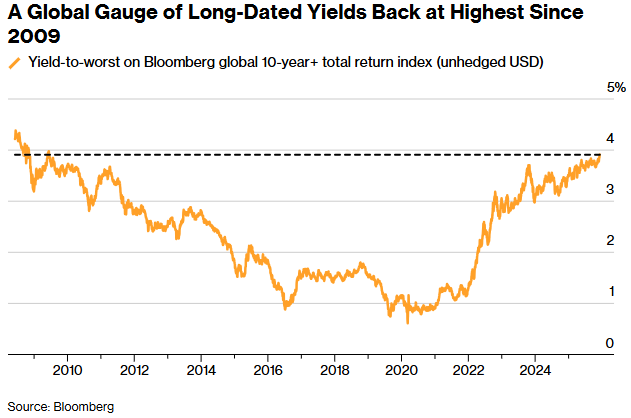
Group 1 - Global long-term bond yields have returned to their highest levels since 2009, indicating a growing consensus that the easing monetary policy cycle by central banks is nearing its end [1] - The U.S. Treasury market is experiencing unusual movements, with yields rising despite expectations of a rate cut by the Federal Reserve, driven by concerns over persistent inflation and a significant budget deficit [5] - The shift in market sentiment has led to a "disappointment trade" across developed markets, as investors reassess inflation risks and the implications of rising public debt [4] Group 2 - The increase in global bond yields is attributed to both a shift in monetary policy expectations and the surge in government debt and fiscal expansion plans [6] - Major developed markets are seeing rising bond yields, with expectations that the European Central Bank has little room for further rate cuts and that the Bank of Japan is likely to raise rates soon [1][4] - Governments are planning significant fiscal expansions, such as Germany's record €52 billion defense order, which is influencing investor perceptions of long-term financing impacts [7]

全球长债收益率飙升至16年新高,市场押注全球降息周期即将终结
美股IPO· 2025-12-10 13:02
Core Viewpoint - The article discusses the rising global long-term bond yields, driven by concerns over persistent inflation, fiscal deficits, and the potential end of the monetary easing cycle by major central banks, leading to a "disappointment trade" across developed markets [1][6][9]. Group 1: Market Trends - Global long-term bond yields have returned to their highest levels since 2009, indicating a growing consensus that the era of monetary easing by central banks is nearing its end [3]. - Despite expectations of a third consecutive rate cut by the Federal Reserve, the bond market has not reacted positively, with the 30-year U.S. Treasury yield reaching multi-month highs due to investor concerns over long-term inflation and fiscal deficits [3][7]. - The re-evaluation of inflation risks and the global growth outlook under the backdrop of rising public debt and stubborn inflation pressures is shifting market focus away from the previous easing cycle that had driven stock markets to record highs [5][6]. Group 2: Central Bank Policies - A "disappointment trade" is emerging as investors realize that major central banks may soon end their rate-cutting cycles, with expectations for the European Central Bank and the Bank of Japan shifting towards potential rate hikes [6][9]. - The Federal Reserve's preferred inflation measure rose to 2.8% in September, nearly one percentage point above its target, complicating the outlook for monetary policy [7]. - Concerns over the U.S. budget deficit, projected at $1.8 trillion, and the independence of the next Federal Reserve chair are contributing to risk premiums in the U.S. Treasury yield curve [7]. Group 3: Fiscal Expansion - The surge in government debt and fiscal expansion plans are significant factors pushing up bond yields globally, with record defense orders in Germany and Japan's largest spending plan since the pandemic contributing to this trend [9]. - Market signals indicate that the pressure on borrowing costs will persist, as governments are expected to adopt more expansionary fiscal stances in the coming year [9].
今夜美联储决议“剧本”:决议降息,鲍威尔“鹰派讲话”,哈塞特、贝森特“鸽派对冲”?
美股IPO· 2025-12-10 13:02
Core Viewpoint - The market is pricing in a 95% probability of a rate cut in December, indicating that the hawkish statements from Fed Chair Powell may no longer hold significant weight as he approaches a "lame duck" status [1][2][4]. Group 1: Market Reactions and Predictions - If the market reacts "honestly" to a hawkish rate cut, it could lead to a liquidity reversal where bonds and stocks weaken due to profit-taking, while the dollar strengthens, putting pressure on tech and growth stocks [2][9]. - Conversely, if the market ignores the Fed's hawkish signals and continues to rally, it may be driven by the "Hassett trade," which anticipates a more accommodative policy under the new Fed chair, leading to a steepening yield curve and a renewed economic recovery outlook [9][10]. Group 2: Policy Coordination and Implications - There is a potential underestimation of the degree of dovish coordination among the Treasury, the Fed, and the White House to achieve the "3-3-3 goal" (3% economic growth, 3% short-term yields, and 10-year Treasury yields in the 3% range) through unconventional policy tools [2][3]. - Treasury Secretary Mnuchin is under pressure to ensure that the new Fed chair can quickly implement rate cuts, as his own position is closely tied to the Fed's policy direction [10][11]. Group 3: Leadership Changes and Future Outlook - Kevin Hassett is seen as a strong candidate for the new Fed chair, with expectations that he will advocate for lower rates to benefit consumers [11][12]. - The potential for significant reforms at the Fed is highlighted, with calls for changes in the governance structure and the qualifications of regional Fed bank presidents [12].
今夜美联储决议“剧本”:决议降息,鲍威尔“鹰派讲话”?
Hua Er Jie Jian Wen· 2025-12-10 11:40
Group 1 - The market is pricing in a 95% probability of a rate cut by the Federal Reserve in December, indicating a shift in expectations regarding monetary policy [1][3] - The potential appointment of Kevin Hassett as the new Federal Reserve Chair is reshaping market perceptions of monetary policy coordination between fiscal and monetary authorities [2][5] - The current market sentiment reflects a contradiction, with expectations of a "hawkish rate cut" that could lead to a liquidity reversal, impacting bonds and stocks negatively [4][5] Group 2 - Treasury Secretary Mnuchin is under pressure to ensure that the new Fed Chair can quickly implement rate cuts, linking his own job security to the Fed's policy direction [2][5] - Hassett is seen as a loyal candidate who can effectively communicate Trump's economic policies while advocating for lower interest rates [6][7] - There are calls for comprehensive reforms within the Federal Reserve, with suggestions that future regional Fed presidents should reside in their districts for a minimum of three years [7]
刚刚!美联储“内斗”升级,大空头All in这一板块,英伟达H200解禁背后的惊人真相
Sou Hu Cai Jing· 2025-12-10 11:07
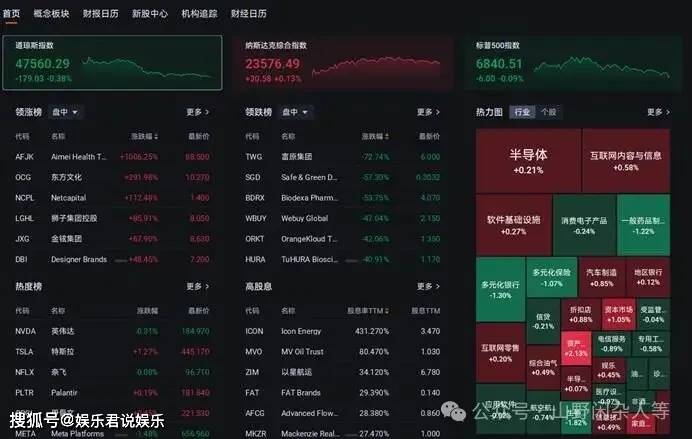
Market Overview - The U.S. stock market indices experienced narrow fluctuations, resembling an "electrocardiogram," with a sense of unnecessary tension in the air [1] - The Dow Jones index closed at 47,560.29, down by 179.03 points or 0.38% [2] Federal Reserve Insights - The bond market is signaling skepticism about the Federal Reserve's potential for easing, as the 10-year Treasury yield is rising towards 4.2% despite expectations of a rate cut [3] - The upcoming FOMC meeting is anticipated to result in a 25 basis point rate cut, but Fed Chair Powell is expected to maintain a hawkish stance, complicating market expectations [4][6] Market Reactions and Strategies - Two potential scenarios are outlined for market reactions post-FOMC meeting: - Scenario A: Powell's hawkish comments lead to a market sell-off, particularly affecting tech stocks [6] - Scenario B: The market disregards Powell's rhetoric, continuing to rally under the influence of a more dovish outlook from figures like Hassett [6] - The term "Hassett Trade" has emerged, indicating a market bet on a weaker dollar and a re-inflationary environment [6] Nvidia's Market Performance - Nvidia's stock did not respond positively to the news of H200 chip exports to China, attributed to a significant tax requirement and regulatory hurdles [9][11] - The approval process for sales to China is expected to be lengthy, leading to a prolonged period of uncertainty for Nvidia's stock performance [11] Housing Market and Government Policies - Prominent investors like Michael Burry and Bill Ackman are betting on the privatization of Fannie Mae and Freddie Mac, anticipating significant stock price increases if the government lowers capital requirements [13] - The potential risks include stock dilution and government control issues, making the investment landscape highly speculative [13] Walmart's Strategic Move - Walmart has transitioned from the New York Stock Exchange to Nasdaq, marking the largest transfer in U.S. stock market history, aiming to attract passive funds and signal a shift towards AI and automation [15] - This move is seen as a positive development for long-term investors, indicating Walmart's intent to redefine its market position [15]

本周的美联储决议“剧本”:决议降息,鲍威尔“鹰派讲话”,哈塞特、贝森特“鸽派对冲”?
华尔街见闻· 2025-12-10 10:12
Group 1 - The core viewpoint of the article is that the market is pricing in a 95% probability of a rate cut in December, but the hawkish statements from Powell may no longer hold significant weight as he approaches the end of his term as Fed Chair [1][3] - The new economic team led by Hassett is preparing to implement unconventional monetary policy tools, which may exceed market expectations, including large-scale asset purchases and direct interventions in the yield curve [6][10] - The potential appointment of Hassett as the new Fed Chair is reshaping market expectations regarding monetary policy paths through 2025, necessitating a reassessment of the traditional independence of the Fed and the coordination between fiscal and monetary policies [2][10] Group 2 - The market may face a liquidity reversal if it reacts "honestly" to a hawkish rate cut, leading to weaker bonds and stocks, while the dollar strengthens, putting pressure on tech and growth stocks [7] - Treasury Secretary Mnuchin is under unprecedented pressure as his performance is directly linked to Fed policy, with Trump indicating that Mnuchin's fate is tied to the Fed's direction [9] - Hassett's loyalty and ability to translate Trump's economic rhetoric into coherent policy are highlighted, with potential risks of pushing for aggressive rate cuts that could undermine confidence in the Fed's inflation control [10][11]
哈塞特“快速降息”承诺变画饼?降息预期遭重挫,全球长期国债收益率飙至16年高点
智通财经网· 2025-12-10 07:10
Core Viewpoint - Global bond yields have reached their highest levels since 2009, indicating market concerns that the interest rate cut cycles in developed markets may be nearing an end [1][4]. Group 1: Market Sentiment - A long-term government bond yield index has rebounded to a 16-year high, with market bets reinforcing the sentiment that further rate cuts by central banks are unlikely [1]. - Traders are pricing in that the European Central Bank is almost certain not to cut rates further, while the Bank of Japan is expected to raise rates this month [1][5]. - The market is rapidly evolving, with investors reassessing monetary policy, inflation, and fiscal discipline, leading to a rise in the 30-year U.S. Treasury yield to multi-month highs [1]. Group 2: Economic Implications - Robert Tipp, Chief Investment Strategist at PGIM Fixed Income, noted that multiple developed markets are experiencing "disappointment trades" as investors accept the reality that rate cut cycles may be ending [5]. - The bond market is reflecting increasing consensus that the rate cuts initiated last year to stimulate economic growth are coming to a close, which had previously driven global stock markets to record highs [5]. - Investors are reassessing global growth prospects and the inflation risks stemming from trade tensions, as well as the impact of soaring government debt in countries like Japan, the UK, and Germany [5]. Group 3: U.S. Treasury Focus - Ahead of the Federal Reserve meeting, U.S. Treasuries have become a focal point, with policymakers expected to cut rates for the third consecutive time, yet the 10-year Treasury yield remains near its highest level since September [5]. - Concerns about the U.S. debt burden and the potential successor to Chairman Powell, with Kevin Hassett being a leading candidate, are influencing market dynamics [5]. Group 4: Global Trends - Gordon Shannon from TwentyFour Asset Management highlighted the emergence of the "Hassett trade," characterized by a weaker dollar, steepening yield curves, and a rebound in risk assets, although the market remains cautious about the extent of policy easing [6]. - The bond market signals that borrowing cost pressures are likely to persist, with significant government spending plans in Germany and Japan being digested by investors [6]. - The Reserve Bank of Australia has nearly ruled out the possibility of rate cuts, leading to a rise in Australian bond yields to the highest levels among developed markets [6].
本周的美联储决议“剧本”:决议降息,鲍威尔“鹰派讲话”,哈塞特、贝森特“鸽派对冲”?
美股IPO· 2025-12-08 04:35
Core Viewpoint - The market is pricing in a 95% probability of a rate cut in December, diminishing the significance of Fed Chair Powell's hawkish statements as he approaches a "lame duck" status [1][2][5] Group 1: Market Reactions and Predictions - If the market reacts "honestly" to a hawkish rate cut, it could lead to a liquidity reversal, weakening bonds and stocks while strengthening the dollar, putting pressure on tech and growth stocks [2][8] - Conversely, if the market ignores the Fed's hawkish signals, it may be driven by the "Hassett trade," leading to a steepening yield curve and a positive outlook for cyclical stocks, while the dollar may weaken [2][8] Group 2: Policy Coordination and Implications - The market may underestimate the degree of dovish coordination among the Treasury, the Fed, and the White House to achieve the "3-3-3 goal" (3% economic growth, 3% short-term yields, and 10-year Treasury yields in the 3% range) [2][3] - The upcoming appointment of a new Fed Chair, likely Kevin Hassett, is expected to reshape market expectations regarding monetary policy paths through unprecedented coordination between fiscal and monetary policies [3][10] Group 3: Key Figures and Their Roles - Treasury Secretary Mnuchin faces pressure as his fate is closely tied to the Fed's policy direction, with President Trump emphasizing the need for quick action on rate cuts [9][10] - Hassett is seen as a strong candidate for the Fed Chair position, with a commitment to lower rates and a unique ability to translate Trump's economic rhetoric into coherent policy [10][11] Group 4: Potential Risks and Reforms - There are concerns that aggressive rate cuts could lead to a loss of confidence in the Fed's commitment to controlling inflation, potentially resulting in a bond market sell-off [10] - Secretary Mnuchin has called for comprehensive reforms within the Fed, suggesting that future regional Fed presidents should have residency requirements to ensure better representation [11]
本周的美联储决议“剧本”:决议降息,鲍威尔“鹰派讲话”,哈塞特、贝森特“鸽派对冲”?
Hua Er Jie Jian Wen· 2025-12-08 02:28
Group 1 - The market is pricing in a 95% probability of a rate cut by the Federal Reserve in December, with Powell's hawkish statements losing significance as he approaches the end of his term [1][3] - There is a potential for a "hawkish rate cut," where the Fed may cut rates but signal a higher threshold for future cuts, which could lead to a liquidity reversal affecting bonds and stocks negatively [4][3] - The coordination between the Treasury, the Fed, and the White House is expected to increase, potentially leading to unconventional policy tools being employed to achieve economic targets [3][1] Group 2 - Kevin Hassett is the leading candidate to replace Powell as Fed Chair, and his appointment could reshape market expectations regarding monetary policy through closer alignment with fiscal policy [2][7] - Treasury Secretary Mnuchin faces pressure to ensure that the new Fed Chair can quickly implement rate cuts, as his own position is tied to the Fed's policy direction [6][2] - Hassett has expressed his commitment to facilitating lower interest rates, which could impact the bond market and investor confidence in the Fed's inflation control [7][6] Group 3 - Mnuchin has indicated a desire for reform within the Fed, criticizing its staff for overstepping their authority and suggesting changes to the selection process for regional Fed presidents [8][6] - The potential for a significant shift in the Fed's operational framework is anticipated with the appointment of a new Chair, which could lead to a more aggressive monetary policy stance [8][7] - The market's reaction to these developments may vary, with some investors betting on a more dovish approach while others remain cautious about the implications of such changes [4][3]