陶瓷艺术

Search documents
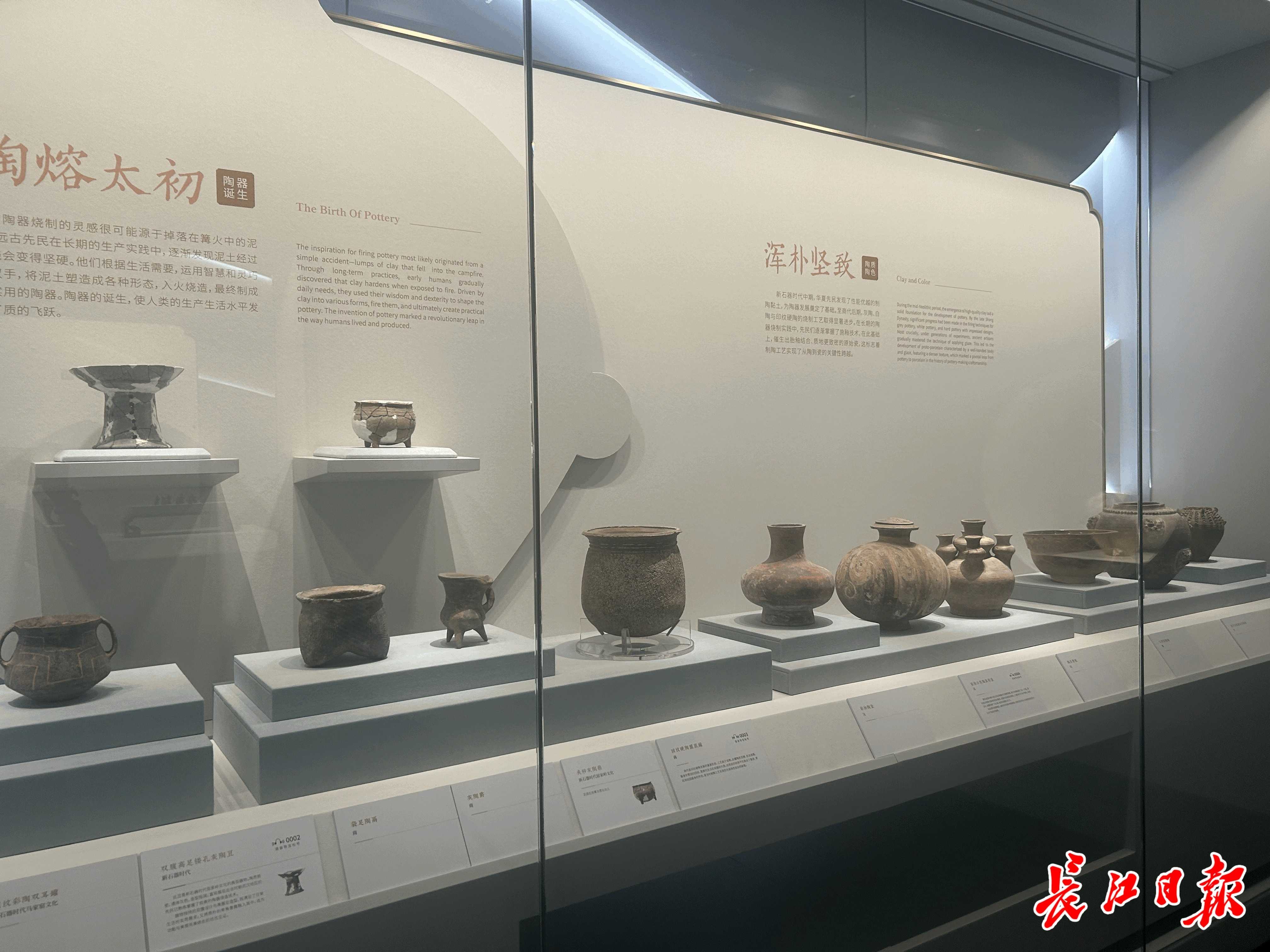
(新春见闻)钞氏兄弟的陶瓷艺术:用泥土提炼的“中国符号”
Zhong Guo Xin Wen Wang· 2026-02-09 07:05
Core Viewpoint - The article highlights the artistic journey of the Chao brothers, who transform ordinary clay into significant ceramic art pieces that embody "Chinese symbols" through innovative techniques and cultural storytelling [1]. Group 1: Artistic Process and Techniques - The Chao brothers, Chao Ziyi and Chao Ziwei, utilize various techniques such as kneading, shaping, glazing, and firing to create diverse forms from clay, including representations of old shoes and ancient books [1]. - They emphasize the difference between traditional pottery and ceramic art, noting that the latter requires higher standards for material strength and glaze control due to its larger and more complex shapes [1]. - Their notable work, the "Oriental Red" tractor, measures 2.6 meters in length and weighs approximately 2 tons, taking four years to complete due to challenges in maintaining structural integrity during the creation process [3]. Group 2: Cultural Significance and Themes - The brothers aim to capture historical depth and emotional warmth through their art, as seen in their "Doorway" series, which reflects their travels and cultural explorations [3]. - Their "108 Shoe Path" series illustrates diverse life trajectories through different footwear, symbolizing the flow of time and experiences [3]. - They are currently creating works themed around the Year of the Horse, intending to convey positive energy through auspicious imagery [4]. Group 3: Recognition and Collaborations - Their works have been collected by prestigious institutions such as the National Art Museum of China and Tsinghua University Art College, as well as galleries in New York [4]. - The brothers have engaged in collaborations with various galleries in Taiwan and have participated in multiple exhibitions, fostering cultural connections across regions [4]. - They recently unveiled a new work titled "CHINA," which incorporates elements from ancient jade and modern technology, aiming to distill a unique "Chinese symbol" from the long history of political, economic, and technological civilization [4].

用泥土承载生命温度(侨界关注)
Ren Min Ri Bao Hai Wai Ban· 2025-12-10 00:33
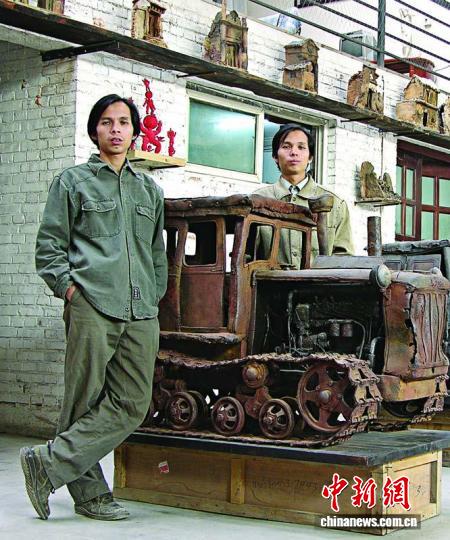
Core Viewpoint - The article highlights the artistic journey of ceramic artist Liang Wanying, emphasizing her deep connection to ceramics, cultural influences, and the emotional resonance of her work, which bridges traditional and contemporary art forms [3][4][9]. Background and Education - Liang Wanying has over ten years of experience in ceramics, with a Bachelor's degree from the Central Academy of Fine Arts and a Master's degree from Alfred University in the USA [3]. - Her artistic journey began in her childhood, inspired by her grandmother's traditional practices and the historical significance of ceramics [4]. Artistic Development - In 2018, she held a personal exhibition titled "Dreaming of Being a Guest," which garnered industry attention and showcased her reflections on life, heritage, and innovation through her ceramic works [5][9]. - Liang's work often reflects her personal experiences and emotions, with pieces designed to comfort both herself and others [7]. Themes and Inspirations - The "Mama-ware" series represents her newfound appreciation for domestic life and the often-overlooked contributions of women [7]. - Her large-scale work "Altar" features intricate floral forms, inviting viewers to explore deeper meanings beyond the surface [8]. Connection to Nature and Daily Life - Living in a rural American town, she draws inspiration from her surroundings, including her experiences raising chickens, which inform her artistic expression [8]. - Liang emphasizes the importance of everyday life in her art, believing that true creativity stems from genuine experiences and emotions [9]. Future Aspirations - Liang aims to continue exploring diverse environments for her creative process, seeking inspiration from various cultural and natural settings [10]. - She is committed to breaking down barriers between art and daily life, aspiring to make ceramics more accessible and relatable to a broader audience [9][10].
武汉博物馆新展启幕,380余件陶瓷珍品呈现千年瓷艺变迁
Chang Jiang Ri Bao· 2025-09-16 00:49
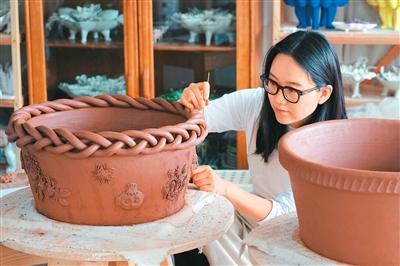
Core Viewpoint - The "Wonders of Ceramics: Ancient Ceramic Art Exhibition" at Wuhan Museum showcases the evolution of Chinese ceramic art over thousands of years, providing a comprehensive experience for the public through upgraded exhibits and interactive elements [1]. Exhibition Overview - The exhibition has been relocated to a new 700 square meter area on the third floor, featuring a redesigned layout that enhances visitor experience [5]. - Over 380 representative pieces have been selected from a collection of more than 10,000 ceramics, organized into four thematic units: "Mud and Fire," "Natural Beauty," "Artistic Craftsmanship," and "Timeless Elegance" [5]. - The exhibition traces the development of Chinese ceramics from the Neolithic period to the exquisite imperial porcelain of the Ming and Qing dynasties, illustrating the transition from utilitarian objects to aesthetic art [5]. Featured Artifacts - Key artifacts include a Neolithic frog-patterned ceramic pot, a Yuan dynasty blue-and-white vase, and a Qing dynasty Doucai plate, all of which are prominently displayed in the new exhibition space [7]. - The exhibition also features over a hundred rare items making their public debut, such as a Warring States period black pottery dancer and a Tang dynasty tri-colored jar [11][12]. Technological Innovations - The exhibition incorporates 3D digital modeling and animation technology to enhance the viewing experience, allowing visitors to understand the ceramic-making process interactively [14]. - An 8.5-meter-long digital scroll of Chinese ceramic culture connects significant historical milestones, utilizing touch-screen technology for an immersive experience [16]. Design Philosophy - The design emphasizes a "subtle and elegant" aesthetic, with simple and refined display cases that allow the colors of the ceramics to stand out in a clean environment [19]. - Scenic spots for photo opportunities are integrated into the exhibition, encouraging visitors to engage with the art while capturing memorable moments [19].