零售轮转理论

Search documents
中国便利店十年混战:谁赢了,谁还在拼?
创业邦· 2025-05-22 03:04
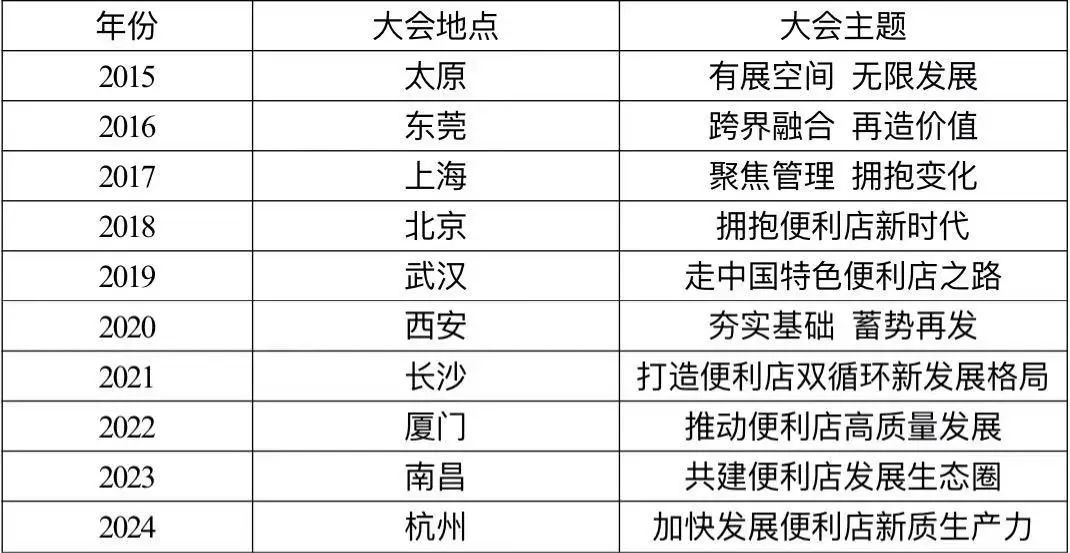
Core Viewpoint - The annual convenience store conference serves as a significant gathering for industry professionals, summarizing the past year's developments and forecasting future trends in the convenience store sector [3][5]. Group 1: Conference Themes Over the Years - The conference themes from 2015 to 2024 reflect the evolution of the convenience store industry, transitioning from market exploration to standardization and localization, and finally to digitalization and sustainable ecosystems [4][14]. - The themes from 2015 to 2017 focused on early exploration, emphasizing market potential and transformation distinct from traditional supermarkets [7][8][10]. - The themes from 2018 to 2020 highlighted the entry into a new era for convenience stores, stressing standardization, localization, and foundational improvements [11][12][14]. - The themes from 2021 to 2024 emphasize development, digitalization, and the creation of an ecosystem to meet consumer needs, showcasing the industry's maturity [14][28]. Group 2: Competitive Landscape - The competitive landscape for convenience stores has shifted from traditional competitors to cross-industry challenges, including snack stores, discount stores, and delivery platforms, which threaten the core value of "convenience" [5][15][17]. - The rise of discount stores and online delivery services has eroded the traditional advantages of convenience stores, necessitating a reevaluation of their value propositions [17][18]. - The retail wheel theory suggests that convenience stores must innovate and differentiate themselves to survive in a rapidly changing competitive environment [19]. Group 3: Strategic Responses - Convenience stores are adopting a long-term customer strategy, transitioning from membership to subscription models, focusing on creating value that encourages customer loyalty [23][24]. - The integration of diverse services and products in convenience stores is becoming a trend, with stores evolving into community hubs to meet local needs and counteract competition [27][28]. - Successful convenience store operators are demonstrating adaptability and innovation in response to market changes, emphasizing the importance of understanding consumer behavior and leveraging technology [28][29].

中国便利店十年竞合启示录
3 6 Ke· 2025-05-19 23:54
Core Insights - The annual convenience store conference will be held in Fuzhou, serving as a significant gathering for industry professionals to reflect on the past year and look forward to future developments [1] - The themes of the conference over the past decade reflect the industry's evolution and the challenges faced by convenience retail in adapting to new market dynamics [2][4] Group 1: Conference Themes and Evolution - The conference themes from 2015 to 2017 focused on early exploration, emphasizing market potential and expansion opportunities [4][6] - From 2018 to 2020, the themes highlighted the transition to a new era for convenience stores, with an emphasis on standardization, localization, and foundational improvements [8][12] - The themes from 2021 to 2024 indicate a shift towards developing an ecosystem for convenience stores, focusing on high-quality development and the integration of technology [10][14] Group 2: Competitive Landscape - The convenience store industry is currently facing blurred boundaries in competition, with challenges from various sectors such as snack shops, discount stores, and delivery platforms [3][15] - The competition has evolved from traditional peer rivalry to a broader challenge from diverse industries, necessitating a redefinition of value and innovation in the convenience store model [18][34] Group 3: Strategic Responses - To survive and thrive in the new competitive landscape, convenience stores must embrace innovation, differentiate their offerings, and leverage data insights to better understand consumer needs [19][20] - The shift from membership to subscription models is emerging as a strategy to enhance customer loyalty and engagement, focusing on delivering long-term value rather than just price [21][23] Group 4: Case Studies and Best Practices - Successful convenience store brands in Taiwan, such as 7-ELEVEn and FamilyMart, are adapting by introducing multi-functional stores that cater to community needs and enhance customer experience [28][30] - These brands are leveraging technology and innovative service offerings to transform their stores into community hubs, thereby increasing foot traffic and customer loyalty [32][34]