订阅经济

Search documents
国铁负债万亿,为何难赚老外的钱?
3 6 Ke· 2025-12-29 03:19
Core Viewpoint - The article discusses the challenges and opportunities in the travel and transportation sector, particularly focusing on the comparison between Switzerland's efficient travel systems and China's current limitations in facilitating inbound tourism [12][25]. Group 1: Travel Experience and Ticketing - Switzerland offers a travel pass that simplifies the ticketing process for tourists, allowing seamless access to various modes of transportation without the need for complex purchases [5][9]. - The Swiss travel pass not only saves money but also eliminates transaction time costs, making travel decisions straightforward for visitors [8][9]. - The article highlights that while the Swiss travel pass is designed for foreign tourists, local residents benefit from a different membership system that encourages frequent travel through discounted fares [15][16]. Group 2: Lessons for China's Transportation System - The article suggests that China's railway system could learn from Switzerland's approach by introducing subscription-based ticketing models to enhance user engagement and increase travel frequency [17][18]. - It emphasizes the need for a more integrated public transportation system in China, where different modes of transport work together seamlessly to improve the overall travel experience [20][21]. - The article points out that the current ticketing process in China can be a barrier for potential travelers, suggesting that simplifying this process could unlock significant domestic and international tourism potential [25][26]. Group 3: Economic Implications - The article argues that improving the travel experience and ticketing systems could lead to substantial economic benefits, as tourists spend significantly more on services beyond just transportation [29]. - It highlights the importance of viewing transportation as a means to connect and enhance the overall tourism experience, rather than merely a transactional service [22][24].


计算机行业点评报告:多邻国(DUOL.O):AI技术重塑教育生态,订阅驱动增长与全球化布局构筑盈利护城河
Huaxin Securities· 2025-06-19 08:35
Investment Rating - The report maintains a "Buy" recommendation for Duolingo, indicating a positive outlook for the company's performance in the market [12]. Core Insights - Duolingo's revenue for Q1 2025 reached $230.7 million, a year-on-year increase of 38%, driven primarily by a 45% growth in subscription revenue [4][5]. - The company's gross margin stood at 71.1%, reflecting a slight decrease of 190 basis points year-on-year, attributed to increased costs associated with Duolingo Max's generative AI [5][8]. - The user base has seen significant growth, with daily active users (DAU) reaching 46.6 million, a 49% increase year-on-year, and monthly active users (MAU) at 130.2 million, up 33% [6][7]. Revenue and Profitability - Subscription revenue accounted for 83% of total revenue, with paid users increasing by 40% to 10.3 million [4][5]. - Adjusted EBITDA reached $62.8 million, a 43% increase year-on-year, with a profit margin of 27.2% [5][8]. - Free cash flow was reported at $103 million, a 31% increase, indicating strong cash generation capabilities [5]. User Growth and Market Penetration - The report highlights a successful marketing campaign that generated 1.7 billion organic exposures, significantly boosting user registrations [6][7]. - Duolingo is expanding its product offerings beyond language learning, introducing non-language courses such as chess, and increasing the number of language courses to 28 [7][8]. AI Empowerment and Operational Efficiency - AI technology is integrated throughout Duolingo's operations, enhancing content production and user experience while reducing costs [8]. - The introduction of AI-driven features like Video Call allows users to practice real-time conversations, improving engagement [8]. Investment Recommendations - The report suggests that Duolingo is entering a phase of significant profitability growth, driven by its unique "AI + Education" positioning and subscription model [10]. - Continuous breakthroughs in AI technology, subscription model enhancement, and global market penetration are expected to drive future performance [10].
中国便利店十年混战:谁赢了,谁还在拼?
创业邦· 2025-05-22 03:04
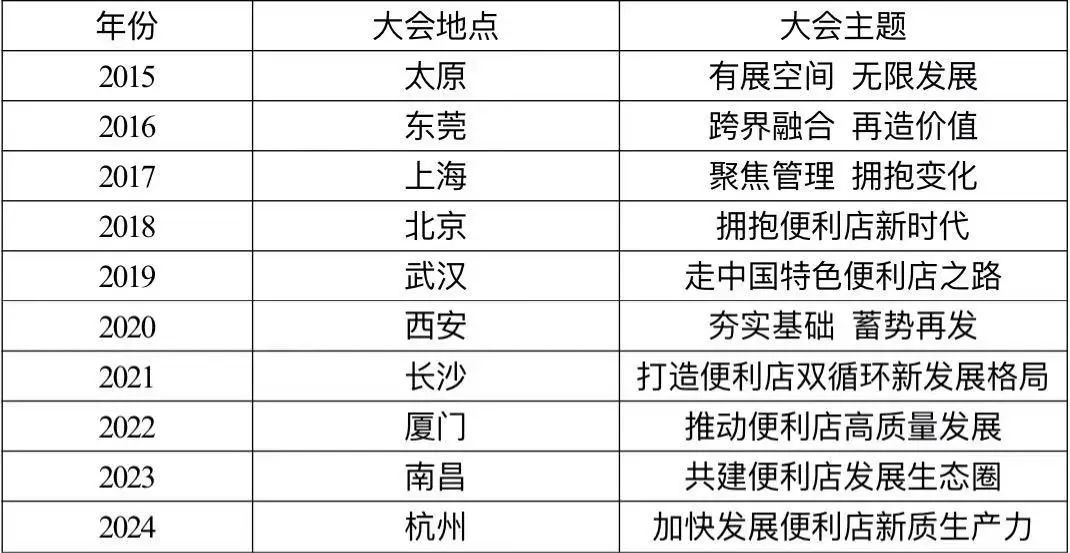
Core Viewpoint - The annual convenience store conference serves as a significant gathering for industry professionals, summarizing the past year's developments and forecasting future trends in the convenience store sector [3][5]. Group 1: Conference Themes Over the Years - The conference themes from 2015 to 2024 reflect the evolution of the convenience store industry, transitioning from market exploration to standardization and localization, and finally to digitalization and sustainable ecosystems [4][14]. - The themes from 2015 to 2017 focused on early exploration, emphasizing market potential and transformation distinct from traditional supermarkets [7][8][10]. - The themes from 2018 to 2020 highlighted the entry into a new era for convenience stores, stressing standardization, localization, and foundational improvements [11][12][14]. - The themes from 2021 to 2024 emphasize development, digitalization, and the creation of an ecosystem to meet consumer needs, showcasing the industry's maturity [14][28]. Group 2: Competitive Landscape - The competitive landscape for convenience stores has shifted from traditional competitors to cross-industry challenges, including snack stores, discount stores, and delivery platforms, which threaten the core value of "convenience" [5][15][17]. - The rise of discount stores and online delivery services has eroded the traditional advantages of convenience stores, necessitating a reevaluation of their value propositions [17][18]. - The retail wheel theory suggests that convenience stores must innovate and differentiate themselves to survive in a rapidly changing competitive environment [19]. Group 3: Strategic Responses - Convenience stores are adopting a long-term customer strategy, transitioning from membership to subscription models, focusing on creating value that encourages customer loyalty [23][24]. - The integration of diverse services and products in convenience stores is becoming a trend, with stores evolving into community hubs to meet local needs and counteract competition [27][28]. - Successful convenience store operators are demonstrating adaptability and innovation in response to market changes, emphasizing the importance of understanding consumer behavior and leveraging technology [28][29].

中国便利店十年竞合启示录
3 6 Ke· 2025-05-19 23:54
Core Insights - The annual convenience store conference will be held in Fuzhou, serving as a significant gathering for industry professionals to reflect on the past year and look forward to future developments [1] - The themes of the conference over the past decade reflect the industry's evolution and the challenges faced by convenience retail in adapting to new market dynamics [2][4] Group 1: Conference Themes and Evolution - The conference themes from 2015 to 2017 focused on early exploration, emphasizing market potential and expansion opportunities [4][6] - From 2018 to 2020, the themes highlighted the transition to a new era for convenience stores, with an emphasis on standardization, localization, and foundational improvements [8][12] - The themes from 2021 to 2024 indicate a shift towards developing an ecosystem for convenience stores, focusing on high-quality development and the integration of technology [10][14] Group 2: Competitive Landscape - The convenience store industry is currently facing blurred boundaries in competition, with challenges from various sectors such as snack shops, discount stores, and delivery platforms [3][15] - The competition has evolved from traditional peer rivalry to a broader challenge from diverse industries, necessitating a redefinition of value and innovation in the convenience store model [18][34] Group 3: Strategic Responses - To survive and thrive in the new competitive landscape, convenience stores must embrace innovation, differentiate their offerings, and leverage data insights to better understand consumer needs [19][20] - The shift from membership to subscription models is emerging as a strategy to enhance customer loyalty and engagement, focusing on delivering long-term value rather than just price [21][23] Group 4: Case Studies and Best Practices - Successful convenience store brands in Taiwan, such as 7-ELEVEn and FamilyMart, are adapting by introducing multi-functional stores that cater to community needs and enhance customer experience [28][30] - These brands are leveraging technology and innovative service offerings to transform their stores into community hubs, thereby increasing foot traffic and customer loyalty [32][34]