
霜降节气

Search documents
忙碌在霜降的田野上
Xin Hua She· 2025-10-23 15:44
Group 1 - The article highlights the arrival of the last solar term of autumn, "Frost's Descent," on October 23, 2025, indicating a transition to cooler weather [1] - Farmers across various regions are actively engaged in agricultural activities such as crop management and harvesting, showcasing their diligence [1]
文化中国行丨今日霜降 秋日山河饱和度拉满
Yang Shi Xin Wen Ke Hu Duan· 2025-10-23 08:47
Group 1 - The article discusses the arrival of the Frost's Descent solar term, marking a transition in nature as temperatures fluctuate significantly between day and night, signaling the preparation for winter [2] - It highlights the cultural significance of the Frost's Descent, emphasizing the wisdom of ancient people in adapting to seasonal changes and transforming harsh conditions into opportunities for a better life [4]

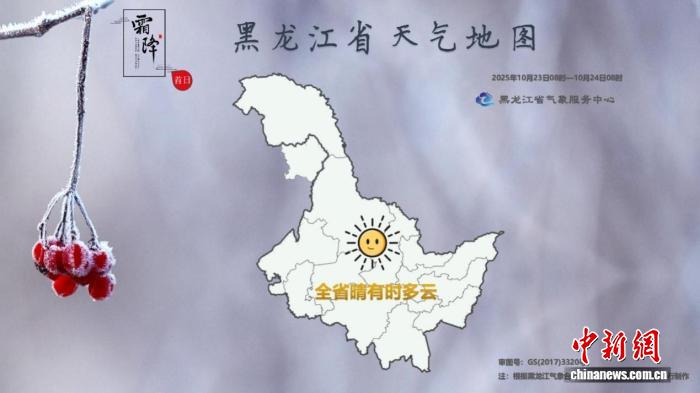
黑龙江:“霜降”至寒气凝 各地最低温降至0℃以下
Zhong Guo Xin Wen Wang· 2025-10-23 02:55
Core Points - The "Frost's Descent" solar term marks a significant drop in temperature, with the average daily temperature difference being the largest of the year [1][3] - In Heilongjiang Province, temperatures have dropped below 0°C, with northern areas experiencing average minimum temperatures between -7°C and -10°C [3][6] - The weather forecast indicates mostly clear weather in the coming week, with light snow expected from October 24 to 27 [7] Summary by Sections - **Temperature Changes**: The minimum temperatures across Heilongjiang have generally fallen below 0°C, with specific regions like Heihe and Daxing'anling seeing temperatures as low as -10°C [3][6] - **Weather Forecast**: The weather is expected to be mostly clear initially, with light snow anticipated later in the week, and wind gusts reaching up to 8 levels in some eastern areas [7] - **Seasonal Characteristics**: The "Frost's Descent" period is characterized by significant temperature drops and large day-night temperature variations, indicating the transition into winter [1][3]
今天是“秋季的最后一个节气”,北方多地早已冷似常年11月
Xin Jing Bao· 2025-10-23 02:22
Core Points - The arrival of the Frost Descent solar term marks the end of autumn and the beginning of winter in China, with significant temperature fluctuations expected [1] - Cold air is forecasted to impact northern regions from October 25 to 27, bringing temperature drops and strong winds [2] Weather Conditions - The Frost Descent period is characterized by the largest temperature differences between day and night, with initial frost already observed in several regions before the solar term [1] - Areas such as Hebei, Shandong, Shanxi, and Henan are expected to experience initial frost during the Frost Descent [1] - Rain and snow are primarily affecting the eastern part of the Tibetan Plateau, with forecasts of light to moderate snow in several provinces [1] Temperature Changes - The strongest cold air mass of the second half of the year has already caused temperatures to drop to levels typical of November and December across much of the country [2] - Specific regions, including Inner Mongolia and Northeast China, are expected to see temperature drops of 4°C to 6°C, with local areas experiencing drops exceeding 8°C [2]
冷空气席卷多地 今起影响进入尾声
Yang Shi Wang· 2025-10-22 20:25
Core Points - A strong cold air mass has swept across most parts of China since October 15, with temperatures expected to gradually rise after October 22, although it will still feel cool, necessitating warm clothing [1][3] - Snowfall occurred in Laiyuan County, Baoding, Hebei, with the lowest temperature dropping to 0°C, causing slippery roads and cautious driving [3] - Shanxi Province issued blue frost warnings, with temperatures in cities like Datong and Taiyuan also dropping to around 0°C, prompting agricultural departments to prepare for frost and protect crops [5] - In Jilin's Changbai Mountain, a rare natural phenomenon called evaporation fog was observed due to sudden temperature drops, creating a visually striking scene [7] - Zhejiang experienced a rapid temperature drop due to the cold air, with minimum temperatures falling to 13-15°C and strong winds causing a noticeable wind chill effect [9] - The upcoming frost descent on the 23rd marks a climatic turning point, with experts warning that blood pressure may rise, particularly among hypertensive patients, due to cold-induced vascular resistance [11]

霜降时节,去哪里寻红叶?收好“秋叶地图”
Ren Min Ri Bao· 2025-10-07 01:52
Core Points - Frost's arrival marks the transition from autumn to winter, with significant implications for agriculture and nature [1] - The phenomenon of leaf color change is influenced by various pigments and environmental factors, particularly temperature and light [2] - The timing and locations for autumn leaf viewing vary across China, with northern regions experiencing the earliest changes [3] Summary by Sections - **Frost and Its Significance** - Frost is the 18th solar term and the sixth of autumn, indicating the approach of winter [1] - It plays a dual role in nature, promoting the maturation of certain crops while signaling dormancy in others [1] - **Leaf Color Change Mechanism** - Leaves contain chlorophyll, carotenoids, and anthocyanins, which determine their color [2] - As temperatures drop in autumn, chlorophyll breaks down, revealing other pigments and leading to vibrant fall colors [2] - **Autumn Leaf Viewing Opportunities** - Different regions in China offer unique autumn leaf viewing experiences, with the best times varying by latitude [3] - Northeastern areas and Xinjiang are the first to showcase vibrant foliage from late September to late October [3] - Central regions follow with peak viewing from late October to mid-November, while southern areas experience their best displays starting mid-November [3] - **Notable Viewing Locations** - Beijing's Xiangshan is famous for its yellow poplar trees, creating stunning contrasts with green pines and ancient temples [3] - Benxi in Liaoning is known as the "Capital of Maple Leaves," featuring diverse maple species that change colors dramatically [3] - Scenic spots like Miyao and Jiuzhaigou in Sichuan offer breathtaking views of red leaves against snow-capped mountains [3]

霜降时节,何处寻红叶(文化中国行·二十四节气二十四问)
Ren Min Ri Bao· 2025-10-06 22:01
Core Viewpoint - The article discusses the significance of the Frost's Arrival (霜降) as the 18th solar term in the Chinese calendar, marking the transition from autumn to winter, and highlights the natural beauty of autumn leaves during this period [1][4]. Summary by Sections Section 1: Frost's Arrival - Frost's Arrival is the 18th solar term and the sixth in autumn, beginning on October 23, 2025 [1]. - It symbolizes the end of autumn and the onset of winter, with frost promoting the maturation of certain crops [1]. Section 2: Leaf Color Change - The color change in leaves is attributed to various pigments such as chlorophyll, carotenoids, and anthocyanins, with chlorophyll dominating in spring and summer [2]. - As temperatures drop in autumn, chlorophyll breaks down, revealing other pigments and leading to vibrant colors in leaves, particularly during Frost's Arrival [2]. Section 3: Autumn Leaf Viewing - The article outlines the best times and locations for viewing autumn leaves across China, with northern regions experiencing peak viewing from late September to late October [3]. - Notable locations include Beijing's Fragrant Hills, known for its yellow leaves, and Benxi in Liaoning, famous for its diverse maple trees [3]. Section 4: Cultural Significance - The changing leaves during this season represent a natural cycle and provide both visual enjoyment and a spiritual experience for observers [4].