《文博日历2026》

Search documents
文博日历丨材质混搭、配色绝美 这一罐尽藏东方汉韵
Xin Lang Cai Jing· 2026-02-24 22:23
Core Viewpoint - The article highlights the exquisite craftsmanship and aesthetic value of a lacquer jar from the Western Han Dynasty, showcasing its intricate design and the use of various precious materials. Group 1: Materials and Craftsmanship - The lacquer jar is made from a combination of gold, silver, copper, jade, crystal, and other materials, demonstrating a rich use of resources [4] - The jar features copper and crystal embellishments, with silver bands around the upper and lower parts, and jade ear decorations that add a dynamic element [7] - The jar's design includes a gold band with blue material beads and 16 jade peach-shaped ornaments, showcasing meticulous craftsmanship [7] Group 2: Aesthetic and Symbolism - The jar exemplifies the aesthetic principles of symmetry and color coordination, reflecting the advanced artistic sensibilities of the Han Dynasty [8] - The exterior is coated in black lacquer while the interior is red, creating a sophisticated color palette, with crystal and jade elements enhancing its visual appeal [8] - The phoenix motifs on the jar symbolize good fortune and peace, indicating the cultural significance of such designs in daily-use items from ancient times [8][9] Group 3: Cultural Significance - The lacquer jar serves as a representation of over 2000 years of Eastern aesthetics and the enduring brilliance of Chinese civilization [9] - The article promotes a cultural product, the "National Treasure Electronic Guide," which aims to enhance public engagement with historical artifacts [9]

文博日历丨这对年画祝你喜气盈门
Xin Lang Cai Jing· 2026-02-20 22:46
Core Viewpoint - The article highlights the significance of traditional Chinese New Year customs, particularly the practice of displaying New Year paintings, and promotes a series of museum activities celebrating these traditions during the festive period [1]. Group 1: New Year Paintings - New Year paintings are an essential part of Chinese culture, symbolizing the welcoming of the new year and the dispelling of evil [8]. - The history of New Year paintings dates back to ancient times, with references to "door god paintings" in the Han Dynasty [8]. - By the Northern Song Dynasty, New Year paintings had formally developed, becoming a popular custom during the New Year celebrations [9]. Group 2: Development of Yangzhou Woodblock New Year Paintings - Yangzhou woodblock New Year paintings emerged in the mid-Ming Dynasty, benefiting from the flourishing of printing techniques and the local book industry [9]. - The unique characteristics of Yangzhou woodblock paintings have made them a representative form of folk art in the region [9]. - The article mentions upcoming events at the Yangzhou Museum, including a woodblock printing experience and various exhibitions related to the New Year [10].
文博日历丨二十八,贴花花~宋代茶盏里“贴”了一对凤凰
Xin Lang Cai Jing· 2026-02-14 23:02
Group 1 - The article highlights the significance of a Song Dynasty tea bowl, known for its elegant design and craftsmanship, particularly the black glaze and intricate decorations [4][6] - The tea bowl features a unique combination of black glaze with brown speckles and a yellow-brown interior glaze, showcasing fine rabbit-hair patterns, with two phoenixes and three plum blossoms as the main decorative elements [6][7] - The craftsmanship of the Jizhou kiln is emphasized, showcasing innovative techniques such as embedding leaves into ceramics, which reflects a blend of traditional and contemporary artistic expressions [6][7] Group 2 - The phoenix, a symbol of auspiciousness and prosperity in Chinese culture, is prominently featured in the tea bowl's design, representing good fortune and harmony, especially relevant during the New Year celebrations [7][8] - The article discusses the evolution of decorative techniques, including the use of paper-cutting in ceramics, which has become a hallmark of Jizhou kiln products, illustrating the cross-disciplinary nature of Chinese art [7][8] - The enduring appeal of the phoenix and floral motifs in Chinese art is noted, as they continue to symbolize beauty and the aspiration for a good life, reflecting cultural continuity [8]
文博日历丨跟着明代女子做发型 戴上它诠释极繁之美
Xin Lang Cai Jing· 2026-02-07 22:52
Group 1 - The article highlights the exquisite craftsmanship of Ming Dynasty hairpins, particularly the gold wire inlaid with gemstones double phoenix pattern hairpin, which is described as an "eye-catching artifact" in the realm of hair accessories [2][5] - The design of the hairpin embodies the "extreme complexity" aesthetic of the Ming Dynasty, featuring intricate motifs such as rolling grass patterns and auspicious clouds, symbolizing beauty and good fortune [7][5] - The article emphasizes the meticulous gold wire craftsmanship involved in creating the hairpin, which includes processes like pulling gold into fine strands and assembling them into detailed shapes, resulting in a stunning three-dimensional effect [8] Group 2 - Ming Dynasty women had a unique aesthetic approach to hairstyles, often using multiple hair accessories to create a cohesive look, with a complete set typically consisting of 10 to 13 pieces [8] - The article mentions the use of a special hair cover called "dí jì," made from gold and silver threads, which was commonly worn by married women during formal occasions, enhancing the overall elegance of their hairstyles [8] - Each piece in the hair accessory set had a designated position, contributing to the overall "head adornment" style that was both dignified and graceful [8]
文博日历丨摸着温热不烫手,送你一件“冬日暖手好物”
Xin Lang Cai Jing· 2026-02-01 22:24
Core Viewpoint - The article introduces a beautifully designed hand warmer, the "Qing Bronze Enamel Hand Warmer with Pine Deer Design," emphasizing its practicality and aesthetic appeal as a winter essential [2][4]. Group 1: Product Description - The hand warmer features an oval diamond shape and is made with a copper-gilded handle that opens and closes [4][6]. - The design includes a hollow lid with a "卍" pattern and diamond-shaped openings, decorated with floral motifs and a charming depiction of two deer [6][7]. Group 2: Functionality - The hand warmer operates by placing burning charcoal inside a copper inner container, allowing heat to transfer through the air between the inner and outer layers, ensuring it remains warm but not too hot to touch [7]. - It can also serve as a "mobile fragrance" device by adding spices along with the charcoal, making it a versatile accessory [7]. Group 3: Cultural Significance - The hand warmer reflects the rich history of Chinese "炉" culture, which evolved from practical cooking and heating tools to decorative household items as craftsmanship advanced [8]. - The article highlights the transition of hand warmers from being used by nobility to becoming common among the general populace, showcasing their widespread appeal [8].
文博日历丨古人冬日“松弛感”图鉴:围炉烤火赏梅花
Xin Lang Cai Jing· 2026-01-31 22:37
Core Viewpoint - The article explores the serene and poetic essence of winter life as depicted in the painting "West Lake Yinqu Tu" by Qian Xuan, highlighting the tranquility and beauty of simple moments in nature and art [6][10]. Group 1: Artistic Representation - The painting captures a moment of leisure with a scholar appearing to be daydreaming, surrounded by a child and a crane, emphasizing the theme of tranquility in winter [6][9]. - The details in the painting, such as the child's playful actions and the elegant crane, reflect a gentle warmth against the cold winter backdrop, creating a sense of peaceful coexistence [8][9]. Group 2: Historical Context - The central figure in the painting is Lin Bu, a renowned recluse from the Northern Song Dynasty, who lived a life devoted to nature and art, famously stating he preferred plum blossoms and cranes over worldly affairs [9]. - Qian Xuan, the artist, aligns himself with Lin Bu's philosophy, choosing a similar path of seclusion and artistic expression during the transitional period between the Song and Yuan dynasties [10]. Group 3: Artistic Philosophy - Qian Xuan, as part of the "Eight Talents of Wuxing," initiated an artistic revolution that rejected the overly ornate styles of Southern Song court painting, advocating for a return to the simplicity and spirit of earlier Chinese art [10]. - The painting "West Lake Yinqu Tu" serves as Qian Xuan's artistic declaration, showcasing a minimalist composition and subtle colors that embody a harmonious aesthetic pursuit [10].
文博日历丨来自三星堆的虎牙,长得好像“腊八蒜”
Xin Lang Cai Jing· 2026-01-25 22:24
Group 1 - The article discusses the cultural significance of "Laba garlic" in North China, particularly its connection to the ancient Shu civilization and the discovery of tiger teeth artifacts at the Sanxingdui site [2][10] - The three tiger teeth artifacts are noted for their green color, resembling Laba garlic, and are believed to have been used as decorative items by ancient Shu people [4][9] - The green coloration of the tiger teeth is attributed to their burial alongside bronze artifacts for over three thousand years, leading to a unique patina similar to the fermentation process of Laba garlic [9] Group 2 - The ancient Shu civilization had a tradition of revering tigers, with tiger teeth symbolizing power and protection, as evidenced by various tiger-shaped artifacts found at the Sanxingdui site [10] - The origin of Laba garlic is linked to ancient commercial practices, where the day of Laba was a time for settling debts, leading to the custom of pickling garlic as a metaphor for "calculating" debts [10] - The article highlights the communal aspect of Laba garlic preparation, with villagers gathering to participate in the tradition, emphasizing its cultural importance [10]
文博日历丨大寒过去春将至,喜鹊为您送祝福啦~
Xin Lang Cai Jing· 2026-01-24 22:40
Group 1 - The article highlights the arrival of spring symbolized by the blooming of plum blossoms and the presence of magpies, which are seen as harbingers of good fortune [4][5] - The plum blossom, known as "the spring flower," represents five blessings: happiness, longevity, smoothness, peace, and joy [5] - The artistic representation of plum blossoms and magpies reflects traditional Chinese aesthetics, emphasizing auspicious meanings and the pursuit of a beautiful life [5] Group 2 - The painting described features a dynamic composition with a magpie diving towards the plum blossoms, symbolizing the announcement of spring [4] - The structure of the artwork, which omits the trunk and roots of the plum tree, creates a sense of space and continuity, suggesting the cyclical nature of life [4] - The combination of magpies and plum blossoms has been a popular motif in Chinese art, often associated with celebrations and good news [5]
文博日历丨双手托起小孩,这个动作叫
Xin Lang Cai Jing· 2026-01-22 22:14
Group 1 - The article discusses a significant artifact from the Shang Dynasty, known as the "Jü Fang Ding," which is essentially a square cooking vessel [4] - The vessel features a pair of standing ears, a neck that narrows inward, and a slightly bulging abdomen, giving it a unique and charming appearance [6] - The decoration includes beast face patterns and cloud and thunder motifs, which are considered classic designs of Shang bronze vessels, enhancing the overall elegance and liveliness of the piece [8] Group 2 - The interior of the vessel bears inscriptions, including "Jü Zu Xin Yu," and the emblem of an important Shang clan, "Jü," indicating its historical significance [9] - The character "Jü" has been interpreted by scholars as symbolizing nurturing, reflecting the clan's role in ancient society [10] - The Jü clan played a crucial role during the late Shang Dynasty, with many members holding significant positions and being favored by the Shang kings [10]
文博日历丨别说没灵感!国风设计“素材包”有了
Xin Lang Cai Jing· 2026-01-21 22:38
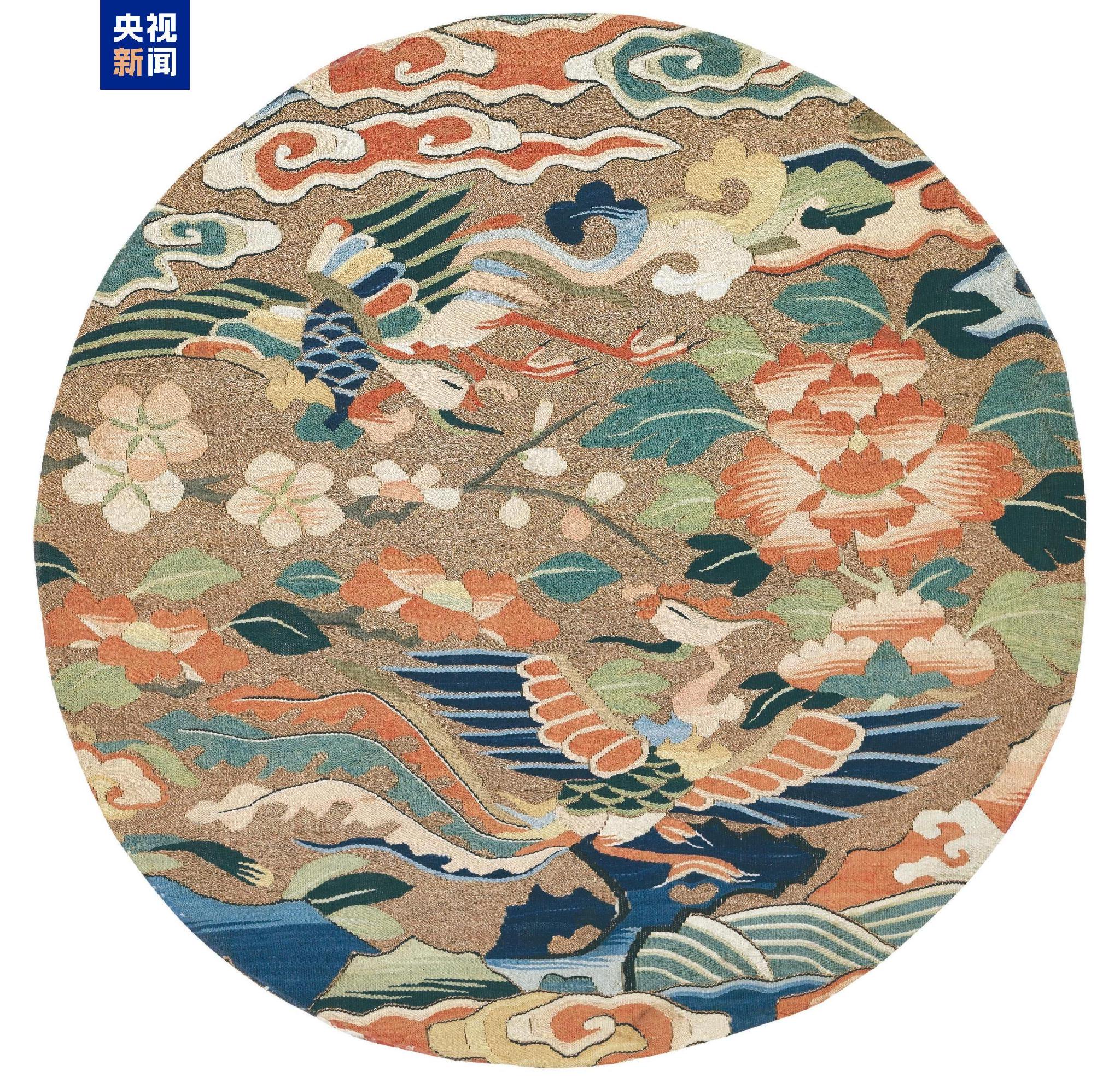
Core Viewpoint - The article highlights the significance of traditional Chinese patterns in modern fashion, particularly in the context of the upcoming Spring Festival, showcasing how these designs embody Eastern aesthetics and cultural heritage [1][4]. Group 1: Traditional Patterns - The "Kesi Phoenix and Peony Round Flower" is a prime example of traditional Chinese patterns, symbolizing wealth and auspiciousness through its intricate design and use of Kesi weaving techniques [4]. - The combination of the phoenix, representing the king of birds, and the peony, the king of flowers, in the "Phoenix and Peony Pattern" signifies nobility and good fortune [4]. - The "Round Flower Pattern" features a circular structure, with various elements like the phoenix and peony, conveying themes of prosperity and harmony [4]. Group 2: Cultural Significance - The "Cloud Pattern" is a classic element in Chinese history, with its typical features emerging during the Ming and Qing dynasties, symbolizing auspiciousness and harmony [5]. - The "Joyful Reunion" pattern, characterized by its yin-yang duality, reflects traditional Chinese philosophical concepts and has evolved over time to include various artistic expressions [5]. - Traditional patterns like "Joyful Reunion" are often used in various art forms, including ceramics, textiles, and paper-cutting, showcasing their enduring relevance in contemporary design [5]. Group 3: Modern Integration - The fusion of traditional patterns with modern technology and fashion has reached new heights, appealing to contemporary youth and enhancing the influence of "Chinese beauty" [6]. - These ancient designs are being transformed into fashionable expressions, resonating with the aspirations for a beautiful life among the younger generation [6]. - The article emphasizes the ongoing integration of traditional motifs into modern life, including clothing design and cultural products, revitalizing their significance in today's society [6].