非粮生物制造

Search documents
安徽企业突破秸秆制糖成本瓶颈 非粮生物制造万亿级赛道迎来黄金发展期
Xin Hua Wang· 2026-01-09 12:22
Core Viewpoint - Anhui Province is accelerating the construction of a green closed loop in the biomanufacturing industry, transitioning from "straw resource utilization" to "material decarbonization," driven by technological breakthroughs and industry chain collaboration [1][2]. Policy Guidance - The State Council's implementation opinions aim to promote the widespread application of biotechnology in new materials, construction, energy, and environmental protection, focusing on biobased material substitution and low-carbon conversion [2]. - Various regions are formulating biomanufacturing industry plans and policies to optimize the industrial environment, with Anhui's biomanufacturing cluster expected to exceed 30 billion yuan in output value by 2026 [2]. Technological Breakthroughs - Biomanufacturing is transitioning from "natural extraction" to "life programming," with the industry expected to enter a golden development period during the 14th Five-Year Plan, driven by national strategy, technological advancements, and market demand [3]. Innovations in Biomanufacturing - Anhui Fengyuan Biotechnology Co., Ltd. has developed a second-generation biomanufacturing technology using straw as raw material, achieving high conversion rates and significant cost advantages [4][5]. - The technology allows for the production of 1 ton of mixed sugar from 3 tons of straw, with a cellulose hydrolysis rate exceeding 90% and a cost of mixed sugar not exceeding 1,000 yuan per ton, significantly lower than corn-based glucose production [4]. Industry Implementation - The "distributed factory" model is activating the county economy, with projects in Shandong and Anhui demonstrating a closed-loop industrial chain from straw processing to biobased materials and energy [6]. - Fengyuan Group is establishing modular projects across multiple provinces, creating a complete industrial chain from agricultural waste collection to biobased product production [6]. Ecological Closure - Anhui Province aims to transform straw from agricultural waste into a "green carbon source," reducing reliance on food resources and promoting green agriculture through high-value byproducts [7]. - The technology addresses the challenges of the polylactic acid market, which faces issues such as small scale and insufficient policy support [7]. Recommendations for Development - Experts suggest implementing a comprehensive ban on plastic in Anhui, promoting biobased materials in government and educational institutions, and establishing a "green procurement list" [8][9]. - Strengthening policy and financial support for straw sugar projects and encouraging the listing of key biomanufacturing enterprises to broaden financing channels [8][9]. Market Expansion - Encouraging the use of polylactic acid composite materials in automotive and construction sectors, and promoting biobased products through events and e-commerce platforms [9]. - The establishment of a biobased materials innovation laboratory in Zhejiang marks a significant step in digital research and development in the field, providing a model for Anhui [9].
60万吨!10亿元!秸秆生物转化项目落地江苏宝应
合成生物学与绿色生物制造· 2026-01-08 08:28
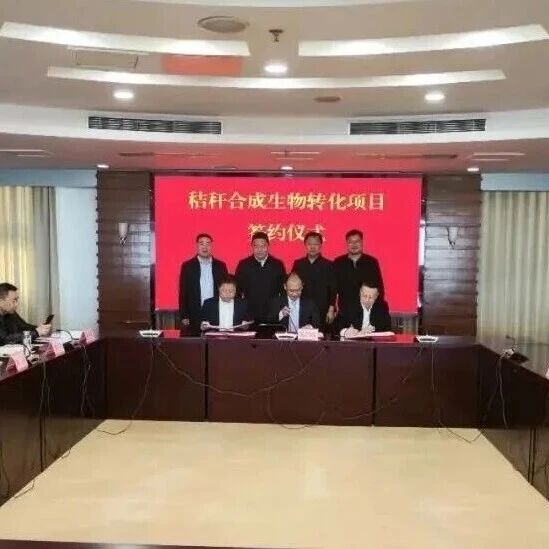
Core Viewpoint - The article discusses the signing of a straw bioconversion project in Baoying County, highlighting the investment and production capacity of the project, which aims to utilize agricultural waste for sustainable feed production [2][4]. Group 1: Project Overview - The straw bioconversion project has a planned total capacity of 600,000 tons and a total investment of 1 billion yuan, with the first phase covering approximately 60 acres and involving the construction of a 30,000 square meter factory [2]. - The first phase includes an investment of 80 million yuan for a production line capable of converting 150,000 tons of straw into fermented feed, projected to generate annual sales exceeding 300 million yuan and tax contributions over 8 million yuan [2]. - The second phase plans to invest in a production line for 200,000 tons of straw-derived single-cell protein feed [2]. Group 2: Company Background - Zhongke Kangyuan (Tangshan) Biotechnology Co., Ltd. was founded by Dr. Zhang Dongyuan, a researcher from the Tianjin Institute of the Chinese Academy of Sciences, and is recognized as a "National High-tech Enterprise" and a "Specialized and Innovative Enterprise" in Hebei Province [4]. - The company focuses on the research and development of biomass depolymerization molecular chemical processes, having established two provincial R&D platforms and one production base with a capacity of 200,000 tons [4]. - Zhongke Kangyuan has participated in 14 research projects, including one that is part of three national key R&D projects, and holds 36 national intellectual property patents [4]. Group 3: Investment and Financing - Zhongke Kangyuan completed its first round of financing in December 2025, successfully attracting strategic investors including the National Development Investment Group and Wuxi Innovation Investment Group [5].

聚力杭实基金拟战略注资路德科技子公司
Zhong Zheng Wang· 2025-12-23 01:00
Core Insights - The strategic cooperation between Lude Technology and Guotou Juli marks a significant capital movement in the biomanufacturing sector, with a total investment of 117 million yuan aimed at enhancing the company's focus on biomanufacturing [1][2] Group 1: Investment Details - Guotou Juli's fund, Juli Hangshi, plans to strategically invest in three core subsidiaries of Lude Technology, with investments of 35 million yuan in Bozhou Lude, 45 million yuan in Suqian Lude, and 37 million yuan in Yongle Lude [1] - This investment is part of a broader initiative by state-owned capital to deepen its involvement in the non-grain biomanufacturing industry, contributing to agricultural green transformation and national food security [1][2] Group 2: Strategic Collaboration - The collaboration highlights the synergy between national and local investment strategies, with Guotou Juli being a key player in the state-owned enterprise sector, managing assets exceeding 800 billion yuan [2] - The partnership aims to leverage the strengths of both national and local capital to create a resource network that connects national strategies with local industry needs [2] Group 3: Technological and Product Development - The three subsidiaries are pivotal to Lude Technology's transition from environmental governance to high-tech biomanufacturing, utilizing by-products from the food industry to produce high-quality biopharmaceutical feed [3] - Lude Technology has committed to investing at least 30 million yuan in research and development of protein feed resources from 2026 to 2028, aiming to enhance the protein content of its products [4] Group 4: Industry Ecosystem and Future Outlook - The investment is not merely financial but is seen as a strategic move to build a biomanufacturing ecosystem, crucial for addressing food security and agricultural livelihoods [5] - Future collaborations will focus on innovative uses of non-grain biomass and the development of functional bioproducts, contributing to cost reduction and efficiency in the livestock industry [6]

工信部又发文!35项非粮生物制造典型案例上榜,这些企业值得关注!
合成生物学与绿色生物制造· 2025-12-09 11:59
Core Insights - The article discusses the announcement by the Ministry of Industry and Information Technology and the Ministry of Agriculture and Rural Affairs regarding the selection of typical cases for the innovation and development of non-grain bio-based materials, highlighting 25 key technological innovations, 8 application scenarios, and 2 characteristic gathering areas [2]. Group 1: Key Technological Innovations - A total of 25 enterprises have been recognized for their key technological innovations in non-grain bio-based materials, including companies like Shandong Elpai Powder, Wuhan Ruijia Kang Biological, and Guangdong Boxing New Materials [3]. - Shandong Elpai Powder has developed a technology for preparing silicon-carbon anode materials using agricultural straw and organic waste, addressing issues like volume expansion and conductivity [4]. - Wuhan Ruijia Kang Biological has created high-yield industrial strains and efficient genome editing technologies to produce high-purity lactic acid from non-grain biomass [5]. - Guangdong Boxing New Materials has developed high-performance light-cured resin technology from plant oils, enhancing material strength and curing speed [6]. - Heilongjiang Boneng Green Energy has implemented a circular model for processing agricultural waste into biogas, methanol, and organic fertilizers [7]. Group 2: Application Scenario Expansions - Eight enterprises have been recognized for their innovative applications of non-grain bio-based materials, including Shanghai Kaisa Biotechnology and Weifang Xinlong Biological [29]. - Shanghai Kaisa has developed high-strength, lightweight non-grain bio-based polyamide composite materials for cold chain logistics, achieving a weight reduction of 20% compared to traditional materials [30]. - Weifang Xinlong has successfully scaled up the production of inorganic flame-retardant fibers, addressing safety concerns associated with traditional flame-retardant materials [32]. - Suzhou Juwei Yuan Chuang has created green packaging solutions from brewing by-products, significantly reducing carbon emissions [33]. - Anhui Fengyuan has focused on the application of polylactic acid (PLA) in mineral water bottles, promoting environmental benefits [34]. Group 3: Characteristic Gathering Areas - The Anhui Guzhen Economic Development Zone has been recognized for its focus on the comprehensive utilization of biomass, developing a robust industrial chain from straw to polylactic acid [40]. - The Nanle County Advanced Manufacturing Development Zone has established innovation platforms for low-carbon utilization of biomass, creating a collaborative innovation environment for cellulose, hemicellulose, and lignin [42].

聚焦“非粮+农业”赛道,中科康源获国投融资,20万吨级生物饲料生产线已完成
合成生物学与绿色生物制造· 2025-12-04 08:11
Core Viewpoint - Zhongke Kangyuan has successfully completed its first round of financing, marking a significant milestone in its development of non-grain biomass manufacturing technology using straw as a raw material, receiving recognition from both state-owned enterprises and local venture capital institutions [1] Group 1: Addressing Straw Conversion Challenges - China generates over 900 million tons of agricultural and forestry waste annually, with about 700 million tons being agricultural straw, but the resource utilization rate remains low [3] - Zhongke Kangyuan focuses on the efficient biological conversion of lignocellulosic biomass, having developed a proprietary continuous controllable temperature oxidation pretreatment process that effectively breaks down the degradation barriers of straw [3][4] Group 2: Supporting Livestock Industry Cost Reduction and Efficiency - The "New Energy Source" digestible sugar and protein products developed by Zhongke Kangyuan have over 55% digestible sugar content and over 8% crude protein content, allowing for a 1:1 replacement of corn in ruminant feed [7] - Trials at a leading domestic enterprise's farm showed an increase of 0.19 kg/day in dry matter intake per cow, with feed costs decreasing by over 0.35 yuan per cow per day, while improving milk fat and protein rates [7][8] Group 3: 200,000 Ton Project Commencement - The 200,000-ton straw bioconversion project in Tangshan has officially commenced production, covering 70 acres with a total investment of 240 million yuan, utilizing proprietary equipment and an intelligent control system [9] - Zhongke Kangyuan is accelerating the replication of this industrialization across major agricultural production areas in China, establishing a resource utilization network covering key straw-producing regions [9] Group 4: Aligning with National Development Goals - The national strategy emphasizes the importance of "biomanufacturing" as a key direction for future industries, focusing on high-value utilization of agricultural and forestry waste and the development of non-grain biomass conversion technologies [10] - Zhongke Kangyuan's technology aligns with these policies, aiming to alleviate feed grain pressure and provide non-grain carbon sources for downstream industries, contributing to China's transition from "catching up" to "leading" in biomanufacturing [10]

中科柏易金郑明远:秸秆糖催化转化制乙二醇技术进展
合成生物学与绿色生物制造· 2025-11-08 15:10
Core Viewpoint - The article discusses the advancements in bio-based ethylene glycol production from biomass resources, highlighting the significance of this technology for sustainable economic development and carbon neutrality goals [2]. Group 1: Bio-based Ethylene Glycol Production - Ethylene glycol is an important polyester monomer, traditionally produced from fossil raw materials like petroleum ethylene. The use of biomass resources such as straw offers a renewable, low-carbon alternative for producing bulk chemicals [2]. - The technology for producing bio-based ethylene glycol was pioneered by a team led by Academician Zhang Tao from Dalian Institute of Chemical Physics in 2008, with the first pilot plant established in Puyang, Henan in early 2022. The plant successfully produced bio-based ethylene glycol in June 2022, achieving a seamless process flow [2]. - The bio-based ethylene glycol produced has been tested and found to have superior quality compared to coal-based ethylene glycol, with performance comparable to petroleum-based products. The next step involves scaling up the technology to a ten-thousand-ton industrial facility [2]. Group 2: Company Overview - Zhongke Baiyi Jin (Zhengzhou) New Energy Technology Co., Ltd., established in 2019, focuses on the industrialization of bio-based low-carbon diols and is a high-tech enterprise in the biomass energy development sector [3]. - The company will participate in the 2025 Non-grain Biomass High-Value Utilization Forum, where Chairman Zheng Mingyuan will present on the progress of straw sugar catalytic conversion technology for ethylene glycol [3][6]. Group 3: Forum and Industry Engagement - The 2025 Non-grain Biomass High-Value Utilization Forum will take place from November 27-29 in Hangzhou, featuring various sessions on bio-based chemicals and materials [8][9]. - The forum will showcase over 50 reports and include a special youth forum aimed at discovering innovative technological achievements in the field of non-grain biomass [8][9].
聚维元创:秸秆糖开放公测|1000份样品等你来拿
合成生物学与绿色生物制造· 2025-05-29 01:36
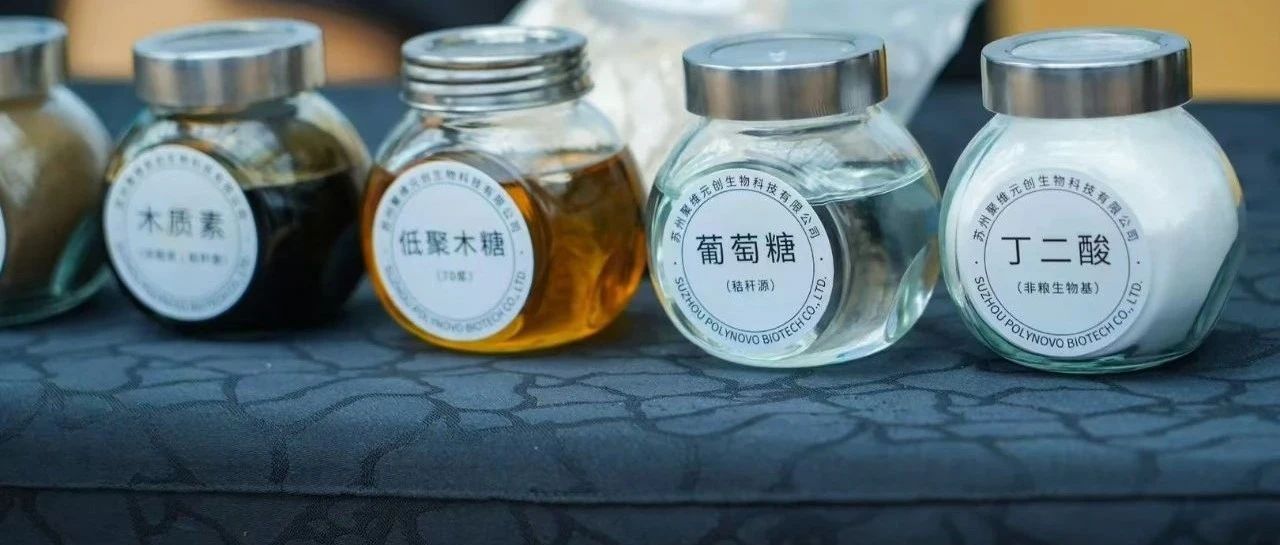
Core Viewpoint - The article highlights the advancements and innovations of Suzhou Juwei Yuanchuang Biotechnology Co., Ltd. in the field of bio-manufacturing, particularly focusing on the use of straw as a raw material for producing high-quality glucose and other bio-based products, aligning with sustainability goals and carbon reduction strategies [1][6][11]. Group 1: Company Overview - Suzhou Juwei Yuanchuang Biotechnology Co., Ltd. specializes in bio-manufacturing using straw as a raw material, developing a full chain of self-research and production capabilities [11]. - The company has established a straw saccharification and bio-manufacturing capacity of 100,000 tons per year [6][11]. - The core management team comprises experts from prestigious institutions such as Tsinghua University and MIT, with extensive research achievements in various fields [11]. Group 2: Product Offerings - The company showcased a series of products at the 10th Bio-based Conference, including straw-derived glucose, lignin, oligosaccharides, and non-food-based succinic acid [1][6]. - The straw sugar source can be widely used in the production of bio-based materials, animal nutrition products, and industrial enzymes [9][11]. Group 3: Industry Impact - Bio-manufacturing is positioned as a crucial driver for creating greener and more sustainable production models, with straw sugar as a key component for cost reduction and efficiency improvement [6]. - The company's innovations are expected to significantly reduce carbon emissions, aligning with the "dual carbon" strategic goals [6]. Group 4: Sample Distribution Initiative - The company is offering 1,000 free samples of its products, inviting various units to apply for trial use [5][9]. - The application process involves verifying information and tracking project progress through various communication methods [8][10].