顿悟

Search documents
关于顿悟时刻的8个洞见
3 6 Ke· 2025-11-27 07:45
Core Insights - The article discusses the phenomenon of insight, particularly how it is experienced and understood in the context of problem-solving and creativity [4][6][12] Group 1: Nature of Insight - Insight is defined as a sudden transformation or formation of concepts or knowledge representations that typically leads to problem-solving [4] - The experience of insight is characterized by a cognitive component (the thought process leading to a solution) and an emotional component (the emotional response during the insight moment) [7] - Insight often arises from the reorganization of cognition, where individuals must overcome cognitive biases and constraints to find solutions [8] Group 2: Mechanisms and Conditions for Insight - The path to insight requires cognitive restructuring, which involves recognizing and overcoming incorrect assumptions about a problem [8] - Relaxation is identified as a crucial factor in fostering insight, as it allows individuals to step back from a problem and encourages creative thinking [9] - The aesthetic pleasure associated with insight moments contributes to their appeal, as solutions often feel beautiful and coherent [10] Group 3: Psychological Effects of Insight - Insight experiences are often accompanied by a strong sense of confidence, known as the accuracy effect, where individuals feel they have understood the solution correctly [11] - There is a warning against false insights, which can lead to overconfidence based on incorrect assumptions [12] - Insight moments provide meaningful understanding and joy, driving curiosity and human engagement [12] Group 4: Ingredients for Insight - Insight relies on attention, knowledge base, distant associations, and an open mindset, often connecting seemingly unrelated concepts [13] - The article emphasizes that there is no fixed formula for achieving insight, as it is a complex interplay of various cognitive and emotional factors [13]


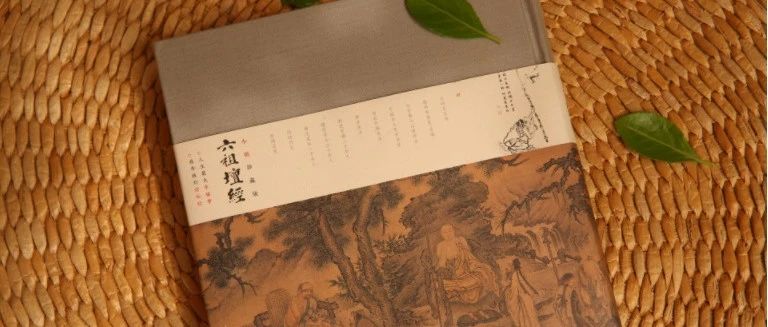
史上最美小楷《六祖坛经》,让您走入禅宗顿悟的神奇之门!
首席商业评论· 2025-06-14 04:26
Core Viewpoint - The article emphasizes the significance of the "Platform Sutra of the Sixth Patriarch" by Huineng as a vital text in Chinese Buddhism, regarded as a must-read for personal development and understanding of Zen principles [9][12][47]. Group 1: Importance of the "Platform Sutra" - The "Platform Sutra" is considered a unique Buddhist text, being the only one referred to as a "sutra" in Chinese Buddhism, highlighting its exceptional status [6][22]. - Influential figures, including Chairman Mao and renowned scholars like Qian Mu, have recognized the "Platform Sutra" as essential reading, placing it alongside other classic texts like "The Analects" and "Tao Te Ching" [10][12]. - The text is recommended for all ages, with the notion that it provides insights relevant to different life stages, making it beneficial to read at any time [12][27]. Group 2: Huineng's Life and Teachings - Huineng, originally a woodcutter, became the Sixth Patriarch of Zen Buddhism, illustrating a remarkable journey from humble beginnings to spiritual enlightenment [5][14]. - His teachings emphasize the concept of inherent Buddha-nature in all beings, advocating for an internal search for enlightenment rather than external pursuits [27][28]. - The "Platform Sutra" contains ten chapters, each addressing different aspects of Zen practice and philosophy, including the nature of wisdom, meditation, and the importance of self-awareness [25][39]. Group 3: Versions and Accessibility of the Text - The "Platform Sutra" has multiple versions due to historical transcription and publication, with the most popular being the one compiled by the monk Zongbao during the Yuan Dynasty [41][43]. - A newly published edition, the "Small Calligraphy Edition of the Platform Sutra," combines calligraphy, illustrations, and modern interpretations, making it accessible for contemporary readers [40][45][47]. - This edition aims to facilitate understanding of Zen principles, allowing readers with no prior knowledge of Buddhism to engage with the text meaningfully [47].