
预付制消费

Search documents
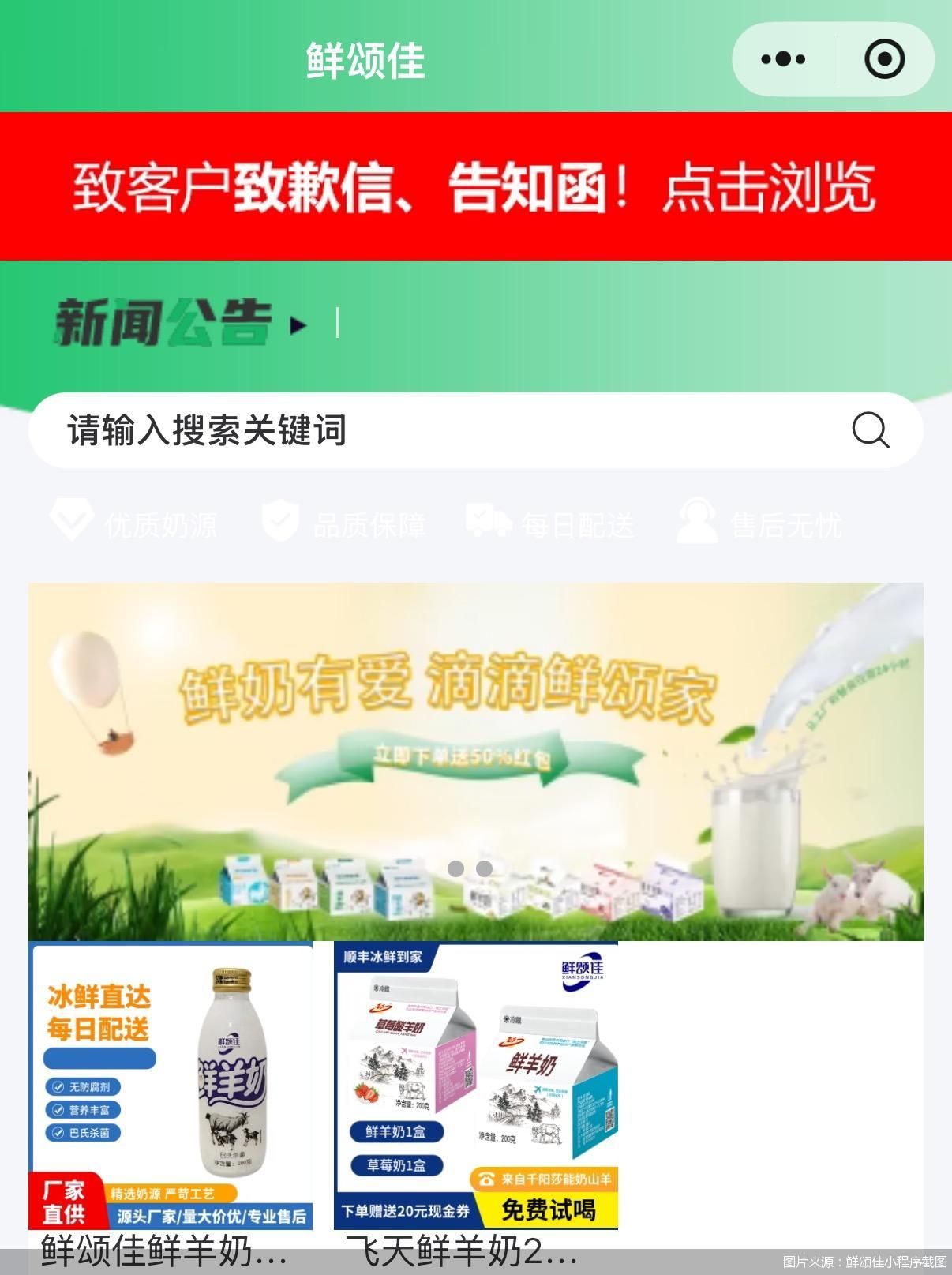
鲜颂佳平台陷“断奶”风波,红星美羚能否救场
Xin Lang Cai Jing· 2026-01-08 16:56
Core Viewpoint - The sudden closure of the Shenzhen-based milk delivery platform, Xiansongjia, due to a financial crisis has left thousands of consumers without their prepaid orders, raising concerns about the risks associated with prepaid consumption models in the dairy industry [5][10]. Group 1: Company Overview - Xiansongjia, operated by Shenzhen Pindin Supply Chain Management Co., primarily provided online ordering and delivery services for dairy products, including sheep milk [5]. - The company faced a severe financial crisis, leading to a breakdown in its supply chain and inability to fulfill customer orders [5][10]. Group 2: Consumer Impact - Consumers reported significant losses, with over 250 individuals from various cities, including Shenzhen and Guangzhou, registering complaints about unfulfilled orders totaling more than 49,000 boxes of sheep milk [3][6]. - One consumer reported spending 12,800 yuan for 1,400 boxes, with over 1,200 boxes still undelivered [3]. Group 3: Financial and Legal Issues - Shenzhen Pindin was involved in multiple labor disputes and was listed as a defendant in a court case with an execution target of nearly 29,000 yuan [3][4]. - The company acknowledged its operational failures in a public apology, citing serious mismanagement in market expansion and risk control as reasons for its financial collapse [5]. Group 4: Industry Response - Following the crisis, Red Star Meiling, a dairy company, attempted to mitigate the situation by offering trial deliveries of sheep milk, although the effectiveness of this intervention remains uncertain [1][8]. - The crisis has highlighted the vulnerabilities of the prepaid consumption model in the dairy industry, with experts noting that consumers face significant challenges in seeking redress when companies fail [10][12]. Group 5: Future Solutions - To address the supply disruption, Flying Sky Dairy offered consumers two options: switching to a new delivery supplier or exchanging unfulfilled orders for sheep milk powder [7]. - Red Star Meiling proposed a "buy one, get one free" model for future deliveries, which has drawn skepticism from consumers regarding its fairness and practicality [8][9].


鲜颂佳平台陷“断奶”风波,红星美羚能否救场?
Bei Jing Shang Bao· 2026-01-08 12:52
Core Viewpoint - The sudden closure of the Shenzhen-based milk delivery platform, Xiansongjia, due to a cash flow crisis has left thousands of consumers without their prepaid orders, raising concerns about the risks associated with prepaid consumption models in the dairy industry [5][12]. Group 1: Company Crisis - Xiansongjia, operated by Shenzhen Pinding Supply Chain Management Co., has halted deliveries of various brands of milk, affecting thousands of consumers who had prepaid for their orders [1][5]. - The company cited severe mismanagement in market expansion and risk control as reasons for its financial collapse, leading to an inability to fulfill delivery commitments [5][12]. - As of January 4, over 250 consumers reported being owed more than 49,000 boxes of milk, with some individuals having prepaid as much as 12,800 yuan for their orders [3][5]. Group 2: Consumer Impact - Consumers are facing significant challenges in recovering their prepaid funds, as the company has ceased operations and the legal avenues for recourse are complicated [12][13]. - The situation has highlighted the vulnerabilities of prepaid consumption models, where consumers lose control over their funds and face difficulties in asserting their rights when companies fail [12][13]. - Legal experts indicate that consumers may struggle with evidence collection, identifying responsible parties, and asset preservation in cases of business failure [13]. Group 3: Industry Response - Following the crisis, Red Star Meiling, a dairy company, has attempted to step in to provide some level of service continuity, but the effectiveness of this intervention remains uncertain [1][7]. - The dairy industry is facing scrutiny regarding its distribution practices and the sustainability of prepaid models, with calls for better consumer protection mechanisms [12][14]. - The incident has prompted discussions about the need for a shift from prepaid to cash-on-delivery models to enhance consumer trust and reduce risks [12][13].

“拼团”买拍立得“团长失联”!记者调查:此类拼团投诉频发,维权困难
Yang Zi Wan Bao Wang· 2025-11-20 00:18
Core Viewpoint - The article highlights consumer complaints regarding the "拼团呀" (Pintuan Ya) mini-program, where many users have reported long delays in receiving their orders for instant camera film, leading to difficulties in obtaining refunds and communication with group leaders [1][10]. Group 1: Consumer Experiences - Multiple consumers have reported issues with the "拼团呀" mini-program, particularly regarding delayed shipments and unresponsive group leaders after payment [1][5]. - A consumer named Ms. Li shared her experience of spending 2,771 yuan on five orders for instant camera products, none of which have been delivered after several months [7]. - The mini-program operates as a transaction mediator, with consumers required to contact group leaders for after-sales service, which has led to complications in obtaining refunds [8][10]. Group 2: Company Background - The "拼团呀" mini-program is developed by Hangzhou Kehuo Network Technology Co., Ltd., which has not provided effective communication or responses to inquiries regarding the complaints [1][10]. - The program has gained popularity due to its low prices and the social endorsement of friends, but it has also been associated with numerous complaints about group leaders disappearing after collecting payments [5][20]. Group 3: Legal and Regulatory Insights - Legal experts suggest that platforms like "拼团呀" may bear responsibility if they fail to verify group leaders or disclose necessary information, especially if they profit from transactions [21]. - Consumers are advised to take precautions when participating in group purchases, such as verifying the identity of group leaders and being cautious of prices significantly lower than market rates [21].
