
领土换和平

Search documents
俄早已切换战争模式,欧盟靠许愿,小金毛炮轰欧洲
Sou Hu Cai Jing· 2026-02-26 09:22
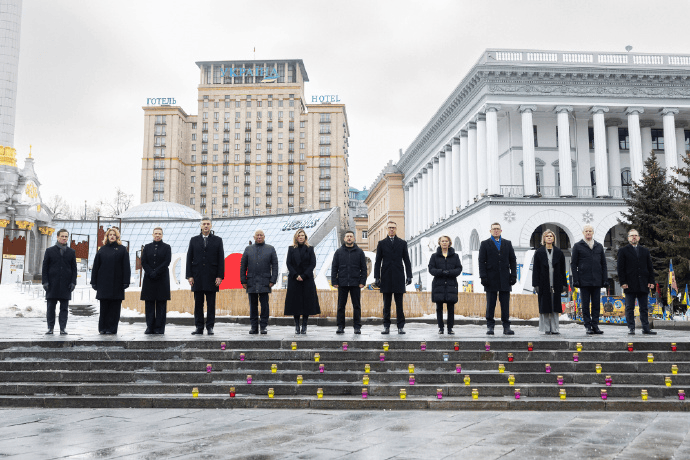
乌俄战争已经正式进入第5年,离第一次世界大战用时长度还剩下3个月14天,以目前来看,这场战争时 长超过一战不是问题。 不意外的是,欧洲政要在这一天,高调的表示援助乌克兰抗战到底,各国把之前那些援助乌克兰的数字 金额再拿来叠加一遍,例行公事的到访基辅表达声援。其实,战时期间,除了乌克兰本国进行这类纪 念,欧洲政要这种到访基辅已经没有任何必要,徒劳增加乌克兰的防空安保成本,他们最应该做的就是 把这些基辅之行的安保和行程费用全部变现,买成武器援助给前线的乌克兰将士解困。而如果过去4年 欧洲政要把这些费用,还有每周一次的布鲁塞尔巴黎伦敦罗马柏林开会的所有费用变现,恐怕没有十亿 欧元,也有八亿欧元。 而每次和欧洲领导人会晤之后,各种力度的抨击呛声川普,认为川普对乌克兰的支持不够,也是川普上 任以来,泽连斯基总统的标配动作,这当然也是川普所说的泽连斯基是谈判障碍的原因。 匈牙利总理欧尔班则谴责欧盟外长卡拉斯: 他们希望在乌克兰领土上击败俄罗斯,迫使俄罗斯支付赔款,从而收回他们的钱。 对此我不再赘述——我只想说,拿破仑和希特勒也曾尝试过这种做法,但他们失败了。 依我看,现在(欧盟外长)卡娅·卡拉斯也要这么做了。 泽连斯基总 ...

俄美乌会谈无实质进展!领土等核心议题上有根本冲突难达共识
Nan Fang Du Shi Bao· 2026-02-06 14:05
Group 1 - The core issue of the recent talks among Russia, Ukraine, and the U.S. centered around territorial disputes, which are crucial for determining the direction of the Russia-Ukraine conflict [2][3] - No substantial progress was made on key issues such as territory and ceasefire, and no joint statement was issued regarding political and security matters [2][3] - The talks resulted in a significant prisoner exchange, with both sides transferring 157 captives each, totaling 314 individuals, marking the first large-scale exchange in five months [1][2] Group 2 - The main divergence among the three countries lies in Ukraine's willingness to accept "land for peace" negotiations, with the U.S. eager to push for significant progress in the talks [2][3] - The first round of talks established a negotiation mechanism and made limited progress on humanitarian issues, which could help build confidence for future discussions [3] - Europe is perceived to be in a difficult position, feeling sidelined in the negotiations, and may need to adopt a different strategy from the U.S. to enhance its role and flexibility in addressing the Russia-Ukraine issue [4]
欧洲要妥协?越来越多的欧洲国家认为,乌克兰必须做出领土让步,泽连斯基只剩下一条路可走
Sou Hu Cai Jing· 2025-12-10 18:40
Core Viewpoint - The shift in European countries' attitudes towards Ukraine suggests a growing acceptance of territorial concessions for peace, putting Ukrainian President Zelensky in a difficult position as support from former allies wanes [1][3][6] Group 1: European Attitude Shift - Initially, European nations provided strong support to Ukraine, but as the conflict drags on, economic burdens and domestic pressures have led to a reevaluation of their stance [3][4] - Finnish President Stubb publicly stated that Finland is prepared to accept a peace plan involving territorial concessions from Ukraine, indicating a broader acceptance of this idea among European leaders [3][4] - Key European countries, including France, Germany, and Italy, have hinted to Zelensky that significant compromises on territorial issues are necessary for a lasting ceasefire [3][4] Group 2: Internal Divisions in Europe - There are notable divisions within Europe, with countries like Poland and the Baltic states firmly opposing any territorial concessions, fearing for their own security [4] - In contrast, more pragmatic nations, including France and Germany, recognize the unsustainable economic burden of continued support for Ukraine and the potential for the U.S. to abandon Ukraine on territorial issues [4][6] Group 3: Zelensky's Dilemma - Zelensky faces immense pressure as he previously asserted that Ukraine cannot concede territory, but now finds himself receiving "peace" suggestions from allies [6][7] - The fluctuating support from the U.S. and the changing European stance have diminished Zelensky's negotiating power, making it increasingly difficult to maintain a hardline position [6][7] - The potential for a compromise involving territorial concessions appears to be the most pragmatic path forward for Ukraine, despite the political risks it poses for Zelensky domestically [7][9] Group 4: Future Implications - The outcome of the conflict will depend on the negotiations among involved parties, with the shift in European attitudes significantly altering the dynamics [9] - Ukraine must navigate the balance between territorial concessions and national dignity while securing adequate safety guarantees [9] - Europe faces the challenge of managing internal disagreements and avoiding being overly influenced by U.S. policies in the ongoing conflict [9]

视频丨为何俄军发动猛攻控制红军城?专家:战略意义显著
Yang Shi Xin Wen Ke Hu Duan· 2025-12-02 07:19
Core Points - The Russian Ministry of Defense announced control over Red Army City in Donetsk and Volchansk in Kharkiv, indicating a significant military advancement [1] - Experts suggest that the attack on Red Army City serves dual purposes: to open access to western Donetsk and to exert pressure on Ukraine and its Western allies for negotiations [3] Summary by Categories Military Strategy - The battle for Red Army City is viewed as a combination of diplomatic, political, and military warfare, aimed at maximizing pressure on Ukraine [3] - The Russian military's large-scale offensive is intended to demonstrate its capability and resolve to both Ukraine and Western nations [3] Diplomatic Implications - The offensive aims to influence Western perceptions, particularly in light of Ukrainian President Zelensky's comments about potential territorial losses if negotiations do not occur [3] - Russia seeks to achieve its diplomatic goals by encouraging Europe and the U.S. to abandon support for Ukraine and consider Russia's peace proposals [3]
普京要和泽连斯基见面了?先停火还是先和谈?华盛顿会议后悬念迭起
Di Yi Cai Jing· 2025-08-20 04:59
Core Viewpoint - The article discusses the ongoing debate regarding whether to prioritize ceasefire or negotiations in resolving the Ukraine crisis, highlighting the differing perspectives of key leaders involved [1][2][4]. Group 1: Meeting Arrangements - President Trump has initiated arrangements for a potential face-to-face meeting between President Putin and President Zelensky, with a three-party meeting involving Trump also planned [2][6]. - The atmosphere of the recent Washington meeting was described as more amicable compared to six months ago, with Trump expressing optimism about the discussions [4]. Group 2: Perspectives on Ceasefire vs. Negotiation - European leaders, including German Chancellor Merz, prefer a ceasefire before negotiations, emphasizing the complexity of the current situation [4]. - Trump questioned the necessity of a ceasefire, suggesting that negotiations could proceed without it, reflecting a divergence in approach between the U.S. and European leaders [4][5]. Group 3: Potential Outcomes and Challenges - The feasibility of achieving a ceasefire and subsequent negotiations is uncertain, with significant differences in the positions of Russia and Ukraine complicating the situation [5]. - Trump's approach of "negotiation first, ceasefire later" is seen as a compromise to Russia's dominant position in the conflict, raising concerns among European nations about the implications for Ukraine's territorial integrity [5][8]. Group 4: Future Meetings and Coordination - There is speculation about a potential meeting between Putin and Zelensky within two weeks, with discussions on security guarantees for Ukraine expected to be finalized soon [6][8]. - U.S. officials, including Vice President Pence and Secretary of State Rubio, are actively communicating with both Russian and Ukrainian sides to coordinate the ongoing process [7].

热点问答丨美俄总统会晤在即 各方立场如何
Xin Hua Wang· 2025-08-12 13:44
Group 1 - The upcoming meeting between US President Trump and Russian President Putin on August 15 in Alaska is highly anticipated, with the Ukraine situation being a focal point [1][2] - Trump described the meeting as a "test meeting," suggesting that the outcomes could vary, but he believes in the potential for "constructive dialogue" [2] - The US administration is considering a potential meeting involving Ukrainian President Zelensky and Putin, but Trump has expressed disagreement with Zelensky's approach regarding territorial issues [2] Group 2 - Russia aims to focus on a long-term peaceful resolution to the Ukraine crisis during the meeting, with Putin having discussions with leaders from nine countries regarding the situation [3] - The Russian government has indicated that the upcoming meeting could provide new momentum for normalizing US-Russia relations, although creating the necessary conditions for a Ukraine-Russia presidential meeting remains challenging [3] Group 3 - Ukrainian President Zelensky has been actively communicating with foreign leaders, emphasizing that Ukraine does not see any shift in Russia's stance and opposes the idea of "territorial exchange for peace" [4] - Reports suggest that Ukraine might agree to a ceasefire while allowing Russia to maintain control over certain regions, but Zelensky firmly rejects any further territorial concessions [4] Group 4 - European leaders are also engaging diplomatically, with discussions aimed at ensuring that any resolution to the Ukraine crisis protects European and Ukrainian security interests [5][6] - Germany plans to lead a European initiative to discuss the Ukraine situation, inviting key leaders for a video conference to coordinate their positions [6]