
食品救济

Search documents
记者手记丨美联邦政府“停摆”破纪录 食品救济点人更多了
Xin Hua She· 2025-11-06 06:11
Core Points - The U.S. federal government shutdown has reached its 36th day, marking the longest shutdown in U.S. history, leading to increased demand for food assistance among federal employees [1] - The charity organization "World Central Kitchen" has set up multiple food relief points in Washington D.C., distributing over 36,000 meals since October 27, with a noticeable increase in demand on November 5 [2] - The shutdown has severely impacted food assistance programs, with the "Supplemental Nutrition Assistance Program" halting benefits since November 1, affecting approximately 42 million people, or one-eighth of the U.S. population [3] Group 1 - The shutdown has resulted in long lines at food relief points, with federal employees increasingly relying on free meals due to missed paychecks [1] - The charity's collaboration with local restaurants aims to support struggling businesses while providing meals to federal employees [2] - The economic impact of the shutdown is evident, with local restaurants reporting a sales decline of 15% to 20% during this period [2] Group 2 - The inability to access food assistance has raised concerns among low-income families, with estimates suggesting that around 1.2 million households and nearly 5 million individuals may not receive benefits in November [3] - Political leaders have expressed differing views on the shutdown's implications, with Democrats accusing the Trump administration of neglecting the needs of the hungry, while Republicans blame Democrats for initiating the shutdown [4]
视频丨食品救济金“减半” 美国民众深感忧心
Yang Shi Xin Wen Ke Hu Duan· 2025-11-05 02:12
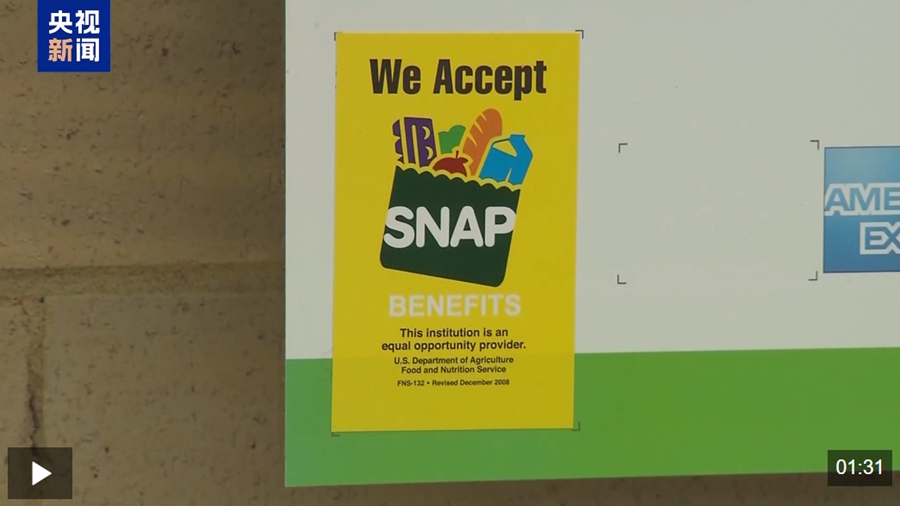
Core Points - The ongoing "shutdown" of the U.S. federal government has significantly impacted the distribution of funds for the Supplemental Nutrition Assistance Program (SNAP) [2] - The U.S. government announced on November 3 that it will utilize emergency funds to maintain half of the SNAP benefits for November, but some states may take weeks or even months to resume full distributions [2] - This is the first time in 60 years that SNAP has suspended benefit payments, despite previous government shutdowns not affecting the program [2] - The USDA indicated that it will use $4.65 billion in emergency funds for November's SNAP benefits, which will only cover 50% of current needs [2] - SNAP is a crucial part of the U.S. social safety net, serving 42 million people, or about one-eighth of the U.S. population, with most recipients living below the poverty line [2] Individual Perspectives - A SNAP recipient expressed concern about the impact of benefit interruptions on vulnerable populations, such as the elderly and disabled who lack stable income [3] - Another recipient highlighted the panic caused by the situation, emphasizing the need to prioritize food for children over adults [5]

【环球财经】美国法官裁定政府必须动用应急资金维持食品救济发放
Xin Hua She· 2025-11-01 05:39
Core Points - The U.S. federal government has been in a shutdown for 31 days, with the "Supplemental Nutrition Assistance Program" (SNAP) becoming a major focus due to funding issues affecting approximately 42 million people, or one-eighth of the U.S. population, most of whom live below the poverty line [1][2] - A federal judge in Rhode Island ruled that the government must utilize emergency funds to maintain SNAP operations during the shutdown, criticizing the decision to withhold $6 billion in emergency funds as "arbitrary" and potentially causing "irreparable harm" [1] - Multiple states, led by Democratic governors, have filed lawsuits against the USDA for halting food assistance, with a Massachusetts federal judge ordering the government to clarify its position on the use of emergency funds by November 3 [2] Group 1 - The SNAP program is at risk of exhausting its funds due to the ongoing government shutdown, impacting millions of low-income individuals [1] - The USDA initially planned to use emergency funds to sustain SNAP but later stated it could not continue funding, leading to legal actions from local governments and organizations [1] - The Rhode Island federal court's ruling emphasizes the priority of food assistance over reserving funds for disaster relief, highlighting the critical nature of the SNAP program [1] Group 2 - Legal actions have been initiated by 25 states and Washington D.C. against the USDA's decision to suspend food assistance, indicating widespread concern over the program's funding [2] - The Massachusetts federal judge's order reflects the judiciary's willingness to intervene in the matter, suggesting a potential favorable outcome for the plaintiffs [2] - Former President Trump expressed willingness to provide funding if legally guided, acknowledging that food assistance would still be affected despite potential funding [2]