
补充营养援助计划

Search documents
综述丨创纪录的美国联邦政府“停摆”闹剧落幕
Xin Hua She· 2025-11-14 01:49
Core Points - The U.S. federal government shutdown lasted for 43 days, breaking the previous record of 35 days from late 2018 to early 2019, and ended with the passage of a temporary funding bill by Congress and its signing by President Trump [1][2] - The shutdown had significant economic and social impacts, affecting over one million federal employees who faced financial stress due to unpaid wages, and causing widespread flight delays and cancellations, impacting approximately 5.2 million air travelers [1] - The Supplemental Nutrition Assistance Program (SNAP), a crucial part of the U.S. social safety net covering about 42 million people, was suspended for the first time in its 60-year history, directly affecting low-income households [1] Economic Impact - The Congressional Budget Office estimated that the six-week shutdown would result in an economic loss of approximately $11 billion [2] - The shutdown sent a dangerous signal to the world about the reliability of the U.S. as a partner, as stated by Senator Jerry Moran [2] Public Sentiment - A significant portion of the public expressed disappointment with the Trump administration, with 65% of respondents feeling let down by the government's performance in managing the economy and inflation [2] - There is a growing sense of distrust in the government, with 66% of respondents indicating a lack of trust, reflecting widespread anxiety about the future and the direction of the country [2] - The political polarization in the U.S. is perceived to be worsening, with 59% of respondents believing it has intensified compared to five years ago [2]
释新闻|美国在多重隐忧中结束政府“停摆”,“雾中开车”影响经济决策
Sou Hu Cai Jing· 2025-11-13 09:47
Core Points - The U.S. government shutdown lasted for 43 days, resulting in an estimated loss of $1.5 trillion, according to President Trump [2] - The temporary funding bill signed on November 12 will fund most federal agencies at current levels until January 30, 2026, but does not resolve the Democratic demand for extended subsidies under the Affordable Care Act [3][4] - The shutdown has severely impacted the lives of American citizens, with significant disruptions in air travel and food assistance programs [6][8] Government Operations - The temporary funding bill passed with support from nearly all House Republicans and a few moderate Democrats, but it did not address the core Democratic demand for healthcare subsidies [4] - Federal employees who were furloughed during the shutdown are entitled to full back pay, but delays in processing may occur due to staffing shortages in payroll offices [6][8] Economic Impact - The shutdown has led to the closure of statistical agencies, preventing the release of key economic data such as employment and inflation figures, complicating the Federal Reserve's decision-making process regarding interest rates [9][10][11] - The absence of October's inflation data may lead to inaccuracies in subsequent months' Consumer Price Index calculations, affecting economic assessments [11]

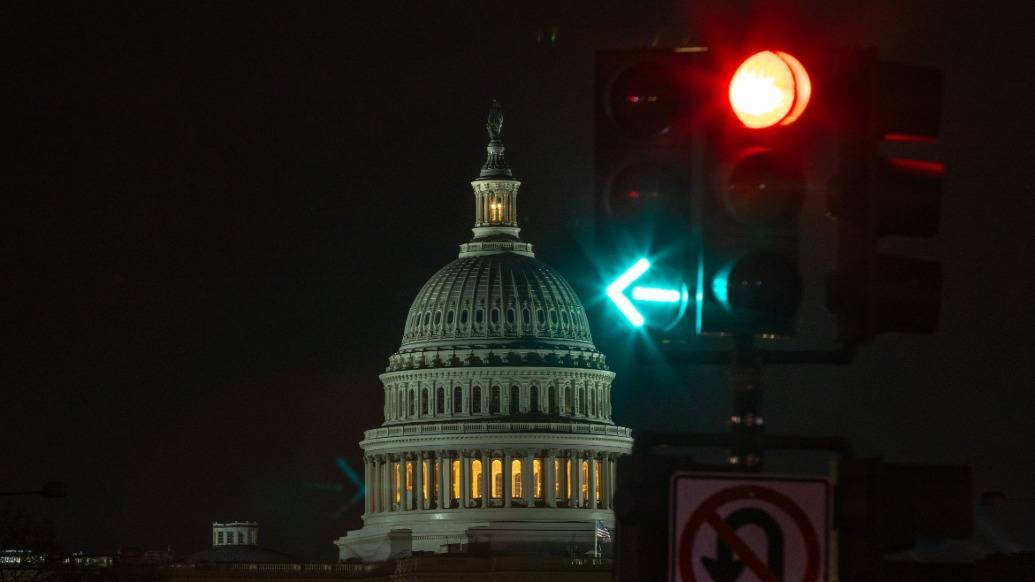
历史最长“停摆”将结束 美国“坏账”继续
Xin Hua She· 2025-11-13 01:49
Group 1 - The U.S. Congress passed a temporary federal funding bill, ending a record 43-day government shutdown, which had significant negative impacts on the economy and public welfare [1] - The shutdown affected the Supplemental Nutrition Assistance Program (SNAP), which serves 42 million Americans, leading to potential delays in food assistance payments [2][4] - The shutdown has been characterized by a political stalemate between the Republican and Democratic parties, with accusations of using the public's suffering for political gain [4] Group 2 - The aviation industry faced severe disruptions due to the shutdown, with thousands of flights delayed or canceled, leading to significant operational chaos at airports [5][7] - The American Airlines Association reported that approximately 5.2 million air travelers were affected since the shutdown began, with potential daily economic losses ranging from $285 million to $580 million as flight reductions reached 10% [7][8] - The Congressional Budget Office estimated that the economic loss from the shutdown could reach $11 billion if it continued for six weeks, with a projected decline in the fourth quarter GDP growth rate by 1 to 2 percentage points [8][10] Group 3 - The prolonged shutdown is expected to have long-term effects on the U.S. economy, particularly due to its unprecedented duration and the adverse impacts on public services and travel [12]
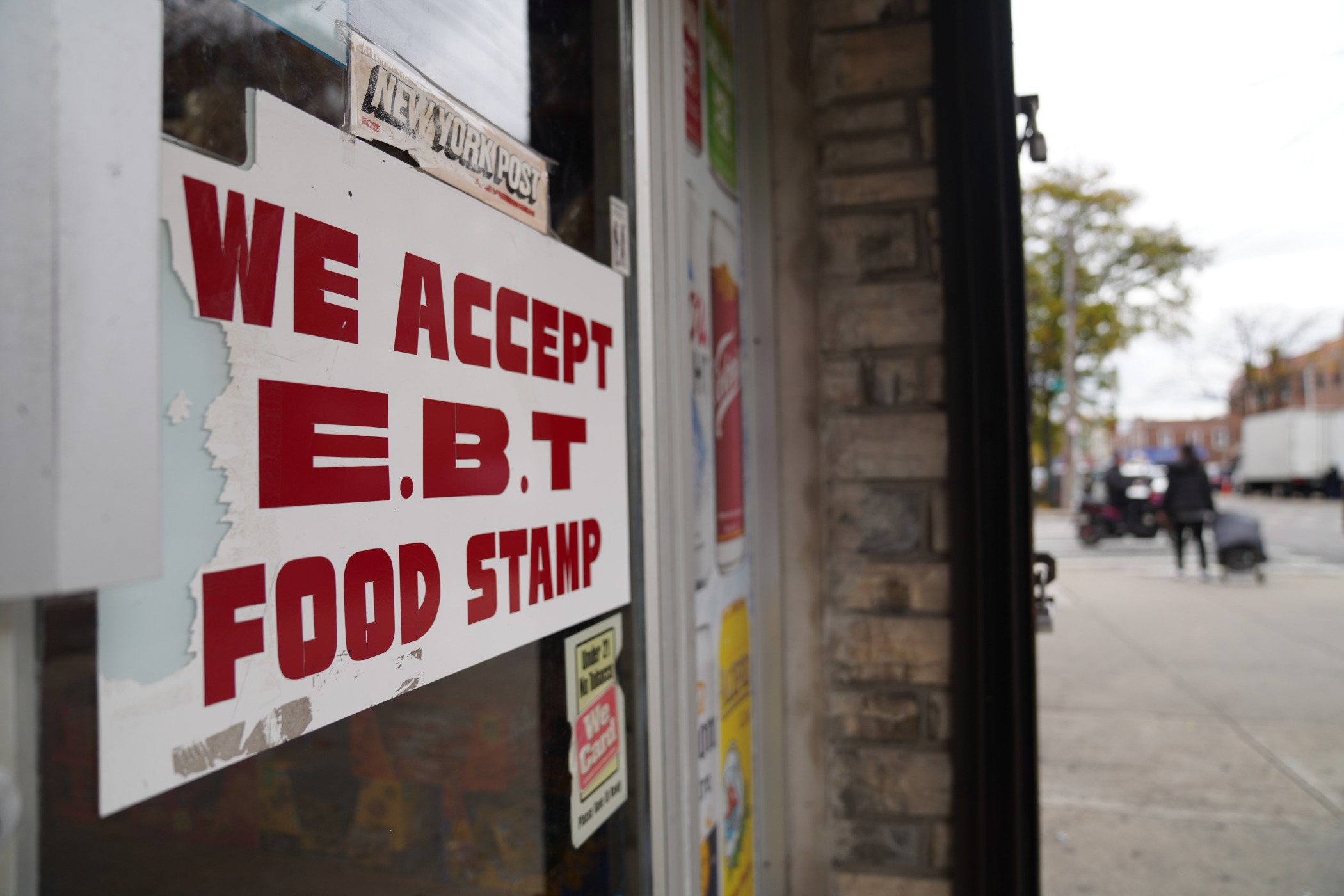
【环球财经】政府 “停摆”第41天 美参议院正式通过临时拨款法案
Xin Hua Cai Jing· 2025-11-11 05:28
Core Points - The U.S. Senate passed a temporary federal funding bill on November 10, ending a record 41-day government shutdown that began on October 1 [1][2] - The bill provides funding for most federal agencies at current levels until January 30, 2026, and includes full-year funding for the Department of Agriculture, Department of Veterans Affairs, military construction projects, and congressional operations [1] - The bill also ensures funding for the Supplemental Nutrition Assistance Program (SNAP), which had faced temporary funding issues [1] - Senate Majority Leader John Thune promised Democrats a vote on extending enhanced subsidies for the Affordable Care Act by the second week of December, although some Democrats expressed dissatisfaction with the lack of guarantees for the continuation of these subsidies [1] Legislative Process - The bill was revised from a version previously passed by the House and must now be approved by the House again before being sent to the President for signature to fully resolve the government shutdown [2] - The Senate's passed bill only includes three of the twelve annual appropriations, indicating that nine appropriations are still pending, which suggests potential for another government shutdown in the coming months [2]
美联邦政府最长“停摆”折射治理之失(环球热点)
Ren Min Ri Bao Hai Wai Ban· 2025-11-10 22:57
Core Points - The U.S. federal government is experiencing its longest shutdown in history, now entering its 40th day, with a temporary funding bill only providing resources until January 2026 [2][3] - The shutdown has significant impacts on the economy and public welfare, with millions affected as political disputes overshadow the needs of ordinary citizens [2][9] Political Dynamics - The shutdown began on October 1, following a failure to pass a temporary funding bill in the Senate, with both parties blaming each other for the impasse [2][4] - The Republican Party is using the shutdown to push for cuts to government employment and programs supported by Democrats, while Democrats are trying to maintain their political stance ahead of upcoming elections [4][5] Legislative Challenges - The current political polarization has made it increasingly difficult for Congress to complete budgetary processes, with no fiscal year starting without a completed budget since the 21st century [6][8] - The Senate's "filibuster" rules complicate the passage of funding bills, requiring a supermajority for closure on debates, which has become a significant hurdle [7][8] Economic Impact - The shutdown is projected to reduce the U.S. GDP growth rate by 1-2 percentage points in Q4, with estimates suggesting a loss of approximately $15 billion for each week the shutdown continues [11] - Essential services and welfare programs are being severely affected, including food assistance for 42 million people and heating subsidies for low-income families [9][10] Public Sentiment - Polls indicate that a majority of Americans feel disconnected from both political parties, with nearly 80% expressing dissatisfaction with Congress's performance [11]

特朗普政府要求暂停执行全额支付食品援助金裁定
Yang Shi Xin Wen· 2025-11-07 16:02
Core Points - The Trump administration has filed an emergency request to the U.S. Court of Appeals to suspend a federal judge's ruling requiring full payment of the Supplemental Nutrition Assistance Program (SNAP) benefits [1] - A federal district judge ruled that the Trump administration must fully pay SNAP benefits for November by the deadline of November 7 [1] Group 1: Government Actions - The U.S. Department of Agriculture (USDA) announced that due to the government shutdown, it would not issue SNAP benefits for November [1] - On October 31, the judge ordered the federal government to use emergency funds to maintain the operation of the SNAP program [1] - The USDA indicated on November 3 that it would utilize emergency funds to cover half of the month's food assistance, but some states might experience delays of weeks or even months for funds to be available [1] Group 2: Program Impact - As of November 1, SNAP benefits have been suspended due to depleted funds, marking the first time in 60 years that the program has halted benefit issuance [1] - SNAP is a crucial part of the U.S. social safety net, covering 42 million people, which is about one-eighth of the U.S. population, with most recipients living below the poverty line [1] - The program has monthly expenditures exceeding $8 billion [1]
刷新最长纪录 美国联邦政府“停摆”谁最受伤?
Xin Hua Wang· 2025-11-06 00:43
Group 1: Government Shutdown Impact - The U.S. federal government has entered its longest shutdown in history, lasting 36 days, disrupting normal operations due to funding exhaustion [1] - The Supplemental Nutrition Assistance Program (SNAP) has run out of funds, affecting approximately 42 million people, or one-eighth of the U.S. population, most of whom are below the poverty line [1] - Food assistance sites are experiencing increased demand, with long lines forming as people either have not received benefits or are concerned about future payments [2] Group 2: Heating Assistance - A program designed to subsidize heating costs for low-income families, costing $4.1 billion, may face delays in fund distribution due to the shutdown, impacting around 5.9 million households [3] - Experts warn that if the shutdown continues, thousands may face life-threatening cold conditions as winter approaches [3] Group 3: Aviation Safety - The U.S. Transportation Secretary has warned that if the shutdown extends for another week, air traffic may face significant disruptions, including potential airspace closures due to staff shortages [4] - Since the shutdown began, thousands of air traffic controllers and security personnel have been working without pay, leading to widespread flight delays and cancellations, affecting over 3.2 million travelers [5] Group 4: Military Pay - The federal government has managed to secure funds for military pay for two pay periods since the shutdown began, totaling $5.3 billion from various sources [6] - The next military pay date is set for November 15, and if the shutdown persists, military personnel may not receive their salaries [8] Group 5: Federal Employees - Approximately 750,000 federal employees have been placed on temporary leave or are working without pay due to the shutdown [9] - If the situation continues until December 1, the federal government could accumulate unpaid wages totaling $21 billion [9]

政府破纪录“停摆”拖累美国经济
Bei Jing Shang Bao· 2025-11-05 14:10
Economic Impact - The ongoing government shutdown has the potential to negatively impact overall economic growth, with the Congressional Budget Office estimating a decrease in the annual GDP growth rate by 1 to 2 percentage points in Q4 2023, translating to a loss of $7 billion to $14 billion depending on the duration of the shutdown [4][6] - Consumer confidence is expected to be directly affected, as federal employees face delayed wages and contractors experience payment delays, which could impact the traditional holiday shopping season if the shutdown persists [4][6] - The shutdown has already caused significant disruptions in various sectors, including aviation, with over 3.2 million travelers affected by flight delays or cancellations since the shutdown began [3][4] Aviation Sector - Approximately half of the major air traffic control facilities in the U.S. are experiencing staffing shortages, particularly in the New York area where nearly 90% of air traffic controllers are absent [3] - The Department of Transportation has warned that if the shutdown continues, it may have to close certain airspaces due to staffing and safety pressures, potentially leading to longer wait times at airports during the busy Thanksgiving travel season [3][4] Healthcare and Food Assistance - The shutdown has halted the distribution of funds for the Supplemental Nutrition Assistance Program, affecting over 40 million Americans, with emergency funds being utilized to cover only part of the month's assistance [3][4] - The inability to pass a temporary funding bill has led to significant increases in health insurance premiums, with estimates suggesting an additional $1,000 per year for individuals without government subsidies [2][4] Political Stalemate - The political deadlock between the Republican and Democratic parties continues, with no clear resolution in sight, as both sides appear to be using the shutdown as a political tool rather than seeking a compromise [7][8] - Recent attempts to advance a temporary funding bill have failed to secure the necessary votes, indicating a deepening divide and a lack of urgency to resolve the crisis [7][8]
美国史上最长“停摆”!民生之痛也挡不住政党之争
Mei Ri Jing Ji Xin Wen· 2025-11-05 12:28
Core Points - The U.S. federal government shutdown has reached its 35th day, marking the longest shutdown in history, significantly impacting ordinary American families who rely on federal assistance programs [1][3] - The Supplemental Nutrition Assistance Program (SNAP), which supports approximately 42 million people, has exhausted its funds, highlighting the severe consequences of political stalemate on public welfare [1][4] - The shutdown has led to the suspension of key economic data releases, creating an information vacuum that complicates monetary policy decisions for the Federal Reserve [3][5] Economic Impact - The Congressional Budget Office estimates that the prolonged shutdown could reduce the annual GDP growth rate by 1 to 2 percentage points in Q4 [3] - The BBC reports that each week of the shutdown could cost the U.S. economy approximately $15 billion [3] - The consumption multiplier effect of SNAP indicates that the cessation of $6 billion in monthly benefits could lead to a $9 billion reduction in consumer demand, equivalent to the monthly retail total of 15 medium-sized cities [4] Social Consequences - Hundreds of thousands of federal employees and contractors are facing unpaid work, leading to immediate cash flow disruptions for essential expenses like mortgages and childcare [5][6] - Low-income families are at risk of losing food and energy assistance, exacerbating their financial struggles [6][7] - The normalization of the shutdown as a political tool has led to a concerning acceptance among the public, who are increasingly resigned to the ongoing political impasse [7]

每经热评|美国史上最长“停摆”!民生之痛也止不住政党之争
Sou Hu Cai Jing· 2025-11-05 10:35
Core Points - The U.S. federal government shutdown has reached its 35th day, marking the longest shutdown in history, significantly impacting ordinary American families who rely on federal assistance programs [1][3] - The shutdown has led to the depletion of funds for the Supplemental Nutrition Assistance Program (SNAP), affecting approximately 42 million people and resulting in a substantial decline in consumer demand [1][4] - The economic implications of the shutdown are severe, with the Congressional Budget Office estimating a potential decrease of 1-2 percentage points in the annual GDP growth rate for Q4, and the BBC estimating a loss of approximately $15 billion for each week the shutdown continues [3][4] Economic Impact - Key economic data releases, including the Consumer Price Index (CPI) and non-farm employment data, have been delayed due to the shutdown, creating an information vacuum for the Federal Reserve and complicating monetary policy decisions [3][4] - The consumption multiplier effect of SNAP benefits is significant, with a monthly loss of $6 billion in benefits potentially leading to a $9 billion reduction in consumer demand, equivalent to the monthly retail sales of 15 medium-sized cities [4] Social Consequences - The shutdown has forced hundreds of thousands of federal employees and contractors into unpaid status, disrupting their cash flow and impacting their ability to meet essential financial obligations such as mortgages and childcare [5][6] - The ongoing political standoff has led to a normalization of the shutdown among the public, with many citizens beginning to accept the situation as a new reality, despite the severe impact on their livelihoods [6]