食品标识管理

Search documents
(景)市监罚〔2026〕10号
Xin Lang Cai Jing· 2026-02-24 14:11
Summary of Key Points Core Viewpoint - The article discusses an administrative penalty imposed by the Jingtai County Market Supervision Administration for violations of food labeling regulations, highlighting the importance of compliance with national standards in food labeling practices [1]. Group 1: Penalty Details - The penalty was issued on February 12, 2026, and involves a fine ranging from 500 to 10,000 yuan for failing to comply with food labeling requirements [1]. - The specific regulations cited include the need for accurate food names, origin labeling, producer information, ingredient lists, and adherence to product standards [1]. Group 2: Regulatory Framework - The article outlines several key requirements for food labeling, including the necessity for food names to reflect true attributes and comply with national or industry standards [1]. - It emphasizes that food labels must include the production location, producer's name and contact information, and a detailed ingredient list in descending order of quantity [1]. - Additional stipulations include labeling for specific food types, such as those made to imitate other biological features, which must be clearly indicated [1].
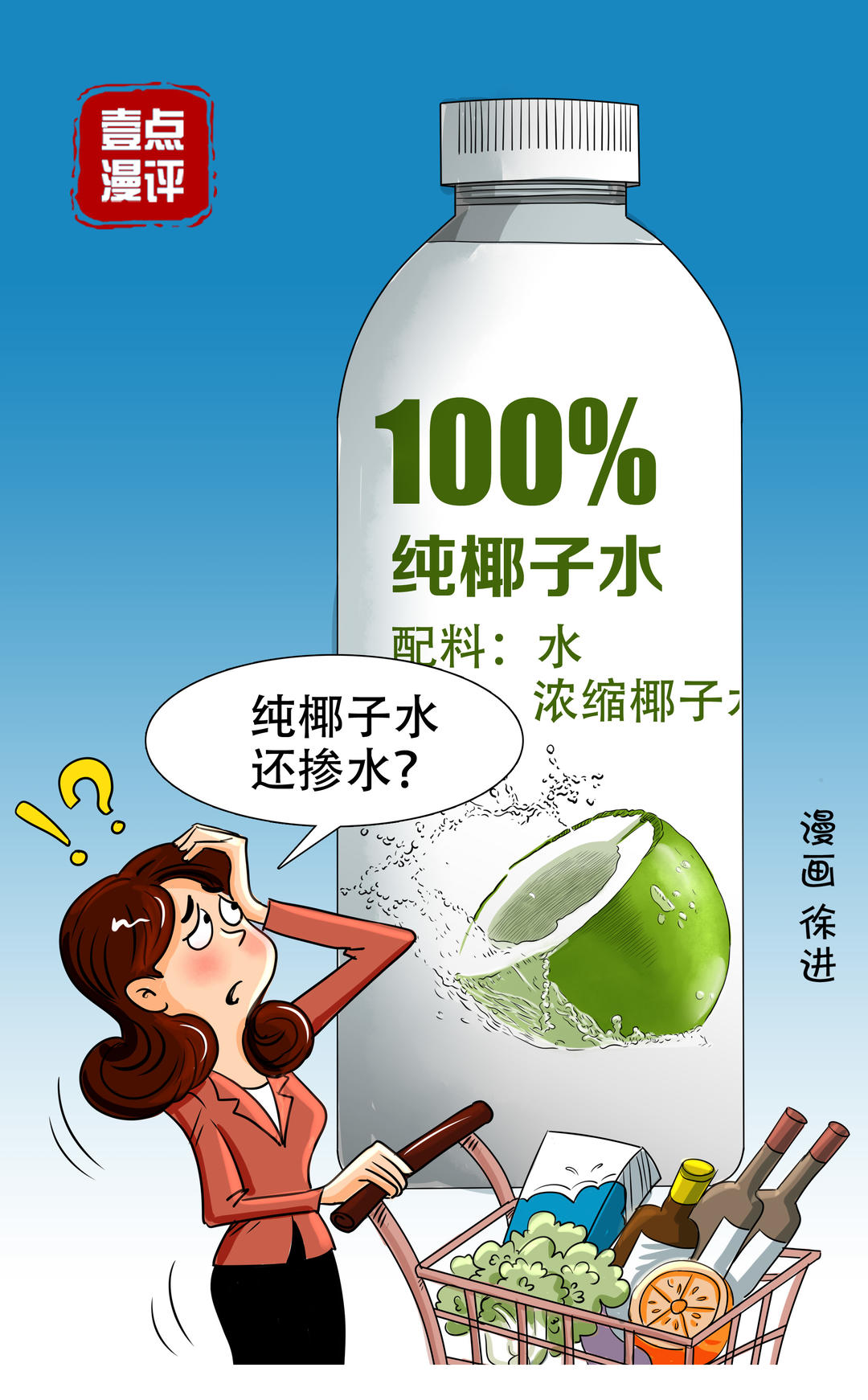
被模糊的“100%椰汁”:包装标识“严管”应尽快落地
Qi Lu Wan Bao Wang· 2025-10-17 08:18
Core Viewpoint - The recent controversy surrounding the labeling of "100% coconut water" highlights the misleading practices in the juice industry, where products labeled as pure may contain added water, leading to consumer confusion and potential misrepresentation [2][3]. Group 1: Labeling Regulations - The current regulations allow products made from concentrated juice mixed with water to be labeled as "100% juice," which can mislead consumers into thinking they are purchasing pure juice [2]. - The upcoming implementation of the "Food Labeling Supervision and Management Measures" in 2027 aims to improve clarity in food labeling, requiring labels to be clear and not misleading [3]. Group 2: Consumer Awareness and Education - There is a growing need for consumer education on how to identify genuine fruit juices, as many consumers are unaware of the differences between concentrated and non-concentrated juices [4]. - The industry should focus on making labeling more straightforward, such as clearly indicating whether a juice is "not from concentrated" or "pure juice without added water," to prevent confusion [4].