
餐饮下沉市场

Search documents
炸鸡皇后丨炸鸡加盟下沉市场:本土化策略与选址关键解析
Sou Hu Cai Jing· 2025-12-05 03:07
Core Insights - The chicken franchise market is experiencing intense competition in first- and second-tier cities, prompting investors to shift focus to the vast lower-tier markets, which contribute 60% of the growth in the chicken franchise industry and cover 70% of the population in China [1][3] Market Characteristics - The lower-tier market is not a simplified version of first- and second-tier cities; it requires deep localization strategies rather than mechanical replication [3] - Consumers in lower-tier cities exhibit a strong demand for cost-effectiveness, social needs, and face-saving consumption psychology, leading to complex purchasing behaviors [3] Cost Structure - The cost structure in lower-tier markets presents both advantages and challenges, with rental costs being only 1/3 to 1/2 of those in first-tier cities, and significant labor cost advantages providing greater profit margins [4] - However, lower foot traffic may pose challenges, necessitating a reevaluation of the relationship between rent, labor, and logistics [4] Product Strategy - Successful positioning in the lower-tier market requires balancing "value for money" with "social currency," ensuring both substantial portion sizes and visually appealing dishes [5] - Pricing strategies must align with local consumption levels, as demonstrated by a brand offering a "19.9 yuan classic burger set," which, despite being 15% lower than in first-tier cities, improved profit margins through supply chain optimization [7] Marketing and Localization - Deep localization in marketing is crucial, as national brand advertising has limited impact; word-of-mouth and local community engagement are more effective [7] - Brands should leverage local social media platforms and community partnerships to enhance visibility and acceptance [7] Future Outlook - The competitive landscape in the restaurant market will increasingly favor brands that are "down-to-earth," with strong adaptability and the ability to provide localized support to franchisees [9] - Brands that can achieve localization within three months have a 58% higher success rate compared to those that do not adapt quickly [9] - Thorough on-the-ground research is essential for investment decision-makers to understand local consumer preferences and habits, which can significantly influence product offerings and business success [9]


餐饮下沉新样本:鱼你在一起如何用品质快餐在县域市场扎好根
Sou Hu Cai Jing· 2025-11-17 11:46
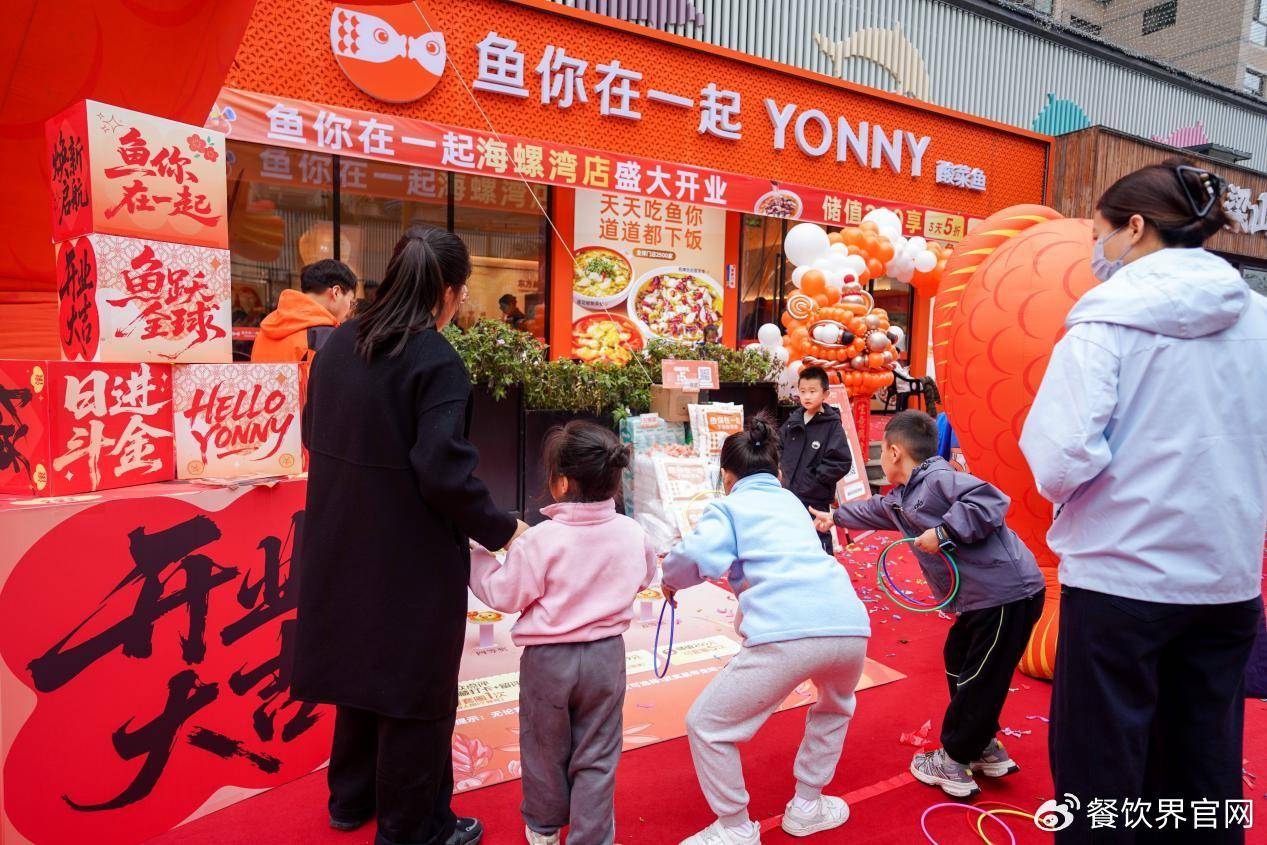
Core Insights - The Chinese catering industry is experiencing structural changes, with first-tier cities facing growth pressure while lower-tier cities are becoming the main growth drivers [1] - The market size of the catering industry is expected to reach 6.2 trillion yuan, with an annual compound growth rate of 8%-10% over the next five years [1] - The brand "Fish You Together" has rapidly expanded in lower-tier markets, demonstrating strong adaptability and growth potential [1][2] Industry Overview - In the first nine months of 2025, China's catering revenue reached 40,989 billion yuan, a year-on-year increase of 3.3% [1] - The growth rate of stores in third-tier and below cities is as high as 12%, indicating a significant shift towards lower-tier markets [1] - Urbanization is narrowing the income and consumption gap between lower-tier and first-tier cities, leading to increased consumer potential in lower-tier markets [1] Company Strategy - "Fish You Together" opened its first 5.0 new image store in a lower-tier market, showcasing its strategic capability [2][4] - The brand focuses on providing quality dining experiences in lower-tier markets, combining aesthetic design with a comfortable dining environment [4][6] - The founder emphasizes the importance of early strategic planning for supply chain and franchise systems to achieve scalable expansion [7] Operational Model - The brand's operational success in lower-tier markets is supported by a systematic operational model that differentiates it from traditional fast-food giants [8] - The brand offers a combination of quality and value, with a pricing strategy that targets the 30-40 yuan range, aligning with consumer expectations in lower-tier cities [11] - A standardized supply chain ensures consistent quality across over 2,500 stores, enabling rapid replication in lower-tier markets [12] Competitive Landscape - The competition in lower-tier markets is intensifying, with over 15,000 chain brands entering this space [8] - "Fish You Together" aims to create a comprehensive system that includes product innovation, supply chain stability, operational efficiency, and franchise support [15] - The brand's approach reflects a long-term strategy focused on building deep consumer relationships rather than quick market penetration [16]
绿茶集团港股IPO获证监会备案:初代网红餐饮的资本突围与下沉市场考验
Xin Lang Zheng Quan· 2025-04-14 02:46
Core Viewpoint - Green Tea Group Limited has received approval from the China Securities Regulatory Commission for its overseas IPO, marking a significant milestone after multiple failed attempts since 2021 [1][2]. Group 1: IPO and Fundraising - The company plans to issue up to 212.98 million shares on the Hong Kong Stock Exchange, aiming to raise funds primarily for store expansion [1][2]. - Green Tea Group's IPO journey has been challenging, facing regulatory scrutiny over food safety and financing issues, which delayed its previous attempts [2][3]. - The company aims to open 683 new restaurants from 2024 to 2027, focusing on second-tier and lower cities, which aligns with its strategy to penetrate deeper into the market [2][3]. Group 2: Market Position and Strategy - Green Tea Group's competitive edge lies in its "high cost-performance" and popular dishes, with average consumer spending dropping to 57.7 yuan, close to 2014 levels [2][3]. - As of the end of 2024, the company operates 461 restaurants across 21 provinces and regions, ranking third among Chinese casual dining brands by the number of outlets [2]. Group 3: Challenges and Opportunities - The competitive landscape has evolved significantly, with new dining formats emerging, making it crucial for Green Tea to adapt to changing consumer preferences beyond just cost [4]. - The company plans to open over 80% of its new stores in second-tier and lower cities, which presents both opportunities and challenges, particularly regarding table turnover rates [4][5]. - Supply chain management is critical as the company expands into lower-tier cities, where maintaining food quality and cost efficiency will be essential for sustainable growth [5]. Group 4: Industry Trends - The IPO approval reflects broader changes in the Chinese dining industry, where traditional models face scrutiny while new brands thrive on quality and social engagement [5]. - For Green Tea to maintain its status as a "first-generation internet celebrity" brand, it must innovate in product offerings and enhance customer experiences while balancing expansion and profitability [5].