
首仿药

Search documents
2025首仿榜单:科伦药业6款夺榜首,齐鲁紧追,两匹黑马逆袭百亿市场!
Ge Long Hui· 2026-01-05 12:59
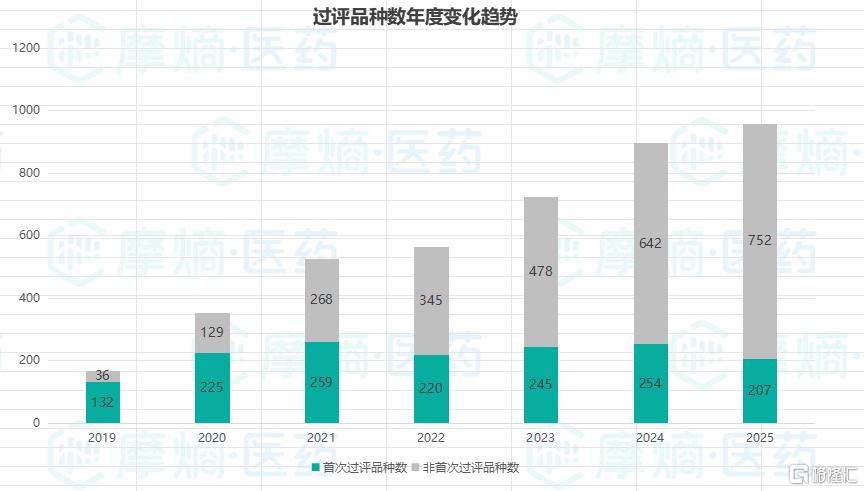
Core Insights - The pharmaceutical industry in 2025 experienced significant changes, particularly in the generic drug sector, marked by intense competition and regulatory challenges, with the race for first generic drugs becoming a central focus [1] Group 1: Market Dynamics - The 11th round of national drug procurement introduced optimized rules aimed at stabilizing clinical use, ensuring quality, and preventing price wars, marking a pivotal moment for the industry [2] - Over 277 first generic drugs were approved from 2022 to 2024, with a steady increase in numbers, indicating a resilient market despite challenging conditions [2] - In 2025, 959 generic drug varieties passed or were deemed to have passed consistency evaluations, with 207 being first approvals, accounting for over 20% of the total [2] Group 2: Leading Companies - In 2025, Kelun Pharmaceutical maintained its position as the leader in first generic drugs with 6 approvals, reinforcing its dominant market status [5] - Qilu Pharmaceutical followed closely with 5 first generic approvals, showcasing its strong R&D capabilities and market competitiveness [7] - Yichang Renfu Pharmaceutical and Hangzhou Muyuan Biopharmaceutical emerged as notable competitors, each achieving 3 first generic approvals, marking a significant rise in their market presence [8][9] Group 3: Regulatory Environment - A regulatory storm in December 2025 led to the rejection of 102 applications for chemical generics within a short span, highlighting the increased scrutiny on the authenticity and compliance of drug development [12] - This regulatory shift signals the end of a development model that prioritized speed over quality, emphasizing the need for stability and compliance in the race for first generics [12]


国产替代加速:NMPA批准关键首仿药,福安、明瑞或股价大涨!
Ge Long Hui· 2025-12-03 19:26
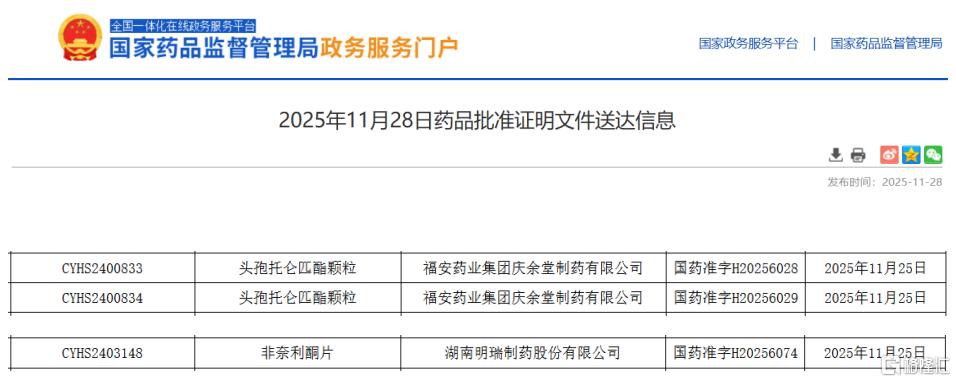
Core Insights - The approval of 51 drug varieties (70 specifications) through consistency evaluation reflects the growing strength of domestic pharmaceutical companies in research and development [1][23] - The first generic approvals for non-naloxone tablets and cefotolan piperazine granules indicate a competitive landscape in the pharmaceutical market, with significant sales potential for these drugs [6][13] Group 1: Non-naloxone Tablets - Non-naloxone tablets, developed by Bayer, are the first breakthrough drug for chronic kidney disease related to type 2 diabetes, with a projected global sales exceeding $500 million in 2024, marking a year-on-year growth of 89.21% [3][6] - Hunan Mingrui Pharmaceutical has secured the first generic approval for non-naloxone tablets, amidst over 30 companies that have submitted applications for generic versions [6][12] - The original patent for non-naloxone will not expire until 2028, limiting the market entry of generics unless patents are challenged [9][22] Group 2: Cefotolan Piperazine Granules - Cefotolan piperazine granules, originally developed by Meiji Seika Pharma, have been approved for domestic production, marking the first generic approval in this category [13][14] - The drug is a third-generation cephalosporin antibiotic with a strong efficacy against beta-lactamase-producing strains, and it has been in the Chinese market for nearly 10 years [13][14] - Currently, 14 companies have submitted applications for cefotolan piperazine granules, indicating a competitive market environment as more generics are expected to enter [19][21] Group 3: Market Dynamics - The rapid progress in domestic generic drug approvals is driven by early completion of consistency evaluations, allowing companies to gain market advantages [22] - The potential inclusion of non-naloxone tablets in centralized procurement by 2028 could significantly reduce treatment costs, from approximately 6 yuan to around 1 yuan [12][22] - The approval of these generics not only enhances patient access to affordable medications but also propels the domestic pharmaceutical industry towards innovation-driven, high-quality development [23]

化学老师变身女首富,身家1410亿
创业邦· 2025-10-30 10:14
Core Viewpoint - The article highlights the remarkable rise of Zhong Huijuan, who became the richest woman in China with a wealth of 141 billion yuan, showcasing her rapid ascent in the pharmaceutical industry and her innovative approach to drug development [6][7]. Group 1: Background and Early Career - Zhong Huijuan was among the first batch of university students after the resumption of the college entrance examination in 1977, with a low admission rate of 4.7% [10]. - After graduating, she worked as a chemistry teacher at Lianyungang Yan'an Middle School, while her boyfriend, Sun Piaoyang, worked as a technician at a local pharmaceutical factory [12][13]. Group 2: Company Formation and Initial Challenges - In 1995, Sun Piaoyang became the factory manager of Lianyungang Pharmaceutical Factory, which was struggling financially, and he decided to innovate by producing a soft capsule version of an anti-tumor injection [15][16]. - The factory's revival led to significant growth, and in 1996, it achieved over 100 million yuan in revenue [19]. Group 3: Transition to Entrepreneurship - Zhong Huijuan left her stable teaching job to help manage a new company, Haosen Pharmaceutical, founded by her husband, which faced skepticism due to her lack of experience in the pharmaceutical industry [21][23]. - She dedicated herself to learning the industry, training technicians, and managing the company, often working long hours in challenging conditions [29][31]. Group 4: Product Development and Market Entry - Haosen's first major product, "Meifeng," an antibiotic, was launched in 1997 and achieved sales of 30 million yuan, marking the company's entry into the market [34]. - The company focused on producing generic drugs initially, but Zhong aimed to enhance the quality and effectiveness of these products to benefit patients [39][40]. Group 5: Innovation and Growth - Zhong Huijuan adopted a strategy of "imitating first, then innovating," leading to the development of over 30 national-level new drugs within ten years [60]. - The company achieved significant milestones, including the launch of "Xingwei," a leukemia treatment that was much more affordable than imported alternatives, generating sales of 210 million yuan in its first year [51][48]. Group 6: Market Expansion and Recognition - Haosen Pharmaceutical successfully passed the FDA certification in 2003, allowing it to enter the international market and generate millions in foreign exchange [62]. - By 2019, the company had grown significantly, merging with Hanhsen Pharmaceutical and becoming a leading research-driven pharmaceutical company in China [68][73]. Group 7: Personal and Professional Legacy - Zhong Huijuan and Sun Piaoyang became notable figures in the pharmaceutical industry, with their combined wealth reaching nearly 200 billion yuan in 2020, and they were recognized as a powerful couple in business [69][72]. - Zhong's journey from a chemistry teacher to a billionaire entrepreneur exemplifies the potential for innovation and success in the pharmaceutical sector, impacting countless lives through affordable healthcare solutions [73].
首仿药获批热潮:2024年896款过评,齐鲁制药霸榜,技术门槛提升成趋势
Ge Long Hui· 2025-05-26 01:18
Core Insights - The balance between innovation and generics is crucial for the healthy development of the pharmaceutical industry. Recently, the first generic drugs have become a focus for domestic pharmaceutical companies, with over 170 first generics approved from 2022 to 2023, and the number of approvals increasing year by year. In 2024, despite fierce competition from ten rounds of centralized procurement, 896 drugs have passed or are deemed to have passed consistency evaluations, with 254 being first approvals and 107 being significant first generics. Qilu Pharmaceutical topped the annual list with 7 first generics [1][2][4]. Industry Overview - The domestic generic drug market has become increasingly competitive due to market opening and reform of drug approval systems. The tenth round of national centralized procurement has intensified competition, leading to extreme pricing situations, with some injectable drugs priced lower than bottled water. This has put significant pressure on B-class enterprises, with some industry insiders claiming that generic drug projects are becoming unsustainable [2][4]. Company Performance - Leading companies in the domestic generic drug sector, such as Qilu Pharmaceutical, Kelun Pharmaceutical, and Heng Rui Medicine, have maintained strong competitive positions. In 2022, Heng Rui and Kelun each achieved 7 first generics, while in 2023, Kelun led with 6 first generics. In 2024, Qilu Pharmaceutical excelled with 7 first generics, solidifying its leading position in the generic drug field [4][5][6]. Market Dynamics - In 2024, a total of 896 generic drugs passed or were deemed to have passed consistency evaluations, with 254 being first approvals, accounting for 28.34%. The competition for first generics remains fierce, with Qilu Pharmaceutical achieving the highest number of first generics [2][4][5]. Emerging Competitors - Other companies, such as Zhengda Tianqing, also demonstrated strong R&D capabilities, achieving 5 first generics in both 2023 and 2024, maintaining a solid position in the market. Companies like Shanghai Xuantai and Wuhu Daorun have made significant gains, with Xuantai achieving 4 first generics in 2024, marking a notable improvement from 2023 [5][9][12]. Future Outlook - The generic drug market in China is expected to continue evolving, with a focus on high-quality first generics and innovative drugs. The success of first generics is concentrated in high-tech niche areas, highlighting the progress made by pharmaceutical companies in overcoming technical challenges. The competitive landscape will likely shift further as policies and market conditions change [14].
