马的演化

Search documents
马是如何演化成人类亲密伙伴的?
Xin Lang Cai Jing· 2026-02-24 19:18
Core Viewpoint - The article highlights the historical significance and evolutionary journey of horses, emphasizing their role as close companions to humans throughout civilization, from ancient agricultural and military uses to modern therapeutic applications. Group 1: Evolutionary Journey - Horses evolved from small ancestors about 56 million years ago, with significant changes occurring over millions of years, leading to the modern horse's size and adaptations for grassland living [8]. - The true horse appeared in North America over 4 million years ago, becoming the direct ancestor of modern horses, with adaptations that enhanced speed and efficiency in grazing [8]. - Various horse species have existed, but only the true horse lineage has survived due to its adaptability to environmental changes [8]. Group 2: Biological Features - Horses possess the largest eyes among land mammals, providing nearly 350-degree vision, although they are colorblind to red and green [9]. - Their advanced olfactory system allows them to recognize individuals by scent, and they are highly sensitive to human emotional changes [9]. - Horses have remarkable intelligence, strong spatial orientation, and unique physical adaptations, such as the ability to sleep standing and the continuous growth of their teeth [9]. Group 3: Cultural and Practical Significance - Historically, horses were central to agriculture, transportation, and military operations, with innovations like the stirrup enhancing their utility in warfare [10]. - In trade and communication, horses facilitated long-distance travel and were vital in connecting different regions, especially along routes like the Silk Road [10]. - In contemporary society, horses have found new roles in sports, therapy, and cultural symbolism, representing strength and resilience in various cultures [10].

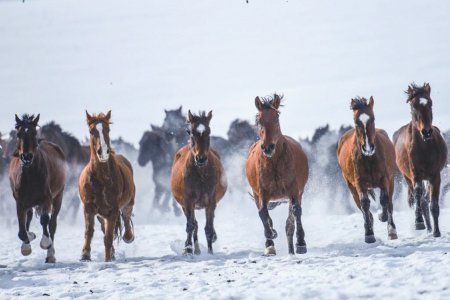
一匹马的生命史诗与精神象征
Ke Ji Ri Bao· 2026-02-20 02:08
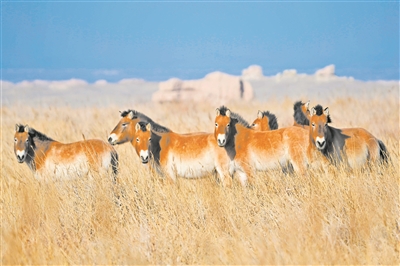
Core Insights - The article highlights the historical and cultural significance of horses, particularly in Chinese culture, as symbols of perseverance and strength, especially with the upcoming Year of the Horse in 2026 [2][9] Evolution of Horses - Horses have a rich evolutionary history, starting from approximately 56 million years ago with early ancestors resembling small dogs, evolving through various stages to become the modern horse [3] - Key evolutionary milestones include the transition from small forest-dwelling creatures to larger grassland animals, with significant changes occurring around 4 million years ago when the modern horse emerged [3] Current Status of Horse Species - The current horse family consists of only one genus, with nine species, including the Przewalski's horse, which is the only remaining wild horse species and is classified as a national first-class protected animal in China [4] - As of the end of 2024, the population of Przewalski's horse in China has exceeded 900 individuals, representing one-third of the global population, showcasing successful conservation efforts [4] Biological Characteristics - Horses possess unique biological traits, such as the largest eyes among land mammals, with a diameter of 5 cm and a nearly panoramic field of vision, although they are colorblind [5] - Their teeth grow continuously throughout their lives, and they can stand while sleeping lightly, allowing for quick escape from danger [5] Historical Relationship with Humans - The domestication of horses began thousands of years ago, with evidence suggesting that horses were domesticated in the Eurasian steppes around 5,600 to 5,500 years ago [7] - Horses played a crucial role in agriculture, transportation, and military endeavors throughout history, serving as a core productivity force in ancient societies [7] Modern Value of Horses - In contemporary society, the practical utility of horses has diminished, but they have gained new value in sports, therapy, and transportation in remote areas [8] - The evolution of horse value reflects human civilization's progress and the harmonious coexistence between humans and nature [8] Cultural Symbolism - In Chinese culture, horses symbolize strength and progress, often associated with phrases that denote success and ambition [9] - The horse has been a recurring theme in literature and art, representing freedom and resilience, as seen in various historical and artistic references [9]
科普丨马年说马:漫长演化中走来的人类亲密伙伴
Xin Hua Wang· 2026-02-16 09:06
Core Insights - The article discusses the long evolutionary journey of horses, highlighting their significance as close companions to humans throughout history [1][9] - It emphasizes the biological features and unique abilities of horses, showcasing their intelligence and sensory capabilities [5][6] - The role of horses in human civilization is explored, detailing their contributions to agriculture, transportation, and military [8][9] Evolutionary Journey - Horses evolved from ancestors the size of foxes around 56 million years ago, with significant changes occurring over millions of years, leading to the modern horse [3] - Key evolutionary milestones include the development of the modern horse's size and adaptations for grassland living, with the true horse appearing in North America about 4 million years ago [3] Biological Features - Horses possess the largest eyes among land mammals, with a nearly 350-degree field of vision, although they are colorblind [5] - Their sense of smell is highly developed, allowing them to recognize individuals based on scent, and they are sensitive to human emotional changes [5][6] - Horses have unique physical traits, such as continuously growing teeth and the ability to sleep while standing, which aids in their survival [6] Role in Human Civilization - Historically, horses were central to agriculture, transportation, and military operations, with innovations like the stirrup enhancing their utility in warfare [8] - In modern times, horses have found new roles in sports, therapy, and as companions, reflecting their evolving value in society [8][9] - The cultural significance of horses is highlighted, with horses symbolizing strength and resilience in Chinese culture, and the establishment of "World Horse Day" by the UN to honor them [9]
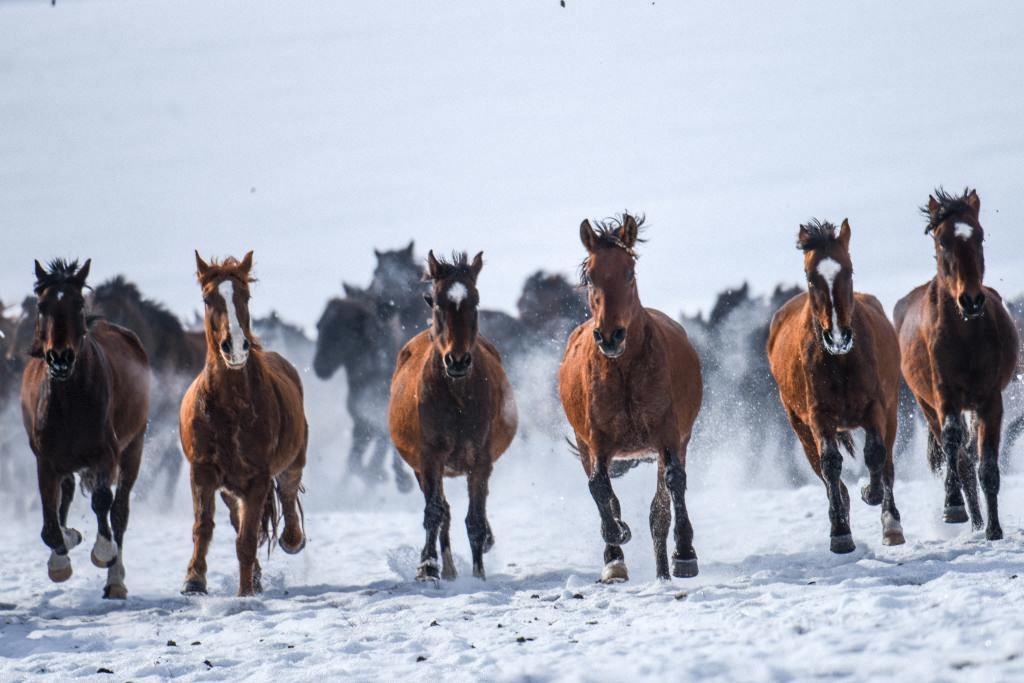
“中国科学院跨年科学演讲开讲啦”活动举办
Xin Lang Cai Jing· 2026-01-03 14:07
Core Viewpoint - The event "Scientific Power on the Road to Revival" organized by the Chinese Academy of Sciences aims to showcase the diverse charm of science through various presentations and discussions [1]. Group 1: Event Overview - The event is themed "Scientific Power on the Road to Revival" and consists of three chapters: "Chasing Light, Exploring New Scientific Frontiers," "Academicians Leading the Way, Discussing Research Aspirations," and "Crossing Mountains and Seas, Exploring Scientific Frontiers" [3]. - The event featured an eight-hour uninterrupted live broadcast, allowing audiences to explore the multifaceted nature of science [3]. Group 2: Key Presentations - Researcher Deng Tao from the Institute of Vertebrate Paleontology and Paleoanthropology presented on the evolution of horses, titled "The Long March of Horses - Running Machines that Never Stop," discussing ecological iterations and life adaptations over millions of years [3]. - Researcher Li Jing from the Purple Mountain Observatory introduced China's first regularly operating submillimeter-wave telescope in her presentation "From Initial Light to All Things - The 15-meter Submillimeter-Wave Telescope (XSMT)" [3]. - Researcher Zeng Yi from the Institute of Automation discussed the creation of ethical artificial intelligence in his presentation "Creating Ethical AI for a Symbiotic Society," envisioning the future of humanity and AI [3]. - Academician Liu Jiaqi from the Institute of Geology and Geophysics shared his experiences from expeditions to the polar regions in his presentation "The Wonders and Mysteries of the Poles," exploring the secrets of these pristine areas [4]. Group 3: Organizers and Hosts - The event was co-hosted by the Central Radio and Television Station and the Chinese Academy of Sciences, with support from the Institute of Physics and the Computer Network Information Center of the Chinese Academy of Sciences [4].