
骑士精神

Search documents
东西问丨马,何以成为文明互鉴“活的桥梁”?
Xin Lang Cai Jing· 2026-02-15 11:36
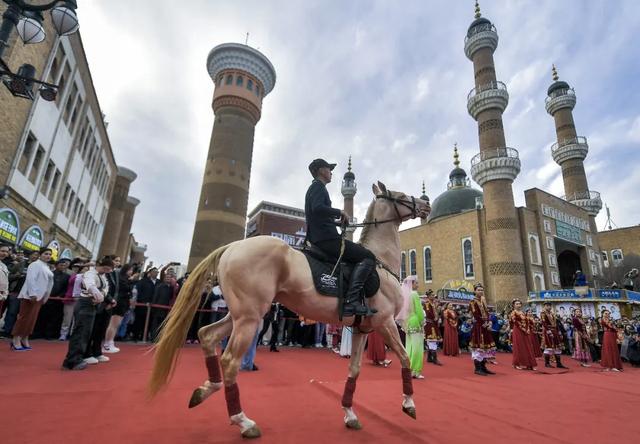
Core Perspective - The arrival of the Akhal-Teke horse from Turkmenistan as a national gift to China symbolizes a historical connection to the Silk Road and the cultural exchanges between East and West, highlighting the horse's role in civilization and mutual understanding [1][3][5]. Group 1: Historical Significance - The horse has historically served as more than just a means of transportation or warfare; it has carried species, technology, art, and beliefs, establishing a bridge of cultural exchange across the Eurasian continent [1][3]. - The desire for quality horses in China drove early interactions between East and West, as documented in historical texts like "Records of the Grand Historian," where Emperor Wu of Han sought horses from the Ferghana Valley [3][5]. Group 2: Cultural Exchange - The horse stirrup, originating in Northeast China around the 4th century, significantly influenced military history by facilitating the rise of heavy cavalry in Europe, thus shaping the feudal knight class [3][5]. - Both Eastern and Western cultures attribute noble qualities to horses, with Chinese mythology and history associating horses with strength and perseverance, while Western mythology portrays them as symbols of honor and valor [5][7]. Group 3: Contemporary Relevance - The gifting of horses, such as the Akhal-Teke, is seen as a symbol of long-lasting diplomatic relations, with cultural artifacts like the Eastern Han bronze galloping horse being compared to Western symbols of beauty [7][8]. - The presence of equestrian elements in events like the 2026 Milan Winter Olympics and cultural exchanges between China and France illustrates the ongoing role of horses in fostering international relationships and cultural dialogue [8].

英媒:Z世代为何着迷“公主待遇”?
Huan Qiu Shi Bao· 2025-07-22 22:42
Group 1 - The article discusses the trend of "princess treatment," which refers to romantic gestures by partners that resemble fairy-tale actions, such as preparing coffee or bringing flowers weekly [1][2] - This trend has gained popularity among Generation Z, particularly in the United States, and is seen as a reflection of emotional care rather than materialism [1][2] - Critics argue that the concept may promote unrealistic expectations in relationships, comparing it to a form of imprisonment rather than empowerment [1][2] Group 2 - Historical dramas have revived interest in aristocratic courtship culture, influencing viewers' perceptions of dating etiquette and emotional understanding [2] - The fascination with the lives of the wealthy and royal figures, both real and fictional, has increased as media shifts to online platforms [2] - The "princess treatment" is viewed as a modern variant of chivalry, which traditionally involved male gestures of respect towards women [2]