
骨骼保健

Search documents
科学与健康|绕开误区,别让骨骼悄悄“变老”!
Xin Hua She· 2025-10-19 04:40
Core Viewpoint - Osteoporosis is a significant health issue for the elderly, with many misconceptions leading to inadequate calcium supplementation and increased bone burden. Experts emphasize the need for lifestyle adjustments and scientific approaches to bone health, especially on World Osteoporosis Day, October 20 [1]. Misconceptions Summary Misconception 1: No fractures mean no problems - Osteoporosis is characterized by low bone mass and increased fragility, often referred to as a "silent disease." The prevalence of osteoporosis among individuals over 50 in China is 19.2%, with rates of 32.1% in women and 6.0% in men. For those over 65, the prevalence rises to 32.0%, with 51.6% in women and 10.7% in men [2][4]. Misconception 2: More calcium means stronger bones - Many believe that consuming more calcium, such as through bone broth or supplements, will prevent osteoporosis. However, bone broth has low calcium content, and excessive calcium supplementation can interfere with the absorption of other minerals and lead to health issues like kidney stones and hypercalcemia. The recommended daily calcium intake for individuals over 50 is 1000 mg, with adjustments for those with osteoporosis or on certain medications [5][7]. Misconception 3: Osteoporosis is exclusive to the elderly - Research indicates that peak bone mass is reached around age 30, after which it gradually declines. Therefore, osteoporosis is not solely an elderly issue; maintaining bone health from a young age through a healthy lifestyle is crucial [8]. Recommendations for Bone Health - Experts recommend adequate calcium intake and physical activity during childhood and adolescence to promote bone growth. Adults should maintain healthy habits, limit alcohol and caffeine, and ensure sufficient calcium and vitamin D intake, especially for women during pregnancy and lactation. Annual bone density tests are advised for those over 50, particularly postmenopausal women and men over 65 [11].

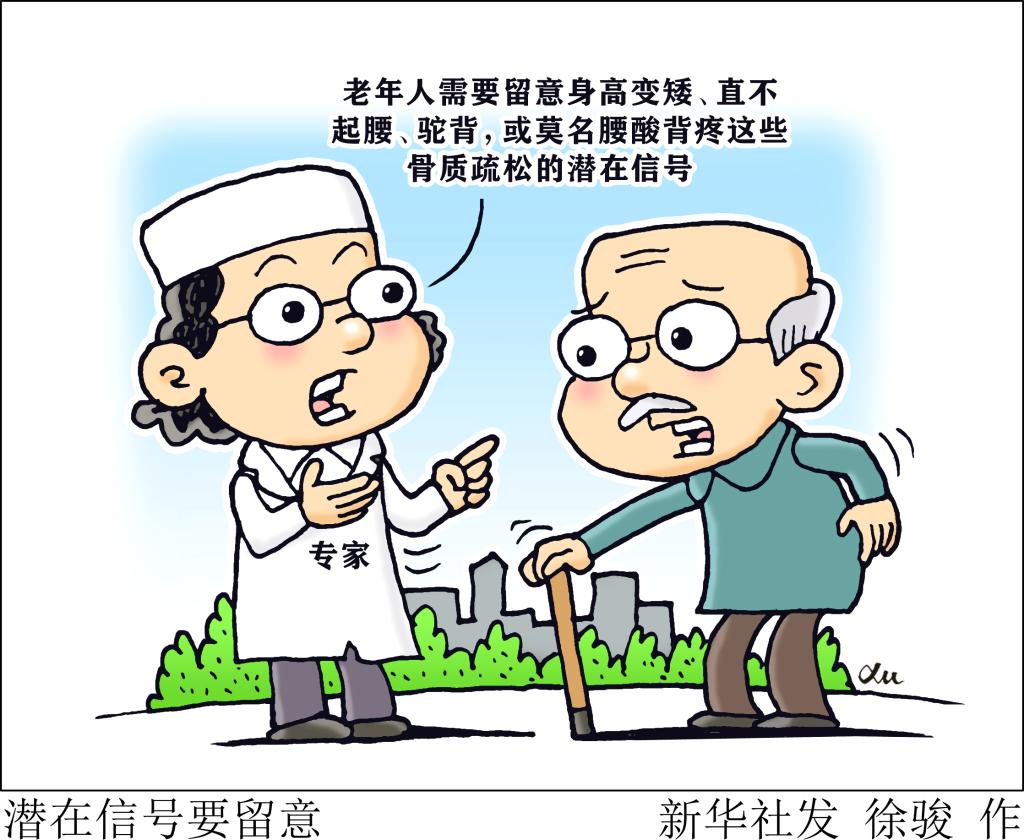
绕开误区,别让骨骼悄悄“变老”!
Xin Hua She· 2025-10-19 03:16
Core Insights - Osteoporosis is a significant health issue for the elderly, often misunderstood, leading to inadequate calcium supplementation and increased bone burden [1][2] Misconceptions Summary Misconception 1: No Fractures Means No Problem - Osteoporosis is characterized by low bone mass and increased fragility, often referred to as a "silent disease" [2] - The prevalence of osteoporosis in individuals over 50 in China is 19.2%, with rates of 32.1% in women and 6.0% in men; for those over 65, the rates are 32.0% for women and 10.7% for men [2] Misconception 2: More Calcium Equals Stronger Bones - Common belief that consuming bone broth or calcium supplements will prevent osteoporosis is misleading; bone broth has low calcium content and excessive calcium intake can lead to health issues [3][4] - Recommended daily calcium intake for individuals over 50 is 1000 mg, with adjustments for those with osteoporosis or on certain medications [3] Misconception 3: Osteoporosis is Exclusive to the Elderly - Bone mineral content peaks around age 30 and declines thereafter; early life bone health significantly impacts later osteoporosis risk [5] - Emphasis on the importance of calcium intake and physical activity during childhood and adolescence to promote bone health [5][6] Health Initiatives - The "Healthy China Action (2019-2030)" includes initiatives to strengthen the musculoskeletal system and prevent osteoporosis among the elderly [6] - Increased public health awareness and education on osteoporosis prevention is crucial for improving health literacy among older adults [6]