
骨质疏松症

Search documents
针对三种慢病 食养指南征求意见稿来了
Xin Lang Cai Jing· 2026-01-16 18:01
Core Viewpoint - The National Health Commission of China has released a draft for public consultation on dietary guidelines aimed at addressing three major chronic diseases: stroke, osteoporosis, and sarcopenia, with the goal of improving national nutrition and health levels [1] Group 1: Stroke Management - Poor lifestyle choices are significant factors contributing to the incidence of stroke, and nutritional management plays a crucial role in recovery [1] - The dietary guidelines are primarily intended for adult patients in the recovery phase or with sequelae of stroke, who are stable, conscious, and do not have severe swallowing difficulties [1] Group 2: Osteoporosis Guidance - Approximately 90 million people in China suffer from osteoporosis, with around 70 million being women [1] - The dietary guidelines target adult osteoporosis patients and grassroots health workers, providing nutritional guidance for prevention and improvement, but are not a substitute for medical treatment [1] Group 3: Sarcopenia Focus - Sarcopenia is an increasingly prominent public health issue in an aging society [1] - The dietary guidelines are based on modern nutritional theories and evidence, combined with traditional Chinese medicine concepts, proposing basic principles and plans for dietary management of sarcopenia [1]
针对三种慢病!食养指南征求意见稿来了
Xin Lang Cai Jing· 2026-01-16 05:44
Core Viewpoint - The National Health Commission has released a draft for public consultation aimed at addressing three major chronic diseases: stroke, osteoporosis, and sarcopenia, with the goal of enhancing national nutrition and health levels [1][2]. Group 1: Stroke Management - Poor lifestyle choices are significant factors contributing to stroke, and nutritional management plays a crucial role in recovery [1]. - The dietary guidelines are primarily intended for adult patients in the recovery phase or with sequelae of stroke, who are stable and can eat orally [1]. - For patients in acute phases or with severe swallowing difficulties requiring tube feeding or parenteral nutrition, individualized nutritional treatment should be guided by clinical physicians and nutritionists [1]. Group 2: Osteoporosis Guidance - Osteoporosis is recognized by the World Health Organization as the third most common disease among middle-aged and elderly individuals, following hypertension and hyperlipidemia [1]. - Approximately 90 million people in China suffer from osteoporosis, with around 70 million being women [1]. - The dietary guidelines target adult osteoporosis patients and grassroots health workers, providing nutritional guidance for prevention and improvement, but do not replace pharmacological treatment [1]. - Patients with comorbidities should refer to the guidelines for dietary planning while consulting healthcare professionals for personalized plans [1]. Group 3: Sarcopenia Focus - Sarcopenia is an increasingly prominent public health issue in aging societies, characterized by progressive loss of muscle mass and strength [2]. - The dietary guidelines for sarcopenia are based on modern nutritional science and traditional Chinese medicine, outlining basic principles and plans for dietary management [2]. - The deadline for public consultation on the draft is set for January 30, 2026 [2].
天天补钙仍然骨质疏松,问题出在哪?
Ren Min Ri Bao· 2025-11-28 00:31
Core Viewpoint - Osteoporosis is a complex condition not solely caused by calcium deficiency, but rather a combination of decreased bone mineral content and quality, leading to increased fracture risk [2][3] Epidemiology - The prevalence of osteoporosis in individuals over 50 years old in China is 19.2%, with women at 32.1% and men at 6.9%. For those over 65, the prevalence rises to 32.0%, with women at 51.6% and men at 10.7% [3] - Approximately 90 million people in China are estimated to suffer from osteoporosis, with around 70 million being women, particularly postmenopausal women [3] Risk Factors - Non-controllable risk factors include aging, menopause in women, and family history of fragility fractures [5] - Controllable risk factors encompass unhealthy lifestyles, diseases affecting bone metabolism, and certain medications [6] Calcium and Vitamin D - Calcium supplementation must be paired with Vitamin D to enhance absorption; without Vitamin D, calcium intake may not be effectively utilized by the body [7][9] - Vitamin D synthesis requires sunlight exposure, and dietary sources are limited, making supplementation necessary for high-risk groups [9] Diagnosis and Screening - The gold standard for diagnosing osteoporosis is the dual-energy X-ray absorptiometry (DXA) scan, with a T-score of ≤ -2.5 indicating osteoporosis [10][11] - Screening is recommended for women aged 65 and older and men aged 70 and older, with earlier screening for those with specific risk factors [12] Symptoms and Public Awareness - Osteoporosis is often asymptomatic in early stages, leading to a lack of awareness until a fracture occurs [13] - Common misconceptions include equating osteoporosis solely with calcium deficiency and believing it only affects the elderly [13]
天天补钙仍然骨质疏松,问题出在哪?(健康驿站)
Ren Min Ri Bao Hai Wai Ban· 2025-11-27 22:46
Core Viewpoint - Osteoporosis is a complex condition not solely caused by calcium deficiency, but rather a combination of decreased bone mineral content and quality, leading to increased fracture risk [2][3] Group 1: Understanding Osteoporosis - Osteoporosis is characterized by a reduction in both bone mineral content and bone quality, which together lower bone strength and increase fragility [2] - The prevalence of osteoporosis in individuals over 50 years old is 19.2%, with women at 32.1% and men at 6.9%. For those over 65, the prevalence rises to 32.0%, with women at 51.6% and men at 10.7% [3] Group 2: Risk Factors - Risk factors for osteoporosis are categorized into uncontrollable factors such as age, menopause, and family history of fractures [5] - Controllable factors include unhealthy lifestyles, diseases affecting bone metabolism, and certain medications [6] Group 3: Calcium and Vitamin D - Many individuals supplement calcium but still experience bone density loss, indicating that calcium deficiency is more accurately described as a decrease in bone mineral content [7][8] - Vitamin D is essential for calcium absorption, acting as a "navigator" to facilitate calcium uptake in the intestines [9] Group 4: Diagnosis and Screening - The gold standard for diagnosing osteoporosis is the dual-energy X-ray absorptiometry (DXA) scan, which measures bone density [10] - It is recommended that women over 65 and men over 70 undergo routine bone density screening, with earlier screening for those with risk factors [12] Group 5: Public Awareness and Misconceptions - Osteoporosis is often referred to as a "silent disease" due to the lack of symptoms in early stages, leading to potential fractures from minor incidents [13] - Common misconceptions include the belief that osteoporosis is solely a calcium deficiency or that it only affects the elderly, which can delay necessary interventions [13]
中疾控:抓住“低骨量”黄金窗口期,强健骨骼三步走
Ren Min Wang· 2025-10-29 06:01
Core Viewpoint - The article emphasizes the importance of maintaining bone health, particularly in individuals aged 30-35 and older, to prevent conditions like osteoporosis and associated fracture risks. It highlights the prevalence of low bone mass in the population and suggests a three-step strategy for bone health management. Group 1: Prevalence and Risks - The peak bone mass is reached in youth, and after age 30-35, there is a gradual decline leading to low bone mass, which can progress to osteoporosis if not addressed [1] - In China, the prevalence of low bone mass is 40.9% among individuals aged 40 and above, and 47.5% among those aged 60 and above [1] Group 2: Step 1 - Scientific Assessment - Individuals should calculate their BMI using the formula: weight (kg) ÷ height (m)², aiming for a healthy range of 18.5-23.9 for adults aged 18-64 [2] - Weight changes should be monitored, especially in older adults, with specific BMI targets set for different age groups [2] - Regular bone density tests are recommended for those over 40 or with risk factors, using various screening methods to identify low bone mass early [2] Group 3: Step 2 - Nutritional Reinforcement - Adequate calcium intake is crucial, with recommendations of 300-500 ml of dairy products daily, along with increased consumption of soy products and dark green vegetables [3] - Vitamin D supplementation is advised through outdoor activities and diet, including fatty fish and egg yolks [4] - Sufficient intake of high-quality protein from fish, poultry, eggs, lean meats, and legumes is essential for bone health [5] Group 4: Step 3 - Effective Exercise - Regular physical activity is vital, with a recommendation of at least 150 minutes of moderate-intensity exercise weekly, adjusted for older adults [6] - Aerobic exercises such as running, walking, swimming, dancing, and cycling are effective for stimulating bone growth [7] - Strength training exercises, including resistance training with bands or weights, are recommended to enhance muscle strength and protect bones [7]
中新健康丨感觉自己变矮了?警惕这种病!
Zhong Guo Xin Wen Wang· 2025-10-21 12:30
Core Viewpoint - The article discusses common misconceptions about calcium supplementation and bone health, emphasizing the importance of understanding the actual sources and methods for maintaining bone density and preventing osteoporosis [2][4][5]. Misconceptions about Calcium Supplementation - Many believe that consuming bone broth and eating meat or shrimp shells effectively supplements calcium; however, the calcium from animal bones is not easily dissolved in broth, making it an ineffective source [4]. - The article highlights that while meat provides essential nutrients for bone health, its calcium content is generally low, and reliance on meat for calcium is insufficient [4]. - Shrimp shells, although high in calcium, have low absorption rates and are often consumed with high salt, which can lead to increased calcium loss [4]. Impact of Beverages on Bone Health - There is a misconception that coffee and carbonated drinks lead to osteoporosis; however, moderate coffee consumption does not significantly increase the risk of osteoporosis [5][6]. - Phosphorus, found in carbonated drinks, is essential for bone health, and moderate consumption does not adversely affect calcium metabolism [7]. Recommendations for Bone Health - To maintain bone health, the article suggests several strategies: 1. Maintain an appropriate weight through regular monitoring and adjustments to diet and exercise [8]. 2. Ensure balanced nutrition by increasing calcium intake through diet or supplements and getting adequate vitamin D [8]. 3. Engage in a combination of aerobic, strength, and balance exercises to enhance muscle strength and reduce fall risk [8]. 4. Avoid unhealthy habits such as smoking and excessive alcohol, as well as limiting high-sugar beverages [8]. 5. High-risk individuals should undergo early screening for osteoporosis to facilitate timely treatment [8].


科学与健康|绕开误区,别让骨骼悄悄“变老”!
Xin Hua She· 2025-10-19 04:40
Core Viewpoint - Osteoporosis is a significant health issue for the elderly, with many misconceptions leading to inadequate calcium supplementation and increased bone burden. Experts emphasize the need for lifestyle adjustments and scientific approaches to bone health, especially on World Osteoporosis Day, October 20 [1]. Misconceptions Summary Misconception 1: No fractures mean no problems - Osteoporosis is characterized by low bone mass and increased fragility, often referred to as a "silent disease." The prevalence of osteoporosis among individuals over 50 in China is 19.2%, with rates of 32.1% in women and 6.0% in men. For those over 65, the prevalence rises to 32.0%, with 51.6% in women and 10.7% in men [2][4]. Misconception 2: More calcium means stronger bones - Many believe that consuming more calcium, such as through bone broth or supplements, will prevent osteoporosis. However, bone broth has low calcium content, and excessive calcium supplementation can interfere with the absorption of other minerals and lead to health issues like kidney stones and hypercalcemia. The recommended daily calcium intake for individuals over 50 is 1000 mg, with adjustments for those with osteoporosis or on certain medications [5][7]. Misconception 3: Osteoporosis is exclusive to the elderly - Research indicates that peak bone mass is reached around age 30, after which it gradually declines. Therefore, osteoporosis is not solely an elderly issue; maintaining bone health from a young age through a healthy lifestyle is crucial [8]. Recommendations for Bone Health - Experts recommend adequate calcium intake and physical activity during childhood and adolescence to promote bone growth. Adults should maintain healthy habits, limit alcohol and caffeine, and ensure sufficient calcium and vitamin D intake, especially for women during pregnancy and lactation. Annual bone density tests are advised for those over 50, particularly postmenopausal women and men over 65 [11].
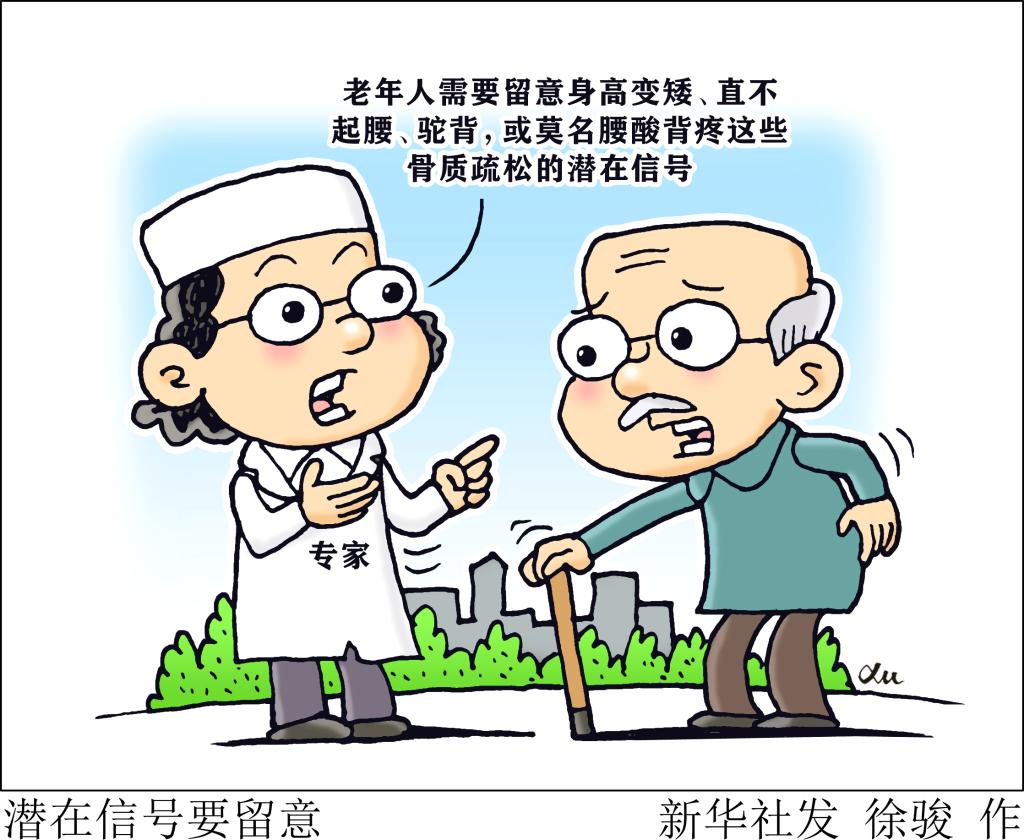
绕开误区,别让骨骼悄悄“变老”!
Xin Hua She· 2025-10-19 03:16
Core Insights - Osteoporosis is a significant health issue for the elderly, often misunderstood, leading to inadequate calcium supplementation and increased bone burden [1][2] Misconceptions Summary Misconception 1: No Fractures Means No Problem - Osteoporosis is characterized by low bone mass and increased fragility, often referred to as a "silent disease" [2] - The prevalence of osteoporosis in individuals over 50 in China is 19.2%, with rates of 32.1% in women and 6.0% in men; for those over 65, the rates are 32.0% for women and 10.7% for men [2] Misconception 2: More Calcium Equals Stronger Bones - Common belief that consuming bone broth or calcium supplements will prevent osteoporosis is misleading; bone broth has low calcium content and excessive calcium intake can lead to health issues [3][4] - Recommended daily calcium intake for individuals over 50 is 1000 mg, with adjustments for those with osteoporosis or on certain medications [3] Misconception 3: Osteoporosis is Exclusive to the Elderly - Bone mineral content peaks around age 30 and declines thereafter; early life bone health significantly impacts later osteoporosis risk [5] - Emphasis on the importance of calcium intake and physical activity during childhood and adolescence to promote bone health [5][6] Health Initiatives - The "Healthy China Action (2019-2030)" includes initiatives to strengthen the musculoskeletal system and prevent osteoporosis among the elderly [6] - Increased public health awareness and education on osteoporosis prevention is crucial for improving health literacy among older adults [6]
“2024 YR4”小行星即将撞击地球?2月“科学”流言榜来了→
Zhong Guo Jing Ji Wang· 2025-02-28 02:23
Group 1 - The term "biodegradable plastics" can mislead consumers into thinking they can be discarded without consequences, while their degradation requires specific conditions that are often not met in natural environments [1][2] - Many biodegradable plastics decompose slowly in natural settings, potentially leading to microplastic pollution, thus emphasizing the need for proper recycling and waste management [2] - A circular economy approach, focusing on reducing plastic use and enhancing recycling, is suggested as a more effective solution to plastic pollution [2] Group 2 - Osteoporosis patients are often advised to limit physical activity to prevent fractures, but appropriate exercise is essential for maintaining bone and muscle health [3] - Regular movement can help prevent the loss of bone density and muscle mass, which are critical for reducing the risk of falls in the elderly [3] - Adequate sunlight exposure is necessary for vitamin D synthesis, which is vital for bone health, highlighting the importance of balanced activity levels [3] Group 3 - The claim that covering oneself with blankets during a fever helps reduce temperature is incorrect; it can actually hinder the body's natural cooling process [4] - Maintaining a comfortable room temperature and staying hydrated are recommended practices during a fever [4] - If fever persists or is accompanied by severe symptoms, seeking medical attention is advised [4] Group 4 - The asteroid "2024 YR4" has a calculated collision probability with Earth of approximately 2%, with its size estimated between 40 to 90 meters [5][6] - The probability of collision has increased from 1% to 2.3% based on ongoing observations, indicating that such probabilities can change rapidly as more data is collected [5][6] - International cooperation has established protocols for monitoring and responding to near-Earth objects, ensuring preparedness for potential threats [6] Group 5 - The belief that wearing glasses worsens nearsightedness is unfounded; nearsightedness progression is linked to eye development and usage habits [7] - Timely use of corrective lenses is crucial for children diagnosed with myopia to prevent further deterioration of vision [7] - Encouraging outdoor activities and proper eye care can help mitigate the progression of nearsightedness [7] Group 6 - The assertion that fish oil can lower blood lipids is oversimplified; while Omega-3 fatty acids in fish oil can help reduce triglycerides, they do not significantly affect cholesterol levels [8][9] - High-purity fish oil is recommended for individuals with elevated triglycerides, but it should not replace statin medications for cholesterol management [10] - The effectiveness of fish oil supplements varies based on their purity and the specific fatty acid content, necessitating careful selection [9][10] Group 7 - The notion that allergy medications should only be taken after symptoms appear is misleading; proactive treatment can be more effective in managing seasonal allergies [11] - Preventive measures, such as using nasal sprays or eye drops before allergy season, can significantly reduce the severity of symptoms [11] - Early intervention is emphasized to improve outcomes for individuals with known allergies [11] Group 8 - The claim that NFC technology in smartphones is insecure and can lead to unauthorized transactions is incorrect; NFC requires close proximity and user authentication to function [12][13] - NFC technology operates similarly to RFID, allowing secure data exchange within a limited range, enhancing its safety for mobile payments [12][13] - Concerns about unauthorized transactions are more related to user behavior and security practices than the technology itself [14]