
骨髓纤维化治疗

Search documents
Karyopharm Therapeutics(KPTI) - 2025 Q4 - Earnings Call Transcript
2026-02-12 14:02
Financial Data and Key Metrics Changes - Total revenue for Q4 2025 was $34.1 million, an increase of 11.8% compared to Q4 2024 [51] - For the full year 2025, total revenue was $146.1 million, a slight increase from 2024 [51] - U.S. XPOVIO net product revenue for Q4 2025 was $32.1 million, an increase of 9.6% compared to Q4 2024 [52] - For the full year, U.S. XPOVIO net product revenue was $114.9 million, an increase of 1.9% from 2024 [52] - The company reported a net loss of $102.2 million, or $5.71 per share on a GAAP basis in Q4 2025 [60] - The full year net loss was $196 million, or $17.93 per diluted share for 2025 [60] Business Line Data and Key Metrics Changes - Xpovio net product revenue grew to $32.1 million in Q4 2025 and $114.9 million for the full year 2025 [36] - The company expects to guide towards $115 to $130 million of Xpovio net product revenue in 2026 [36] - License and other revenue was $2 million in Q4 and $31.2 million for the full year 2025 [53] Market Data and Key Metrics Changes - Demand for Xpovio was consistent year-over-year in 2025, with the community setting driving approximately 60% of total U.S. sales [37] - The company is targeting approximately 4,000 newly diagnosed patients with intermediate to high-risk myelofibrosis [45] Company Strategy and Development Direction - Karyopharm is focused on expanding its oncology franchise, particularly in myelofibrosis and endometrial cancer [7][8] - The company is preparing for pivotal data readouts from its late-stage clinical programs, with significant opportunities in myelofibrosis and endometrial cancer [63] - The strategy includes evaluating a range of financing and strategic options to maintain flexibility and align capital decisions with value creation [12] Management's Comments on Operating Environment and Future Outlook - Management expressed confidence in the upcoming data readout from the phase three SENTRY trial in March, which is expected to address an unmet need in myelofibrosis [9][26] - The company is managing its business with discipline, focusing on near-term value-creating milestones while maintaining flexibility [64] - Management emphasized the importance of executing well and generating high-quality data to define the next phase of the company [64] Other Important Information - The company ended the year with $64.1 million in cash, cash equivalents, restricted cash, and investments, compared to $109.1 million as of December 31, 2024 [61] - The full year 2025 included $15 million of R&D reimbursement from Menarini, which will not be received in future years [53] Q&A Session Summary Question: Can you discuss the differences in exposure and activity between the 40 mg and 60 mg doses? - Management indicated that the 60 mg dose showed a clear benefit-risk profile compared to the 40 mg dose, with maximized efficacy in the 60 mg group [70] Question: What are your thoughts on Novartis' recent plans in myelofibrosis? - Management noted that the continued investment in the myelofibrosis space highlights the unmet need and significant market value [74] Question: Can you elaborate on the strategy for eltanexor and other MPNs? - Management stated that eltanexor is a second-generation XPO1 inhibitor with potential applications beyond myelofibrosis, including other MPNs [78] Question: What updates can you provide on the blinded safety data? - Management confirmed that no updates have been made beyond previously disclosed data, and they are looking forward to the upcoming data readout [85] Question: How do you view the potential for symptomatic improvement in your trials? - Management emphasized the goal of achieving statistical significance for both spleen volume reduction and symptomatic improvement [104]

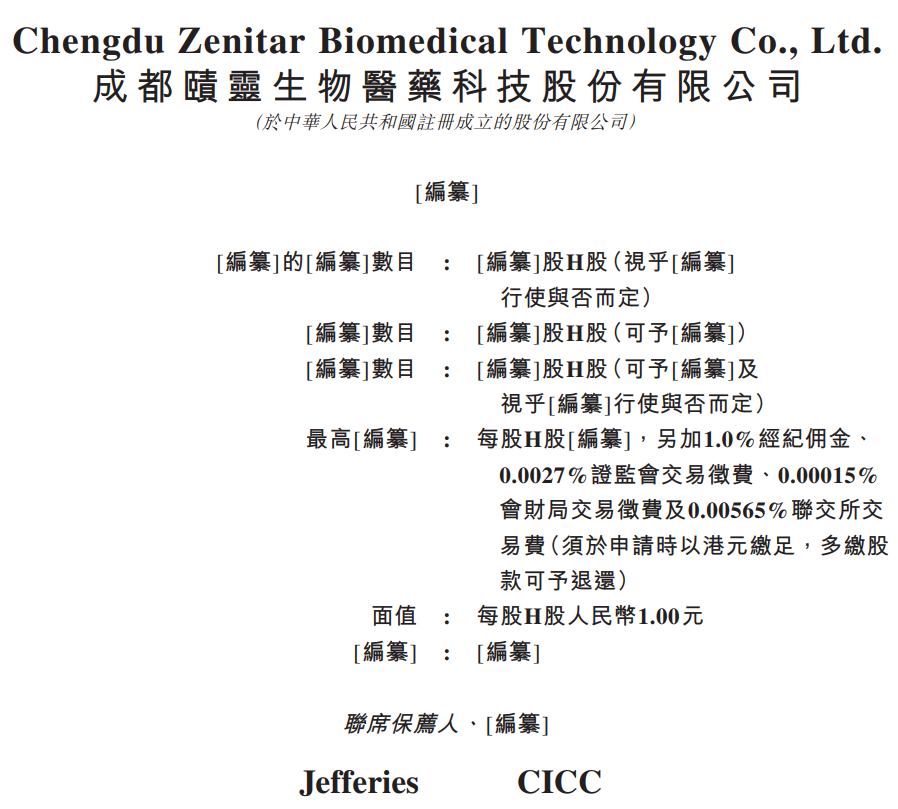
赜灵生物递表港交所 两种候选药物已进入3期注册性临床试验阶段
Zhi Tong Cai Jing· 2026-01-14 03:10
Company Overview - Zeling Bio is a late-stage clinical biotechnology company focused on integrating structural biology, artificial intelligence, and clinically relevant disease models to develop highly differentiated small molecule therapies with first-in-class or best-in-class potential [2] - The company aims to address significant unmet medical needs in the fields of hematologic diseases, oncology, central nervous system, and immune/inflammatory diseases [2] - As of January 5, 2026, Zeling Bio's pipeline includes two core products (Fluorotidine Maleate and Puyisitan Injection), two clinical-stage candidates (ZL-82 and ZL-85), and four preclinical candidates (ZL-65, ZL-69, ZL-59, and ZL-89) [2] Product Pipeline - Fluorotidine Maleate (FM) is a novel triple-target inhibitor for treating myeloproliferative neoplasms, including myelofibrosis and polycythemia vera, with a focus on JAK2V617F mutations [3] - Puyisitan Maleate (PM) is a next-generation selective HDAC I/IIb inhibitor designed to meet unmet medical needs, featuring a unique non-linear triangular cap structure that enhances binding affinity and exhibits superior inhibitory activity compared to approved HDAC inhibitors [3] Financial Information - Zeling Bio currently has no products approved for commercial sale and has not generated any revenue from product sales [4] - For the fiscal year ending December 31, 2024, and the nine months ending September 30, 2025, the company reported other income and gains of RMB 19.661 million and RMB 7.126 million, respectively [4] - The company incurred operating losses of RMB 91.656 million for the fiscal year ending December 31, 2024, and RMB 119.043 million for the nine months ending September 30, 2025, primarily due to research and development expenses and changes in the carrying amount of redeemable debt [5][7] Industry Overview - Globally, cancer remains a leading cause of morbidity and mortality, with the oncology therapeutics market projected to grow from USD 167 billion in 2020 to USD 262.1 billion by 2024, at a compound annual growth rate (CAGR) of 11.9%, and expected to reach USD 724.9 billion by 2035 [8] - In China, the oncology therapeutics market is expected to grow from USD 25.8 billion in 2020 to USD 37.2 billion by 2024, with a CAGR of 13.1%, reaching USD 143.7 billion by 2035 [8] - The global myelofibrosis drug market is projected to grow from USD 1.6 billion in 2020 to USD 3 billion by 2024, with a CAGR of 15.9%, and expected to reach USD 6.4 billion by 2030 and USD 11.1 billion by 2035 [14][15]

泽璟制药: 泽璟制药关于自愿披露盐酸吉卡昔替尼片获批上市的公告
Zheng Quan Zhi Xing· 2025-05-29 09:13
Core Viewpoint - Suzhou Zejing Biopharmaceutical Co., Ltd. announced that its self-developed drug, JAK inhibitor Jikaxitinib (brand name: Zepuping), has received approval for marketing in China, targeting specific types of myelofibrosis in adult patients [1][2][3] Drug Basic Information - Drug Name: Jikaxitinib - Dosage Form: Tablet - Specification: 50mg - Marketing Authorization Holder: Suzhou Zejing Biopharmaceutical Co., Ltd. - Indications: For adult patients with intermediate or high-risk primary myelofibrosis (PMF), secondary myelofibrosis due to polycythemia vera (PPV-MF), and secondary myelofibrosis due to primary thrombocythemia (PET-MF), treating disease-related splenomegaly or symptoms [1][2] Drug Mechanism and Clinical Trials - Jikaxitinib is a novel JAK inhibitor that works by inhibiting the activity of JAK1, JAK2, JAK3, and TYK2, blocking the JAK-STAT signaling pathway to reduce inflammation and splenomegaly [2] - The approval is based on a Phase III clinical trial showing that 72.3% of patients had a ≥35% reduction in spleen volume after 24 weeks of treatment [3] - Other clinical trials indicated good safety and tolerability profiles for Jikaxitinib in the target patient population [3] Market Potential and Competitive Landscape - The annual incidence of myelofibrosis in China is approximately 60,000 new patients, with a total patient population exceeding 200,000 [5] - The market size for myelofibrosis drugs in China was 1.73 billion yuan in 2020, projected to grow to 2.93 billion yuan by 2025 and 3.30 billion yuan by 2030 [5] - Currently, the only approved targeted drug for treating intermediate and high-risk myelofibrosis in China is the imported drug Ruxolitinib, which had a global sales figure of approximately 4.9 billion USD in 2024 [5] Regulatory and Clinical Guidelines - Jikaxitinib has been included in the 2024 CSCO guidelines as a first-line treatment for myelofibrosis-related anemia and is recommended for second-line and advanced treatment [4] - The drug is also undergoing clinical trials for other immune-inflammatory diseases, including atopic dermatitis and ankylosing spondylitis [4]
