高尿酸

Search documents
痛风急性发作期如何正确应对?听听专家怎么说→
Sou Hu Cai Jing· 2026-02-22 07:18
Core Viewpoint - The article emphasizes the importance of proper management and treatment for individuals with high uric acid levels and gout during acute attacks, especially during holiday periods. Group 1: Treatment Guidelines - The main principle for treating acute gout attacks is to quickly control joint inflammation and pain. Bed rest and elevating the affected limb are recommended, with medication being most effective within the first 24 hours of the attack [1] - First-line treatment options for acute gout include non-steroidal anti-inflammatory drugs (NSAIDs) and colchicine, with short-term use of corticosteroids also considered for inflammation [1] - It is crucial to avoid heat application, massage, or rubbing the affected joint during an acute attack, as these actions can exacerbate inflammation and increase pain and swelling [1] Group 2: Dietary and Lifestyle Recommendations - Controlling diet to lower uric acid levels is advised, along with maintaining a daily water intake of at least 2000 milliliters. Drinking alkaline water can help prevent uric acid from depositing in tissues, organs, or joints [1] - Intense exercise may trigger acute gout attacks, so high-intensity workouts should be avoided during acute phases. Moderate aerobic exercise, such as walking or slow jogging for 30 minutes to an hour, is recommended during remission periods [1] Group 3: Medication Management - During the holiday season, individuals with high uric acid levels and gout should not relax their management routines and must continue to take their medications regularly without self-discontinuation [2]
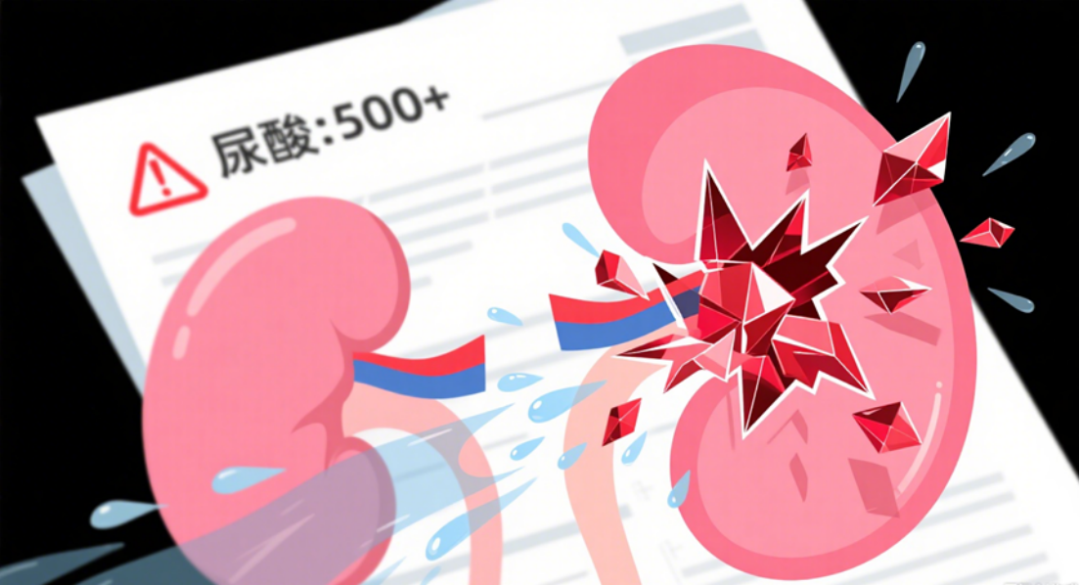
尿酸500+没症状?你的肾脏可能正在被“玻璃渣”祸害!
Yang Shi Xin Wen· 2025-11-16 21:26
Core Insights - High uric acid levels (500+ µmol/L) can lead to serious health issues, even in the absence of symptoms, indicating a "silent disaster" within the body [1][2] - Uric acid crystallization occurs when the concentration exceeds the solubility limit, leading to potential kidney damage and chronic conditions [5][6] Health Implications - Elevated uric acid can cause kidney damage over time, leading to chronic urate nephropathy due to the accumulation of uric acid crystals [5] - Uric acid crystals can also deposit in joints, causing gout attacks triggered by certain dietary choices or physical stress [6] Preventive Measures - Lifestyle management is crucial for controlling high uric acid levels and protecting kidney health [7] - Dietary recommendations include avoiding high-purine foods (red light foods), consuming moderate amounts of certain meats and fish (yellow light foods), and freely eating most vegetables and fruits (green light foods) [7][8] - Sugary drinks, particularly those containing fructose, should be avoided as they significantly raise uric acid levels [10] Exercise and Hydration - Engaging in moderate aerobic exercise is recommended, while avoiding excessive sweating that could trigger gout [11] - Adequate hydration is essential for diluting uric acid and aiding kidney function [12] Medical Guidance - Regular medical check-ups are advised for individuals with high uric acid levels, even if asymptomatic, to monitor kidney function and adjust treatment as necessary [17] - Weight management should be gradual, as rapid weight loss can increase uric acid levels [15]