高性能碳纤维产业化

Search documents
国内首条!T1000级碳纤维大突破
DT新材料· 2025-11-30 13:37
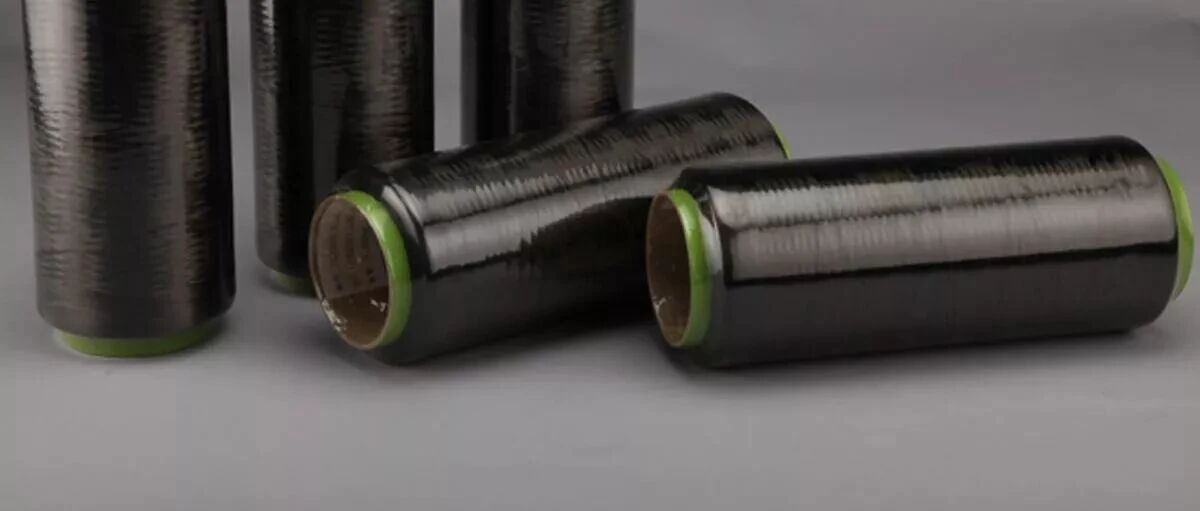
Core Viewpoint - The establishment of Shanxi Huayang Carbon Material Technology Co., Ltd. marks a significant step in the domestic production of high-performance carbon fibers, with a focus on T800 and T1000 grade products, which are expected to enhance China's high-end new materials industry [2][3]. Group 1: Project Overview - The first phase of the project will produce 200 tons per year of high-performance carbon fiber, with construction starting in June 2024 and production expected to commence by November 30, 2025 [2]. - The total investment for the project is nearly 1 billion yuan, focusing on the production of T800 and T1000 grade carbon fibers, with T800 fibers having a tensile strength of over 5.5 GPa and T1000 fibers reaching up to 7.0 GPa [2][3]. Group 2: Technical Achievements - The project has successfully overcome key technical challenges in the dry-jet wet spinning process, ensuring stable and efficient production lines [2]. - The T1000 grade carbon fiber produced has a single filament diameter of only 6 to 7 micrometers, with a tensile strength exceeding 6400 MPa, and a density that is only one-fourth that of steel while being five times stronger [3]. Group 3: Market Context - Other domestic projects, such as Donghua Energy's 10,000-ton carbon fiber project, are also underway, with a total investment of 3.74 billion yuan, aiming for an annual production capacity of 9600 tons of high-performance carbon fibers [5]. - The global high-performance carbon fiber market is currently dominated by companies like Toray and Hexcel, which hold significant market shares and are advancing towards higher strength materials [8]. Group 4: Future Applications - The T1000 grade carbon fiber is expected to find applications in various fields, including national defense, aerospace, rail transportation, and the low-altitude economy, due to its high strength, lightweight, and excellent thermal and electrical conductivity [3][8].


投资数十亿的万吨级碳纤维项目获批
DT新材料· 2025-09-17 16:05
Core Viewpoint - The article highlights the rapid development of the high-performance carbon fiber industry in China, emphasizing the establishment of large-scale production projects and the increasing capacity of various companies in this sector [4][5][6]. Group 1: Industry Developments - The Shenshan Special Cooperation Zone has approved a high-performance carbon fiber project with a planned annual production capacity of 10,000 tons, divided into two phases, with construction expected to start in October 2025 and full production by December 2029 [4]. - The carbon fiber industry in China is experiencing accelerated industrialization, with multiple projects being established, leading to a cluster development model centered around leading enterprises [4]. - Zhongfu Shenying has built a production base with an annual capacity exceeding 20,000 tons, including various grades of carbon fiber, some of which have entered the aerospace sector [4]. Group 2: Company Highlights - Zhongjian Technology has established a production capacity of several thousand tons of T700-grade carbon fiber, with applications in aerospace and sports leisure [5]. - Sinopec Shanghai Petrochemical has built the first domestic 1,000-ton T800 carbon fiber production line, with a current capacity of 24,000 tons/year for precursor fibers and 12,000 tons/year for carbon fibers [5]. - Guangwei Composites is one of the earliest companies to achieve carbon fiber localization, with a current production capacity at the level of 10,000 tons [6]. Group 3: Industry Challenges - The high-performance carbon fiber industry faces several bottlenecks, including technological barriers in precursor fiber preparation, which is a long-standing shortcoming in China [7]. - The equipment level for production processes such as spinning and carbonization needs improvement, as the stability and consistency of domestic equipment are still lacking [7]. - The market structure for high-performance carbon fiber is concentrated in wind power and sports leisure, with limited demand from aerospace and high-end equipment sectors, hindering the development of high-end products [7].