
高校博物馆发展

Search documents
走进藏在高校里的博物馆
Ren Min Ri Bao Hai Wai Ban· 2025-11-12 23:10
Core Insights - The documentary "Museums Hidden in Universities" focuses on the treasures of university museums and their role in academic and cultural transmission, showcasing the unique encounters between valuable collections and young students [2] - The number of registered museums in China has reached 7,046, with university museums being fewer but many achieving national first-class status [2][3] - University museums are integral to modern education and museum development, emphasizing their professional, distinctive, and academic characteristics [3] University Museums' Development - University museums are seen as essential components of top-tier universities, with examples like the University of Oxford's museum being a significant tourist attraction [3] - In Beijing, 27 out of 92 higher education institutions have established 48 museums, indicating a growing recognition of their importance [3] - The Shandong University Museum, a national first-class museum, has a collection primarily sourced from archaeological excavations by students and faculty, highlighting its educational role [4][5] Collection and Academic Value - The Sichuan University Museum, established in 1914, boasts over 80,000 historical artifacts, with a strong reputation for its collections in calligraphy, ceramics, and ethnic artifacts [5] - The Shandong University Museum's unique collection, closely tied to archaeological research, allows for detailed storytelling of artifacts' historical and artistic significance [5][6] - The Beijing Forestry University Museum focuses on rare and endangered plant species, with a collection of 200,000 plant specimens and 130,000 animal specimens, showcasing its academic strengths [6][7] Educational Role - University museums serve as classrooms, providing hands-on learning experiences for students across various disciplines [11][12] - The integration of museum resources into academic curricula enhances the educational experience, allowing students to engage with real artifacts [11][13] - Volunteer programs at university museums enable students to gain practical experience, fostering a deeper connection to their studies and future careers [11][12] Innovation and Community Engagement - University museums are increasingly utilizing technology and innovative methods to engage younger audiences, such as interactive exhibits and digital storytelling [10][13] - Collaborative projects between museums and various academic departments, including computer science, are exploring the application of artificial intelligence in museum settings [13][14] - The documentary highlights the unique themes of different university museums, reflecting their academic strengths and community engagement [9][10]

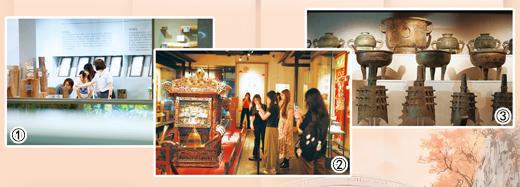
小博物馆也能做大文章(金台随笔)
Ren Min Ri Bao· 2025-05-14 22:41
Core Viewpoint - The article highlights the increasing importance and popularity of university museums in China, emphasizing their role in providing specialized cultural services and educational experiences to the public, despite their smaller collections compared to public museums [1][2][3] Group 1: University Museums - University museums are leveraging academic resources to offer thematic and professional public cultural services, becoming popular "second classrooms" for the public [1] - Examples include the Beijing Institute of Fashion Technology's Ethnic Costume Museum, which houses over 10,000 items related to ethnic clothing, and Chang'an University's Road Traffic Museum, which features immersive VR experiences [2] - The focus on specialization and uniqueness allows university museums to thrive in a niche market, enhancing their visibility and engagement with the community [2] Group 2: Public Museum Landscape - As of the end of 2023, there are 6,833 museums in China, with small and medium-sized museums, including university museums, making up 70% of the total [3] - A significant number of small museums struggle with low visitor numbers, with over 80% of museums receiving fewer than 10,000 visitors annually being small or medium-sized [3] - The article suggests that activating underutilized cultural resources and promoting differentiated positioning can help create a rich and collaborative public cultural service ecosystem [3] Group 3: Innovative Development - Some small museums are innovating by organizing art exhibitions, designing cultural products, and developing cultural industries, akin to professional management practices [3] - The Wu Culture Museum in Suzhou is highlighted as a successful example, expecting to attract 400,000 visitors in a year through innovative strategies [3] - The emphasis is on the idea that the value of a museum lies not in its collection but in how it utilizes its resources effectively to serve the public [3]