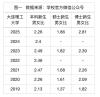
高校本硕博男女比例

Search documents
奋进的女同学们:985硕士女生多了
3 6 Ke· 2025-10-29 00:08
Core Insights - The expansion of graduate enrollment in China's top universities (985 universities) reflects a significant trend in higher education, with graduate admissions surpassing undergraduate numbers in many institutions [1][4][6] - The gender ratio among new students at different educational levels shows a "V" shape, with a predominance of male students in undergraduate programs, a more balanced ratio in master's programs, and a return to a male-dominated ratio in doctoral programs [1][12][17] Group 1: Enrollment Trends - From 2019 to 2025, the majority of 985 universities have seen graduate enrollment (master's + doctoral) exceed undergraduate enrollment, with some universities like Fudan University and Shanghai Jiao Tong University showing a nearly threefold difference [4][6] - The national average growth rates for undergraduate, master's, and doctoral enrollments are approximately 2%, 5%, and 10% respectively, indicating a faster expansion at higher educational levels [3] - In 2023, the total number of undergraduate enrollments was 4.782 million, while graduate enrollments reached 1.302 million, highlighting a significant disparity in enrollment numbers [10] Group 2: Gender Ratio Dynamics - The gender ratio among undergraduate students in 985 universities remains skewed towards males, particularly in engineering and technology fields, where male students often outnumber female students by a ratio of 2:1 or more [12][17] - In contrast, the gender ratio for master's students shows a higher proportion of females compared to their undergraduate counterparts, indicating a shift in enrollment patterns at the graduate level [14] - The doctoral level again reflects a male-dominated trend, with many universities reporting a significant male majority among new doctoral students [17] Group 3: Policy and Future Outlook - The Chinese government is pushing for an increase in graduate enrollment as part of its educational reforms, with policies aimed at expanding the scale of quality undergraduate and graduate education [8] - Experts caution that without corresponding increases in educational resources, such as faculty and facilities, the quality of education may decline, potentially impacting graduates' competitiveness in the job market [9][11] - The trend of expanding graduate programs may lead to an oversupply of academic talent, with many graduates potentially finding themselves in jobs that do not require advanced degrees [11]