高精度钾同位素分析

Search documents
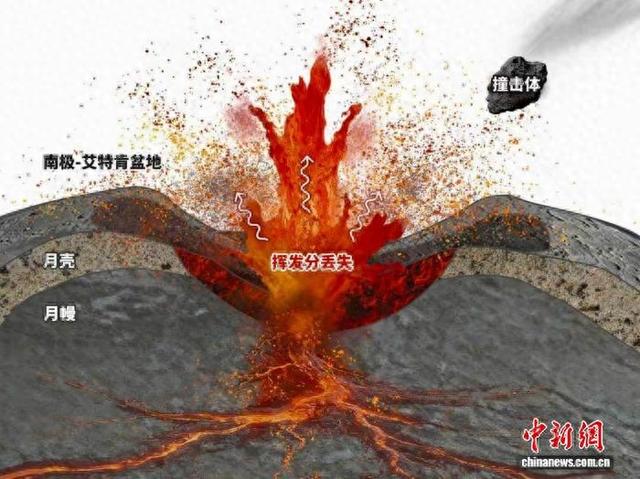
大型撞击造成月幔“蒸发”?
Xin Lang Cai Jing· 2026-01-13 18:48
Core Insights - The Chang'e 6 mission has revealed new findings regarding the differences in evolution between the Moon's near side and far side, addressing a long-standing scientific mystery [1] - High-precision potassium isotope analysis of samples from the Moon's far side has shown that the impact event in the South Pole-Aitken Basin led to the loss of moderately volatile elements in the mantle, providing crucial evidence for understanding the effects of large impacts on lunar evolution and the causes of the Moon's "bipolarity" [1] Group 1 - The research team conducted high-precision potassium isotope analysis on milligram-level basalt samples from Chang'e 6, revealing that the potassium isotope ratios differ from those of samples from the Moon's near side, confirming changes in the mantle due to the impact event [1] - The loss of volatile elements during the high-temperature and high-pressure conditions of the impact may suppress the formation of deep lunar magma and volcanic activity on the far side, offering new clues for understanding the geological evolution asymmetry between the Moon's near and far sides [2] - The related findings were published in the Proceedings of the National Academy of Sciences of the United States of America on January 13 [3]
【人民网】大型撞击如何塑造月球?嫦娥六号月壤再获新成果
Ren Min Wang· 2026-01-13 08:10
Core Insights - The research team from the Chinese Academy of Sciences has revealed that the impact event of the South Pole-Aitken Basin led to the loss of moderately volatile elements in the lunar mantle, providing significant insights into the effects of large impacts on lunar evolution and the origins of the Moon's dichotomy [1] Group 1: Research Findings - The Chang'e 6 mission collected samples from the largest impact basin on the Moon, the South Pole-Aitken Basin, which are crucial for studying the effects of large impact events [1] - High-precision potassium isotope analysis showed that the Chang'e 6 basalt has a higher potassium-41/potassium-39 ratio compared to Apollo samples from the Moon's near side [2] - The study confirmed that the impact event altered the potassium isotope composition of the lunar mantle, resulting in potassium depletion and an increase in isotope ratios [2] Group 2: Implications - The loss of volatile components during the high-temperature and high-pressure conditions of the impact likely suppressed later volcanic activity on the Moon's far side, providing key clues for understanding the geological evolution history of the Moon's near and far sides [2]

【中国新闻网】月幔挥发性元素为何丢失?嫦娥六号月壤高精度同位素分析揭秘
Zhong Guo Xin Wen Wang· 2026-01-13 02:27
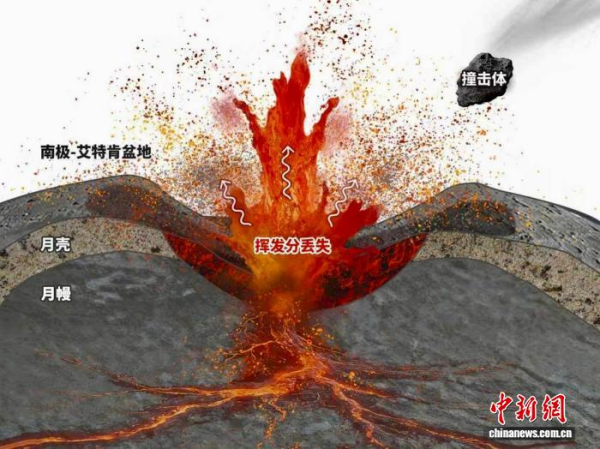
Core Viewpoint - The research team from the Chinese Academy of Sciences has discovered that the large impact event in the South Pole-Aitken Basin on the Moon led to the loss of moderately volatile elements in the mantle, providing crucial insights into the Moon's evolution and the causes of its dichotomy [4][5]. Group 1: Research Findings - The study utilized high-precision potassium isotope analysis of lunar soil samples collected by the Chang'e 6 mission, revealing that the basalt from the Chang'e 6 mission has a higher potassium-41/potassium-39 ratio compared to samples from the Apollo missions [4]. - The research confirmed that the impact event altered the potassium isotope composition of the mantle, resulting in the loss of potassium and an increase in isotope ratios due to the preferential escape of lighter isotopes like potassium-39 during the high-temperature and high-pressure conditions of the impact [5]. - The loss of volatile elements may make the rocks on the Moon's far side more difficult to melt, thereby reducing volcanic activity, which provides key clues for understanding the geological evolution history of the Moon's far and near sides [5]. Group 2: Implications of the Research - The study highlights that asteroid impacts have been the primary external geological process shaping the Moon since its formation, creating numerous impact craters and basins while significantly altering the surface's topography and chemical composition [5]. - The samples collected from the South Pole-Aitken Basin, the largest impact basin on the Moon, are critical for studying the effects of large impacts and their implications for the Moon's deep structure [5]. - High-precision isotope analysis can capture minute changes in isotope ratios, revealing information about early impact events, with the isotope systems of moderately volatile elements being particularly valuable for understanding the temperature, pressure, and material sources during impacts [6].

大型撞击造成月幔“蒸发”?嫦娥六号样品又有新发现
Xin Hua She· 2026-01-13 00:21
Core Insights - The research conducted by Chinese scientists reveals that the impact event in the South Pole-Aitken Basin led to the loss of moderately volatile elements in the lunar mantle, providing crucial evidence for understanding the effects of large impacts on lunar evolution and the cause of the Moon's "bipolarity" [1][2] Group 1 - The high-precision potassium isotope analysis performed on samples from the Chang'e 6 mission acts like a "geological detective," capturing subtle changes in isotope ratios to reconstruct the traces left by impact events [1] - The analysis indicates that the potassium isotope ratios in the Chang'e 6 basalt samples differ from those of samples from the Moon's near side, confirming that the impact event altered the lunar mantle [1] - The study highlights that the loss of volatile elements during the high-temperature conditions of the impact may suppress the formation of deep lunar magma and volcanic activity, providing new clues for understanding the geological evolution asymmetry between the Moon's near and far sides [2] Group 2 - The related findings were published in the Proceedings of the National Academy of Sciences of the United States of America on January 13 [3]
月幔挥发性元素为何丢失?嫦娥六号月壤高精度同位素分析揭秘
Xin Lang Cai Jing· 2026-01-12 21:04
Core Insights - The research team from the Chinese Academy of Sciences has discovered that the impact event of the South Pole-Aitken Basin on the Moon led to the loss of moderately volatile elements in the mantle, providing key information for understanding the effects of large impacts on lunar evolution and the causes of the Moon's dichotomy [1][5]. Group 1: Research Findings - The study published in the Proceedings of the National Academy of Sciences indicates that the Chang'e 6 lunar basalt samples exhibit a higher potassium-41/potassium-39 ratio compared to Apollo samples from the Moon's near side [2]. - The research team confirmed that the impact event altered the potassium isotope composition of the mantle, resulting in the loss of potassium and an increase in isotope ratios due to the escape of lighter isotopes during the high-temperature and high-pressure conditions of the impact [5][7]. - The loss of volatile elements may make the rocks on the far side of the Moon more difficult to melt, thereby reducing volcanic activity, which provides critical clues for understanding the geological evolution history of the Moon's far side [5]. Group 2: Implications of the Research - The study highlights that asteroid impacts have been the primary external geological process shaping the Moon since its formation, creating impact craters and basins that significantly alter the surface topography and chemical composition [7]. - The high-precision isotope analysis used in this research can capture minute changes in isotope ratios, revealing information about early impact events, including temperature, pressure, and material sources during the impact process [7].