黄金市场规范化发展

Search documents
【新华财经调查】黄金税收新政重塑市场格局 终端涨价预期升温
Zhong Guo Jin Rong Xin Xi Wang· 2025-11-05 12:11
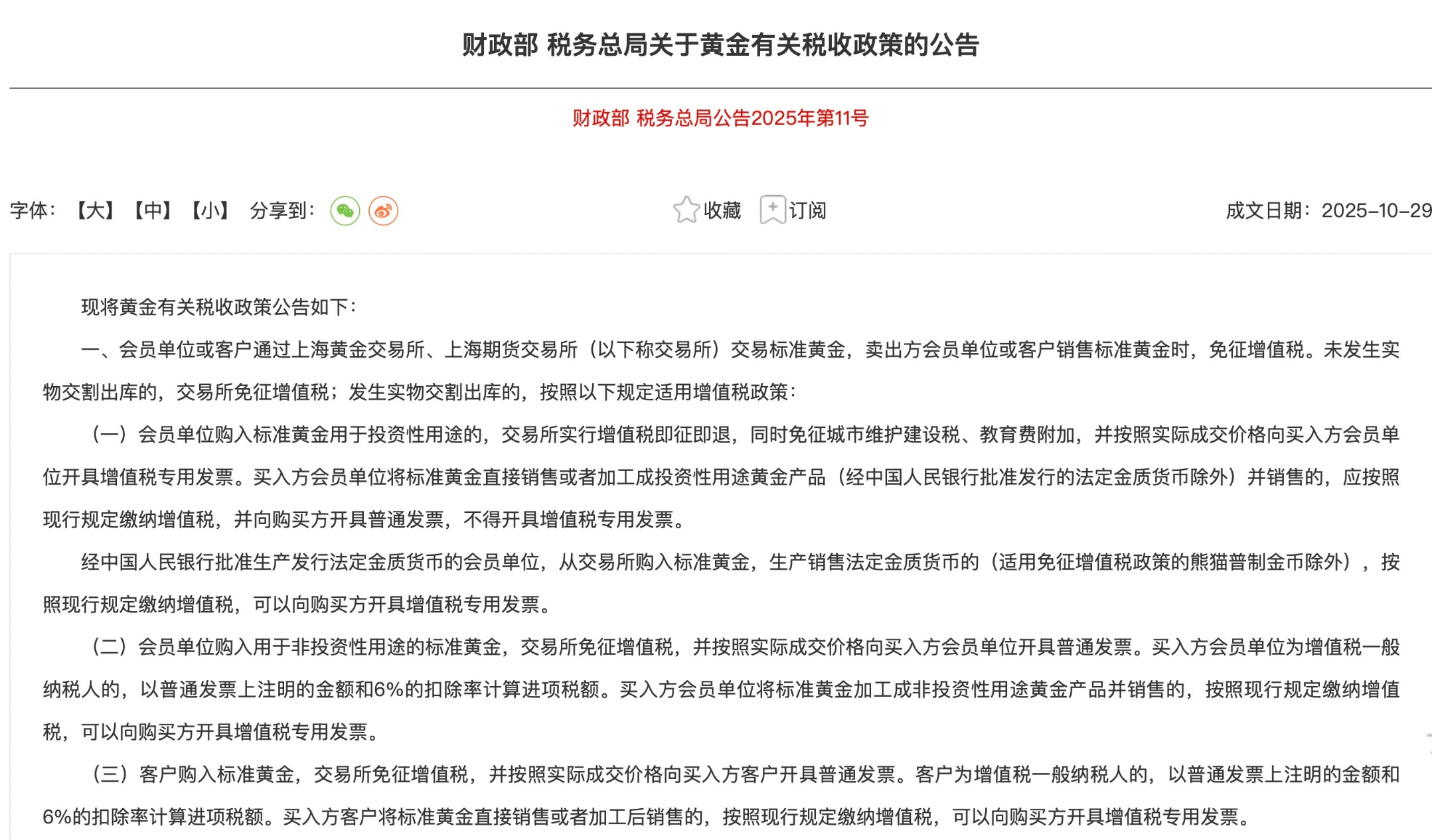
Core Viewpoint - The recent changes in gold tax policy in China have led to significant market reactions, including shortages of gold bars, rising jewelry prices, and declines in gold-related stocks, indicating a major shift in the gold investment landscape [1][12]. Investment Gold - The new tax policy differentiates between investment and non-investment gold, with investment gold transactions exempt from VAT at the trading level, but subject to different tax treatments upon physical delivery [1][2]. - Member units of the Shanghai Gold Exchange benefit from tax exemptions when purchasing investment gold bars, creating a closed-loop market that favors these members [5][12]. - The demand for investment gold bars has surged, with reports of sold-out stocks in major retail outlets shortly after the policy announcement [6][11]. Non-Investment Gold - Non-investment gold sectors are facing pressure, with significant declines in stock prices for gold retail companies following the policy announcement, indicating a negative market sentiment [12][15]. - The new tax structure has increased procurement costs for retailers, leading to higher prices for gold jewelry, with reports of price increases of approximately 70 yuan per gram [15][16]. - Smaller, non-member gold retailers may face greater challenges due to higher costs and competitive pressures, while larger firms can leverage their market position to mitigate impacts [16][18]. General Investor Insights - Investors are advised to adjust their strategies in light of the new tax environment, with a focus on purchasing through member units to avoid increased costs [17]. - The shift towards online gold investment products, such as ETFs, is expected to gain momentum as investors seek lower transaction costs and greater liquidity [18].


黄金税收新政重塑市场格局 终端涨价预期升温
Xin Hua Cai Jing· 2025-11-05 12:08
Core Viewpoint - The new tax policy on gold, effective from November 1, 2025, introduces significant changes in the management of investment and non-investment gold, leading to market volatility and adjustments across the gold industry [1][4][8]. Investment Gold - The new policy differentiates between investment and non-investment gold, with investment gold transactions exempt from VAT at the trading level, but subject to different tax treatments upon physical delivery [1][2]. - Member units of the Shanghai Gold Exchange benefit from tax exemptions when purchasing investment gold bars, creating a closed-loop market that favors these members [4][8]. - The demand for standard investment gold bars has surged, with reports of sold-out stocks in major retail outlets following the announcement of the new policy [5][6]. Non-Investment Gold - Non-investment gold sectors are facing significant pressure, with A-share gold concept stocks experiencing sharp declines, particularly in retail and jewelry sectors [8][9]. - The new tax policy has increased procurement costs for retailers, leading to higher prices for gold jewelry, with reports indicating a price increase of approximately 70 yuan per gram [9][10]. - Smaller non-member retailers are expected to face greater challenges due to higher costs and competitive pressures, while larger firms may leverage their market position to maintain stability [10][11]. General Investor Impact - Investors are advised to adjust their strategies in light of the new tax environment, with a focus on purchasing investment gold through member units to minimize tax costs [11]. - The policy is expected to drive more investment towards online gold products like ETFs, which offer lower transaction costs and higher liquidity compared to physical gold [12].