黄金资源争夺战

Search documents
金价飙升,A股矿企掀“淘金热”
3 6 Ke· 2025-12-17 11:27
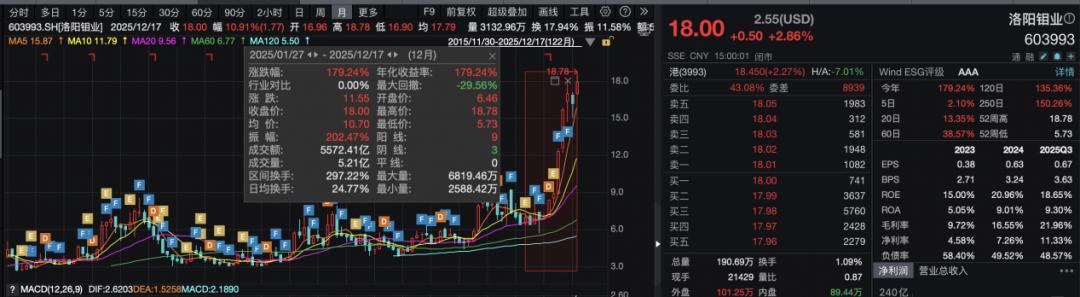
Core Viewpoint - The surge in gold prices has prompted Chinese mining companies to aggressively acquire gold assets globally, reflecting a "gold rush" mentality in the industry [1][3][6]. Group 1: Company Actions - Luoyang Molybdenum announced a $10.15 billion acquisition of four gold mines in Brazil, significantly increasing its gold resource holdings [3][5]. - Other companies like Zijin Mining and Jiangxi Copper have also made substantial acquisitions, indicating a broader trend among A-share mining companies to expand their gold asset portfolios [1][5]. - The gold sector has seen a year-to-date increase of over 70%, with Luoyang Molybdenum's stock rising nearly 180% this year [1][6]. Group 2: Market Dynamics - The gold price has reached record highs, with over 50 historical peaks this year and a cumulative increase of over 60% [6]. - The current gold price is around $4,340 per ounce, raising questions about whether the acquisitions by mining companies are wise or merely chasing high prices [6]. - Despite high prices, companies believe that long-term strategic decisions, rather than short-term price fluctuations, drive their acquisitions [6]. Group 3: Future Outlook - The World Gold Council has analyzed four potential scenarios for the gold market in 2026, with expectations of price stability or slight fluctuations based on economic conditions [7]. - Companies are focusing on increasing reserves and expanding production capacity as a direct response to market conditions [8]. - International capital strategies are also being pursued, with companies like Shandong Gold International preparing for H-share issuance and Zijin Mining restructuring its overseas assets for better market positioning [8].


价值研究所|金价飙升,A股矿企掀“淘金热”
Zhong Guo Ji Jin Bao· 2025-12-17 10:23
Core Viewpoint - The surge in gold prices has prompted A-share mining companies to accelerate their global gold resource acquisitions, raising questions about whether this is a strategic move or merely chasing high prices [2][8]. Group 1: Company Actions - On December 15, Luoyang Molybdenum announced an investment of 7 billion yuan (approximately 1.01 billion USD) to acquire gold mines in Brazil, leading to a nearly 180% increase in its stock price for the year [2][6]. - Luoyang Molybdenum's acquisition includes four gold assets from Equinox Gold in Brazil, with a total gold resource of 5.013 million ounces and a reserve of 3.873 million ounces, significantly higher than the global average [4]. - Other A-share mining companies, such as Zijin Mining and Jiangxi Copper, have also made significant acquisitions, including Zijin's purchase of gold projects in Ghana and Kazakhstan [6][7]. Group 2: Market Context - The gold sector has seen a price increase of over 60% this year, with gold prices reaching record highs, prompting a competitive environment for gold resources [8]. - The current gold price is at historical highs, leading to debates among investors about the wisdom of large-scale acquisitions by mining companies [8]. - The World Gold Council has analyzed potential scenarios for the gold market in 2026, indicating that gold prices may remain stable or experience fluctuations based on economic conditions [9][10]. Group 3: Strategic Implications - Companies are focusing on long-term strategies rather than short-term price fluctuations, with Luoyang Molybdenum emphasizing the long-term market outlook for gold [8]. - The scarcity of quality gold resources is becoming more pronounced, with major gold producers experiencing declining reserve replacement rates [8]. - International capital strategies are being pursued, with companies like Shandong Gold International preparing for H-share issuance and Zijin Mining restructuring its overseas assets for potential listing [11].


价值研究所|金价飙升,A股矿企掀“淘金热”
中国基金报· 2025-12-17 10:12
Core Viewpoint - The article discusses the ongoing surge in gold prices and how A-share mining companies are rapidly expanding their global gold resource acquisitions, questioning whether this is a strategic move or merely chasing high prices [2][3]. Group 1: Mining Companies' Actions - Luoyang Molybdenum announced a $10.15 billion acquisition of four gold mines in Brazil, significantly boosting its stock price, which has risen nearly 180% this year [5][7]. - Other A-share mining companies, including Zijin Mining and Jiangxi Copper, have also made significant acquisitions, reflecting a broader trend of gold resource competition [3][8]. - Domestic gold resources are also in high demand, with Zhongjin Gold acquiring four companies from its controlling shareholder to strengthen its gold business [9]. Group 2: Gold Price Dynamics - Gold prices have reached record highs, with over 50 historical peaks this year and a cumulative increase of over 60%, surpassing $4,340 per ounce [11]. - The current high gold prices raise questions among investors about the wisdom of large-scale acquisitions by A-share mining companies [12]. Group 3: Strategic Considerations - Mining companies believe that their acquisition decisions are based on long-term strategies rather than short-term price fluctuations, viewing gold as a stable investment in the current global economic and political landscape [12]. - The acquisition of Brazilian gold assets by Luoyang Molybdenum is expected to add approximately 8 tons to its annual gold production, with potential to exceed 20 tons after another project comes online [12]. - Zijin Mining's acquisition of a Kazakhstan gold mine is projected to contribute $202 million in net profit in 2024, indicating immediate benefits from these strategic moves [12]. Group 4: Future Market Scenarios - The World Gold Council has outlined four potential scenarios for the gold market in 2026, with expectations of stable growth and possible fluctuations in gold prices based on economic conditions [14]. - Companies are focusing on resource expansion and production capacity as direct responses to market uncertainties, while also emphasizing the importance of improving production management and investing in project infrastructure [16]. Group 5: Competitive Landscape - Analysts suggest that the global competition for mining resources has entered a new phase, where companies with high-quality resource reserves will have a competitive advantage in the industry transformation [17].