黄金预定价模式

Search documents
【深度】百万金额二折兑付,杰我睿危机背后的黄金预订价“赌局”
Sou Hu Cai Jing· 2026-02-14 04:57
Core Viewpoint - The article discusses the severe liquidity crisis faced by the gold trading platform Jie Wo Rui, highlighting the impact on users and the regulatory response to the situation [1][5][23]. Group 1: User Experience and Crisis Development - User Wang Xin had accumulated a balance of 1.73 million and 611 grams of gold on Jie Wo Rui, totaling over 2.8 million yuan, which could buy a house in Dongguan [1]. - On January 19, 2026, users discovered transaction anomalies, revealing Jie Wo Rui's liquidity crisis [1]. - By January 21, users began to queue for withdrawals, but Jie Wo Rui limited daily withdrawals to 1 gram of gold or 500 yuan [1][5]. Group 2: Company Response and Settlement Options - On January 25, Jie Wo Rui announced a settlement plan under regulatory supervision, offering either a phased payout at a discount or a one-time payment at a lower rate [5][6]. - Users were presented with two settlement options: a 40% payout over 12 months or a 20% one-time payout, with no guarantees on timely payments [6][9]. Group 3: Regulatory Actions and Market Implications - Regulatory bodies issued guidelines to standardize gold trading practices, prohibiting illegal activities such as pre-priced trading and leveraged transactions [5][12]. - The crisis reflects a broader trend of speculative behavior in the gold trading market, with platforms increasingly attracting ordinary users rather than just industry professionals [23][24]. Group 4: Market Dynamics and Risks - The article outlines the risks associated with the pre-priced trading model, which can lead to significant losses if market conditions change unfavorably [12][13]. - The rise of unregulated gold dealers and the ease of entry into the market have contributed to the proliferation of risky trading practices [23][24]. - The liquidity crisis at Jie Wo Rui has raised concerns about the overall trust in the gold trading ecosystem, affecting both industry players and ordinary consumers [22][25].


多个黄金交易小程序,被暂停服务
Sou Hu Cai Jing· 2026-01-31 05:04
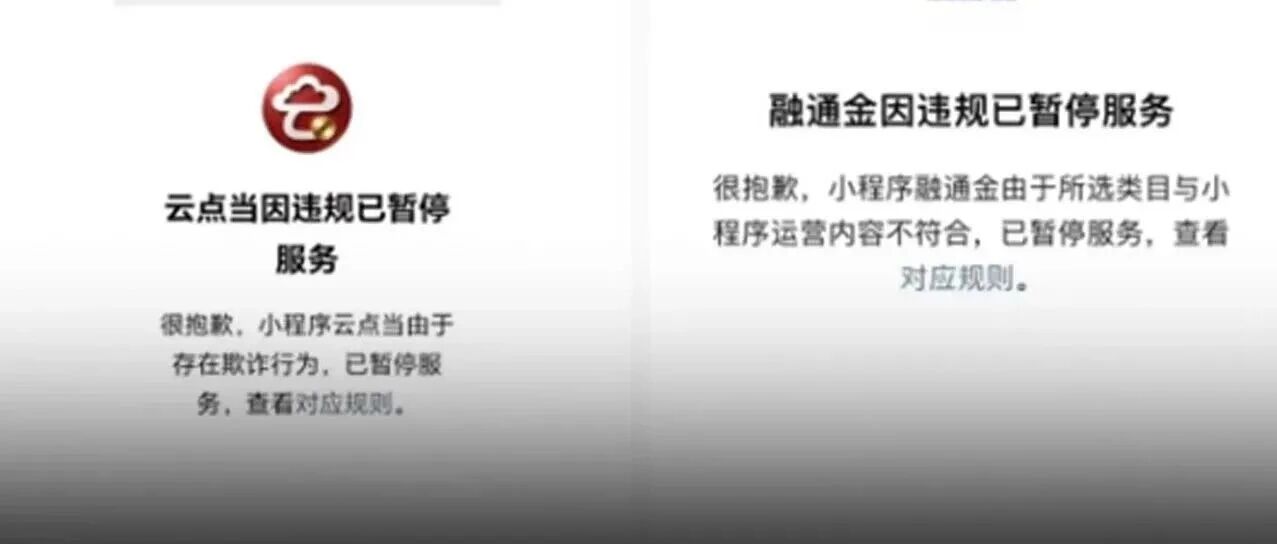
Core Viewpoint - The recent liquidity crisis at Shenzhen's "Jie Wo Rui Jewelry" has raised market concerns, highlighting the risks associated with unregulated gold trading platforms and their reliance on a "pre-priced" model that lacks physical backing [1][3]. Group 1: Company Overview - Jie Wo Rui, originally a gold raw material trader in Shenzhen's Shui Bei area, has transitioned to retailing precious metals, focusing on non-physical gold pricing and related services, which has led to accumulating risks [3]. - Following the liquidity crisis, the Jie Wo Rui app has been suspended, and several related online platforms, such as "Long Ye Jin" and "Jin Cheng Jin Shi Jie," are no longer searchable on WeChat [3]. Group 2: Industry Context - The crisis has prompted the suspension of similar gold trading platforms, with consumers reporting that apps like "Yun Dian Dang" and "Bao Ma Mai Jin" have also been halted, indicating a broader issue within the industry [3]. - A warning from the Agricultural Bank of China in January highlighted the risks of illegal trading platforms masquerading as gold investment opportunities, which often promise low entry barriers and high returns, effectively functioning as gambling scams [6]. - The Shenzhen Gold Jewelry Industry Association has previously issued warnings about companies engaging in non-physical gold betting, which could constitute illegal gambling activities, emphasizing the need for regulatory oversight in the sector [6].

多个黄金交易小程序,被暂停服务
新华网财经· 2026-01-31 03:34
Core Viewpoint - The article discusses the recent gold redemption crisis involving Shenzhen's "Jie Wo Rui Jewelry," highlighting the platform's withdrawal restrictions and the significant unfulfilled balances exceeding 13.39 billion yuan from investors nationwide [2][8]. Group 1: Crisis Overview - The crisis was triggered by the "pre-set price" model, which is essentially a high-leverage gold betting scheme without physical backing [2][10]. - As of January 26, the total unfulfilled balances on the Jie Wo Rui platform reached 13.39 billion yuan [8]. - The platform's withdrawal limit was set to 500 yuan or 1 gram of gold per day, leading to significant losses for investors [5][6]. Group 2: Company Response - Jie Wo Rui announced on January 25 that it had applied for government oversight of its assets, claiming no risk of asset transfer [6]. - The company proposed two redemption plans: a one-time return of principal at a 20% discount or a 40% discount with 12 installment payments, which were largely rejected by consumers [8] [6]. Group 3: Impact on Similar Platforms - Following the crisis, several similar platforms, including "Yun Dian Dang" and "Rong Tong Jin," suspended their mini-programs, indicating a broader impact on the industry [9][11]. - "Rong Tong Jin" has initiated alternative methods to maintain operations, including an announcement regarding updates to its mini-program due to compliance with WeChat platform rules [12][17]. Group 4: Industry Risks - The article notes that the "pre-set price" model has a history of leading to redemption crises, with previous incidents in the same region [18][19]. - Many platforms engaging in this model lack financial qualifications and regulatory oversight, making them susceptible to systemic risks [26][28]. - The high leverage involved in these transactions, with estimates suggesting leverage ratios of up to 15 times, exacerbates the risk of significant losses during price fluctuations [28].